
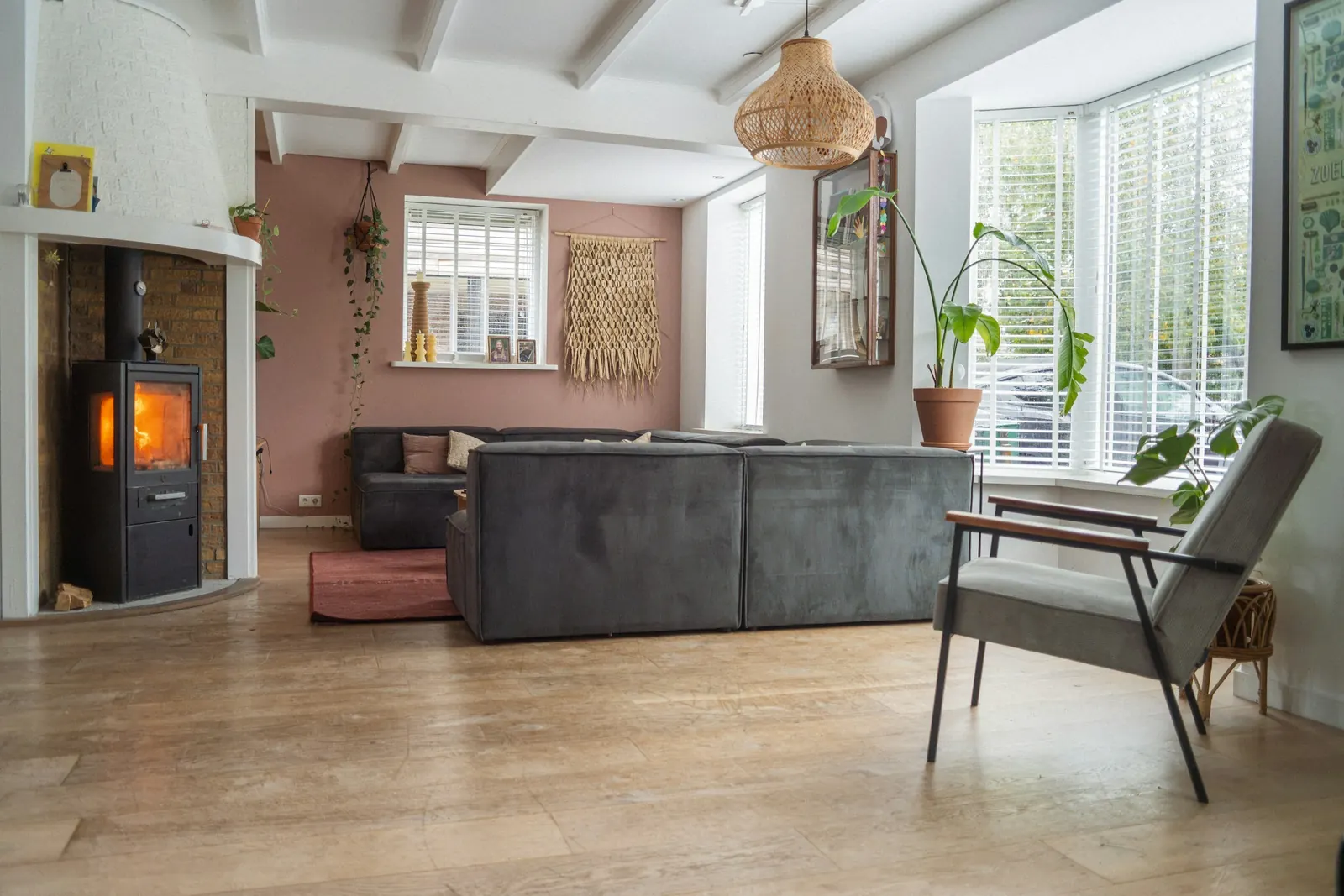
Three setups that all get called a gas fireplace
The answer depends entirely on what is in the wall. A quick look at the front, the sides and the rating plate usually tells you which of these you have:
| Setup | How to recognize it | Wood? |
|---|---|---|
| Factory-built gas fireplace | Metal box framed into the wall, sealed glass front, vent pipe behind or above, rating plate under the front panel | No. It is listed for gas, and cannot be converted |
| Gas insert in a masonry fireplace | Sealed metal unit with a glass front and surround panels, sitting inside an old brick firebox | Not in the insert. The insert has to come out first |
| Gas log set in a masonry fireplace | Ceramic logs on a burner in an ordinary brick firebox, damper and chimney above, no sealed front | Possibly, once the gas set is removed and the chimney is inspected |
Why a gas unit cannot take a log fire
A wood fire burns hotter in places, less evenly and far dirtier than a gas burner. The metal firebox, the glass, the gaskets and the vent of a gas unit are not rated for that heat, and the clearances to the wood framing around the unit were set for a gas flame. Glass fronts can crack from uneven heat, and a sealed unit has no way to deal with burning logs that shift or fall.
Wood smoke also carries creosote and soot, which a gas vent is not designed to handle. Direct-vent pipes are often thin-walled and run sideways through an outside wall, close to framing, siding and windows. Sparks and burning flakes have nowhere safe to go in a system built for clean, hot exhaust.
The gas parts suffer too. Burners, pilot assemblies, thermocouples and valves sit inside the firebox or just below it, and they are designed for the heat of a gas flame, not for burning logs and falling embers on top of them. Ash and creosote clog burner ports. A unit that has had wood burned in it should be inspected and serviced before the gas is used again, since damage to the controls is not always visible.
Reading the rating plate and manual
Every listed gas fireplace and insert carries a rating plate, usually on a chain or metal tag behind the lower louver or on the inside of the control compartment. It names the model, the fuel type (natural gas or propane), the input rating and the listing. The manual repeats this and spells out what the unit may burn. If it says gas only, a log on the grate is outside what the appliance was built and tested for.
If you cannot find either the plate or the manual, assume gas only until someone qualified has looked at it. Previous owners sometimes remove panels, and a unit that has been partly taken apart is harder to identify from the front.
Gas logs in an old brick firebox
If your gas logs sit in a real masonry firebox with a damper and a chimney above, the fireplace may well have been a wood burner before the logs went in. That setup turns up often in brownstone parlors, rowhouse living rooms and older colonials, where a gas log set was added for convenience. Going back to wood takes several steps, in order:
- Have the gas line shut off and capped properly by a qualified gas fitter
- Remove the burner, the ceramic logs and the glowing ember material
- Take out any damper clamp that was installed to hold the damper open for gas
- Have the chimney swept and inspected for wood use
- Repair or reline the flue if the inspection calls for it
Clues that a fireplace was built for wood
A gas log set can make a wood fireplace easy to overlook, especially in a house bought with the logs already in place. A few details inside the room point to a masonry fireplace that was built to burn wood:
- Firebrick lining the back and sides of the firebox, often with old smoke staining
- A damper handle, chain or lever inside the throat above the opening
- A raised or flush hearth of brick, stone or tile extending into the room
- An ash dump door in the firebox floor, common in older houses
- A chimney on the roof directly above, rather than a small metal vent cap on a wall
What a wood fire asks of the chimney
A chimney that has served gas logs for years may look fine and still not be ready for wood. Gas logs leave little creosote, so nobody may have looked inside in a long time. Clay tiles can be cracked or missing, mortar joints between them can be open, and the smoke chamber over the damper may never have been parged smooth. A flue that only had to carry warm gas exhaust would now have to contain wood smoke, sparks and the sustained heat of a long fire.
Liners matter too. Some flues were relined for gas with aluminum or other material made only for gas appliances, which is not suitable for wood smoke. A wood fireplace needs a flue sized to its opening, and a liner rated for solid fuel if one is installed. In older buildings it is also worth confirming that no boiler or water heater is connected to the same flue.
Replacing a gas unit with a wood-burning one
A factory-built gas fireplace cannot be turned into a wood burner. The route is to remove it and install a fireplace or stove listed for wood, with a chimney or liner system rated for wood smoke, set to the clearances in its own instructions. A gas insert comes out the same way, and the masonry chimney behind it needs a liner suited to wood before any fire.
What drives the scope of a job like this is mostly what is behind the wall: the size and condition of the existing chimney, whether framing has to be opened up, the height of the flue, roof access for the liner, and permits. We look at the setup and put the options in a free written estimate.
Rules in New York City and elsewhere
In New York City, the 2022 Mechanical Code says solid fuel-burning fireplaces and appliances must be installed, altered and maintained in line with the city's Air Pollution Control Code, and that no new solid fuel-burning fireplaces or appliances are permitted except those that burn the types of fuel that code allows. The same chapter calls for separate flues for every fireplace and fireplace stove, and it prohibits installing unvented gas logs, gas fireplaces and gas fireplace inserts. Check the current fuel rules before planning a wood conversion in the city.
In New Jersey, Pennsylvania and Delaware, rules are set at the state and local level and vary by town. Ask the local building department what permits a change of fuel or a new appliance requires.
Common Questions
Can you burn logs in a gas fireplace?
Can you burn wood in a gas fireplace insert?
Can I put a log on top of my gas logs?
How hard is it to convert a gas fireplace to wood burning?
Need help with this? See our fireplace repair service, or call (844) 468-2410 for a free written estimate.

