
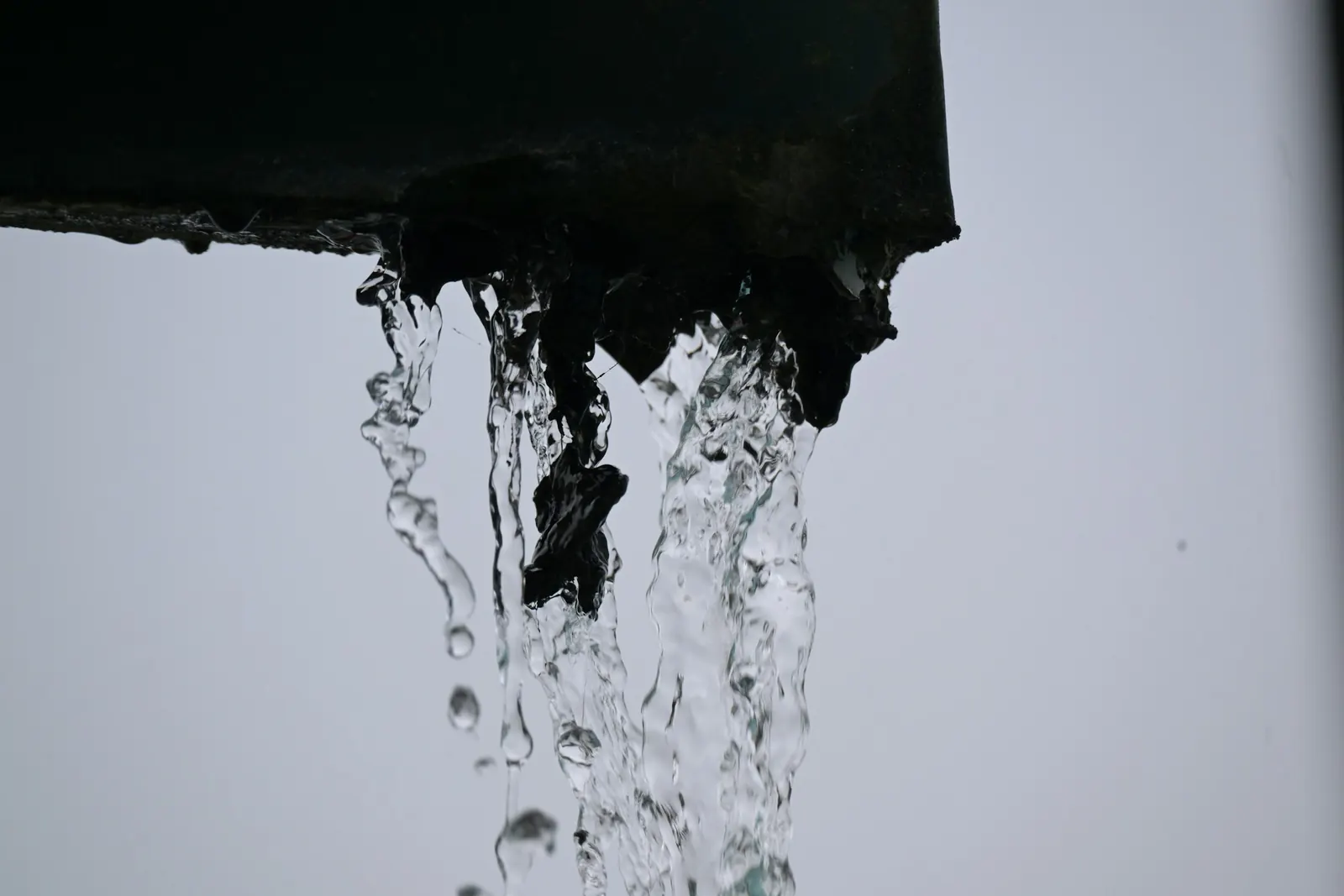
Where the water gets in
A chimney is a tall stack of masonry that passes through the roof and catches every storm from the sides and the top. It has no eaves to shelter it, and it interrupts the roof's own drainage. Water has four main ways in, and an older chimney often has more than one open at the same time.
The flashing is the metal that seals the joint between the chimney and the roof. When it lifts, rusts through or was only sealed with tar, rain runs straight down the outside of the chimney into the attic or the ceiling below. The crown is the slab on top that should shed water away from the flue; when it cracks, water soaks into the core of the chimney.
- Flashing: a gap where the chimney meets the shingles or roofing
- Crown: cracks in the concrete or mortar slab on top of the chimney
- Cap: no cover over the flue, so rain falls straight down the inside
- Brick and mortar: soft joints and porous brick that soak up water
What the stain is telling you
A stain on the ceiling or wall right beside the chimney often points to the flashing. Water in the firebox, or rust on the damper, points to a missing cap or a cracked crown. Damp patches on the chimney breast inside the house, or white powder on the outside brick, usually mean the masonry itself is taking on water.
These are clues, not proof. Water can run along a rafter or down the inside of the flue before it shows up somewhere else, which is why a patch on the ceiling rarely solves anything.
- Ceiling or wall beside the chimney: most likely the flashing, though the crown and upper brick are worth checking
- Water in the firebox, a wet damper or wet ashes: usually a missing cap or cracked crown, sometimes flue tile joints
- Damp chimney breast on upper floors: porous brick or open joints, with the crown, cap and flashing as suspects too
- Wet attic framing around the chimney: flashing or the area behind the chimney, or brick above the roof
- Water at the chimney base in the basement: rain down an open flue, or condensation from a boiler
Causes ranked for older houses
On the brick chimneys of older homes we inspect, the most frequent leak sources we trace are, in rough order: flashing that was tarred rather than set into the brick, a flat or cracked crown made from leftover mortar, uncapped flues, and open mortar joints in the top courses. Chimneys on flat roofs add a fifth: roof coating smeared up the brick in place of flashing.
Wind direction matters too. A leak that appears only in storms from one direction often points to the face of the chimney that takes that wind.
Why it gets worse every winter
Water inside brick and mortar freezes on cold nights and expands. Each freeze opens the crack a little wider, and the next rain gets further in. A small leak that only shows in a heavy storm this year can turn into loose bricks and a crumbling crown after a few winters.
Wet masonry also wears out the parts inside the chimney. Rust attacks the damper, water breaks down flue tiles and mortar joints, and damp wood framing next to the chimney can start to rot. Snow piled behind a wide chimney adds slow meltwater to the same weak points.
How the source is traced
A proper leak inspection starts on the roof. The technician checks the cap on every flue, the crown for cracks and overhang, the condition of the brick and joints, and every piece of flashing, including the back of the chimney where water collects. In the attic, wet framing or stains show where water first reaches the inside. Inside the flue, rust lines and wet tile joints show water coming from the top.
When the signs disagree, a careful water test, wetting one part of the chimney at a time while someone watches inside, can confirm the entry point. That is done by the crew from the roof.
The inspection should end with the entry point, or points, named in writing and each repair tied to the source it stops. If the inspector cannot find the source on the first visit, ask what will be checked next rather than accepting a patch at the most visible stain.
How a leak gets fixed
The fix depends on where the water comes in. Failed flashing is replaced, with base or step flashing tied into the roofing and counter flashing let into a mortar joint. A cracked crown is sealed or rebuilt so it sheds water away from the flue. A cap goes on top of the flue. Soft mortar joints are ground out and repointed, and porous brick can be treated with a breathable water repellent once the cracks are fixed.
Often the right answer is two of these together. That is why the water is traced first and the repair goes into a free written estimate before any work starts.
What to do until it is repaired
Keep the damper closed if water is coming down the flue, set a tray in the firebox and empty it after each storm, and do not light a fire on wet ashes. If water is reaching a ceiling, put a bucket under the drip and move furniture and rugs away. A bulging, water-filled ceiling should be drained by a professional or with great care, since wet plaster can drop suddenly.
In the attic, a sheet of plastic over insulation below the leak protects it until the repair is done. Do not go on the roof in wet or icy weather to patch anything; temporary tarping on a chimney is a job for someone with fall protection.
What you can check yourself
From the ground, with binoculars, you can often see a missing cap, a rusted cap, or black tar smeared around the base of the chimney. Inside, look for water in the firebox after rain, a musty smell from the fireplace and rust on the damper handle. Note which storms cause the leak and how long after the rain starts it appears. Leave the roof to someone with the right gear: chimney tops are steep, high and often slippery.
If the house has had roof work recently, mention it; new roofing around an old chimney is a frequent starting point for leaks.
Common Questions
Is it normal for a chimney to leak in heavy rain?
Is it the roof or the chimney?
Can a sealant stop the leak?
Why does my chimney leak only when it is windy?
Can a chimney leak in snow but not rain?
Need help with this? See our leak repair service, or call (844) 468-2410 for a free written estimate.

