 Manhattan
Local guide
Chimney Care in Manhattan, NY: What Local Homeowners Should Know
Manhattan chimneys mostly belong to 19th-century townhouses and older apartment buildings, many inside landmark districts. A good share still vent oil or gas boilers. Expect wind and freeze-thaw wear on exposed rooftop stacks, schedule an inspection every year, and talk to the Landmarks Preservation Commission before any visible chimney work on a designated building.
Townhouses that predate the street grid
About 42% of Manhattan's housing units are in buildings from 1939 or earlier, based on recent Census estimates, and some chimneys here are among the oldest in the city. The Greek Revival row houses on the north side of Washington Square date from about 1832. In the West Village, the block bounded by Perry, Charles, Bleecker and West 4th Streets mixes mid-1800s rowhouses with houses from the 1830 to 1837 building boom. Murray Hill's streets filled with brownstone row houses in the mid-1800s, and Chelsea still has brick and brownstone townhouses from that era on 16th through 22nd Streets.
Uptown, Morningside Heights got its first row houses in 1892 and 1893, Hamilton Heights has brownstones on many of its eastern streets, and Inwood holds most of the detached and semi-detached houses left on the island.
Between those two ends, the Upper East Side Historic District takes in post-Civil War row houses, early-1900s mansions and townhouses, and Henderson Place is a small group of town houses on East End Avenue. Washington Heights began with row houses and wood-frame houses in the late 1800s, then grew in a 1920s building boom, and Morningside Heights gained at least 75 apartment buildings between 1903 and 1911, many of them still heated by a central boiler and its chimney.
Living with landmark rules
A large part of residential Manhattan is designated. The Greenwich Village Historic District dates to 1969, Chelsea to 1970, the Upper East Side district to 1981, Murray Hill to 2002, and the East 10th Street and East Village/Lower East Side districts to 2012. Nearly all of Hamilton Heights falls inside historic districts, and Morningside Heights got its own in 2017.
On a landmarked building, exterior chimney work that can be seen, from rebuilding a stack to changing a cap or crown, can need approval from the New York City Landmarks Preservation Commission. Plan for that step early. For buildings outside a district, check with the Department of Buildings, and in a co-op or condo, with the board.
Boiler flues carry the load
Fireplaces get the attention, but the hardest-working flue in most Manhattan buildings serves the boiler. Census estimates show utility gas heating about 49% of occupied homes in the borough and fuel oil about 13%, with electricity making up much of the rest. Oil produces soot and acidic deposits that collect in a masonry flue; gas produces moisture that condenses in cold, oversized ones. Either can deteriorate old clay liners and mortar over time, which is why a liner is often part of a boiler upgrade.
Rooftop weather
January's daily mean temperature in Manhattan is 32.6 degrees, yet the borough usually drops to 10 degrees several times a winter and reaches 60 degrees on a few days of the coldest month. Those swings, plus about 49.9 inches of precipitation a year, drive freeze-thaw damage in brick. The city is also prone to strong winds as an exposed coastal location, and a stack standing above a five-story roof takes the full force.
Keeping an old Manhattan chimney sound
For a townhouse owner or a building super, the routine looks like this:
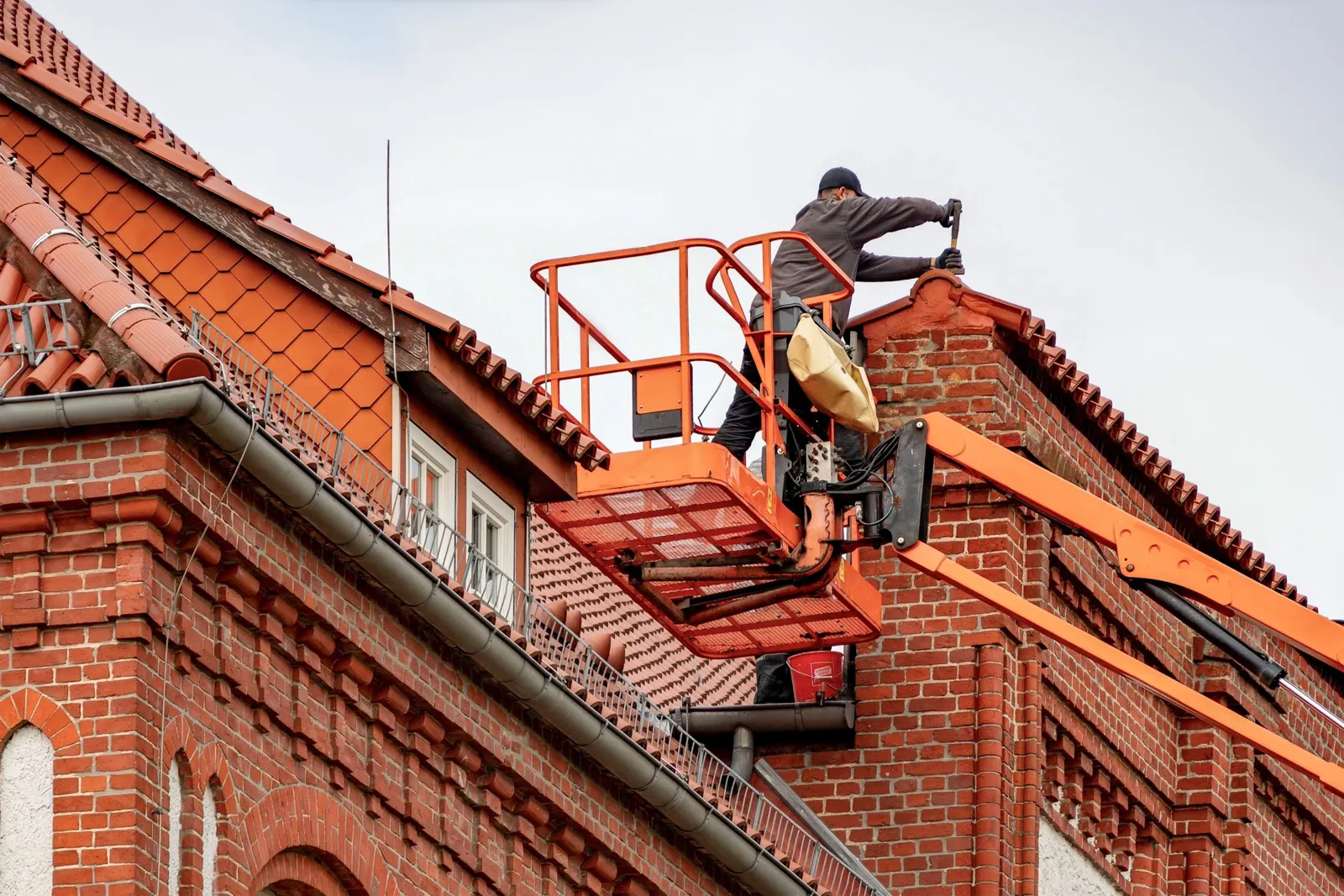
Access shapes every job here. Chimney work on a townhouse usually happens from the roof, a tall stack may need scaffolding, and a shared party wall can mean coordinating with the building next door.
- Book an inspection of chimneys, fireplaces and vents at least once a year, the interval NFPA 211 sets, and have them cleaned when deposits build up.
- Ask whether each flue is lined, especially before using a parlor fireplace that has sat idle for years.
- Watch for loose bricks, open joints or a leaning stack after windy winters.
- Have the system checked after any chimney fire or storm that may have caused damage.