 Monmouth County
Local guide
Chimney Care in Monmouth County, NJ: What Homeowners Should Know
Monmouth County faces the Atlantic and Raritan Bay, so wind, salt and storm surge shape chimney care here as much as cold does. Victorian homes in Asbury Park and colonial houses in Middletown stand beside large postwar suburbs. Gas heats most homes. Check caps, flashing and crowns every year, and again after any storm that may have caused damage.
Ocean, bay and storm surge
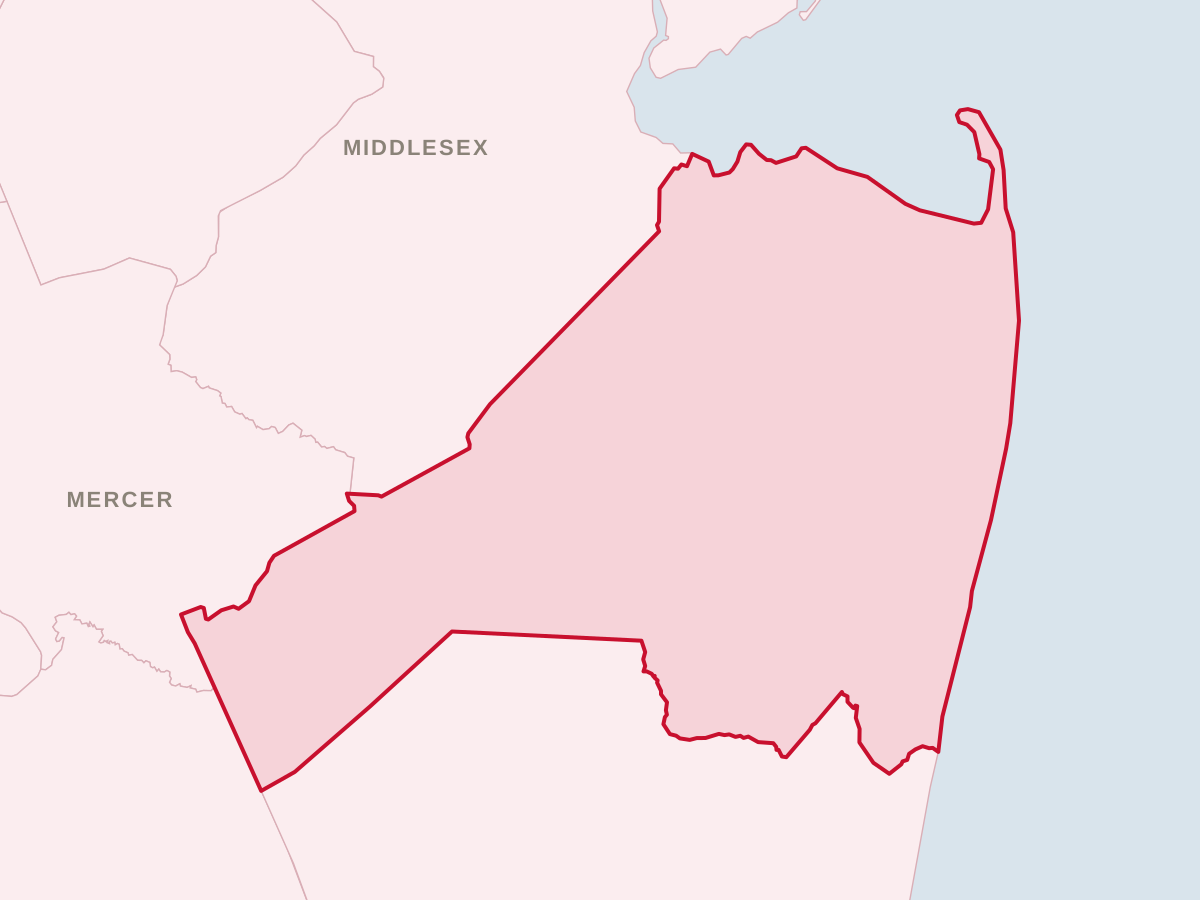
Monmouth County has the Atlantic Ocean on its east and Raritan Bay to the north, and it is part of the Jersey Shore. Most of the county has a humid subtropical climate, with some inland areas hot-summer humid continental. In Freehold Borough, average January lows are about 22 degrees Fahrenheit, while the January average in Asbury Park is about 32.5 degrees.
Storms leave the deepest mark. When Hurricane Sandy arrived in October 2012, floodwater at Sandy Hook was measured at 13.31 feet above normal, breaking every previous local record, and waves as high as 32.5 feet were measured where Sandy Hook Bay meets New York Bay. Bayshore towns such as Keansburg and Hazlet, and the Belford and Port Monmouth sections of Middletown, sit close to that water.
Between storms, wind and salt spray do steady damage. Steel caps and chase covers rust, flashing fasteners loosen, and mortar on the windward face of a chimney erodes faster. A chimney that looks fine from the street can still be letting water in through a corroded cap or a cracked crown.
Shore Victorians, colonial farmhouses and newer neighborhoods
Asbury Park's housing boom in the 1890s left a wide range of Victorian architecture, and many of those houses were restored after property values fell in the 1970s. Long Branch, known as the nation's first seaside resort, and Red Bank, with its Broad Street and Washington Street historic districts, carry their own older layers. Matawan kept many merchants' houses along Main Street from a building boom between 1820 and 1870, a period when the town also had brickyards and potteries.
The oldest homes are colonial. Middletown has the Seabrook-Wilson House from 1663 and Marlpit Hall, a saltbox from 1686, and Holmdel has Kovenhoven from 1700 and the Holmes-Hendrickson House from the mid-1750s. Much of the county is newer: Middletown and Freehold Township grew fast after World War II, and Marlboro filled in with four- and five-bedroom houses in the 1980s and early 1990s before shifting to larger estate homes. Census estimates for 2024 put about 14% of homes countywide before 1940.
Care that fits a coastal county
The Shore adds wind and salt to the usual list, so priorities shift toward the parts that face the weather:
- Choose a cap and chase cover made to resist rust, and replace any that are flaking or leaving stains.
- Have the flashing where the chimney meets the roof checked after strong wind, since lifted flashing is a common leak path.
- Look at the crown every year; on Victorian chimneys with decorative brickwork, loose upper courses should be reset before they fall.
- In homes that flooded in 2012 or in later storms, check the chimney base, the cleanout door and any furnace connection in the basement.
- Larger newer homes often have more than one fireplace or a factory-built unit with a metal flue, and each one needs its own inspection.
What heats Monmouth homes
Gas is the norm. Census estimates for 2024 put utility gas in about 82% of occupied homes, electricity in about 14% and fuel oil in only about 2.5%. In older houses the furnace or boiler and the water heater often share a masonry chimney, while many newer high-efficiency units vent out through a side wall instead.
When a furnace moves to a side-wall vent, the water heater can be left alone in a flue sized for both. That flue runs cool, so moisture condenses inside it and poor drafting becomes more likely. NFPA 211 calls for a yearly inspection and another one after any event that may have caused damage, which along the Shore can include a hard storm as well as a chimney fire.
Historic districts and permits
Monmouth's National Register districts include Middletown Village along Kings Highway, the Asbury Park Commercial Historic District around Cookman and Mattison avenues, the Tinton Falls Historic District, Broad Street and Washington Street in Red Bank, and the Monmouth Battlefield district in Freehold Township and Manalapan. Asbury Park also has close to 50 historic sites registered with the county. Chimney work on a landmarked or locally regulated property can need approval from the local historic preservation body; for other homes, check with your town's building department about permits.