 Union County
Local guide
Chimney Care in Union County, NJ: What Local Homeowners Should Know
Union County is one of the most gas-heated counties in the area, and its busiest building decade was the 1950s, with older homes concentrated in Plainfield, Westfield and Summit. Chimneys here mostly vent furnaces and boilers, which makes the liner and crown the parts to watch. Inspect every year and check local historic rules before exterior work.
A county heated by gas
Recent Census estimates show utility gas heating about 83% of occupied homes in Union County, with electricity at about 12% and fuel oil around 3%. Westfield is about 87% gas and Elizabeth about 86%. A few towns keep more oil: about 7% in Cranford and about 6% in Linden, Rahway and Summit.
Because the chimney mostly vents a furnace or boiler, its enemy is moisture rather than soot. Gas exhaust cools as it rises through a masonry flue, and when the flue is too large or unlined, water condenses on the inner walls, mixes with combustion byproducts and wears out mortar and clay tile. Small piles of crumbled tile or mortar at the base of a flue are a typical sign.
One situation is common here: a furnace is replaced with a high-efficiency model that vents out through the wall, and the water heater is left alone in a big masonry chimney. That small appliance may not draft well in a flue built for two, so the chimney usually needs a smaller liner.
1950s streets and the Queen City
Homes from 1939 or earlier make up about 23% of the county's housing units in recent estimates, and the 1950s, at about 20%, were the busiest single decade after that. Union Township, Linden, Scotch Plains and Clark all had their biggest building decade in the 1950s, and a postwar boom gave Summit its tree-lined streets of architect-designed houses.
The older stock is substantial. Plainfield, known as the Queen City, has a large stock of preserved 19th- and 20th-century suburban homes and six residential historic districts. In Westfield about 37% of housing predates 1940, in Summit about 33%. Elizabethport, Elizabeth's oldest neighborhood, mixes older houses with colonial-style homes and apartments.
Some of the oldest buildings in New Jersey are here as well. Clark's Robinson Plantation House and Squire Hartshorne House date from the late 17th century, Rahway's Seventeenth Century Clark House is one of the oldest buildings in the state, Scotch Plains' Stage House Inn dates to 1737, and Springfield's Cannon Ball House, built around 1741, survived when British troops burned the town. In Roselle about 32% of housing predates 1940, and in Cranford about 31%.
What good chimney care looks like here
For a gas-heated Union County house, good care is mostly about timing:
- Inspect chimneys, fireplaces and vents at least once a year, which is what NFPA 211 recommends.
- Clean when deposits build up, especially in oil-heated homes or with regular fireplace use.
- Reline when a furnace or boiler is replaced, so the flue size matches the new appliance.
- Repair cracked crowns and loose flashing before winter.
- Inspect again after a chimney fire or a storm that may have damaged the chimney.
Low ground and the Watchung ridge
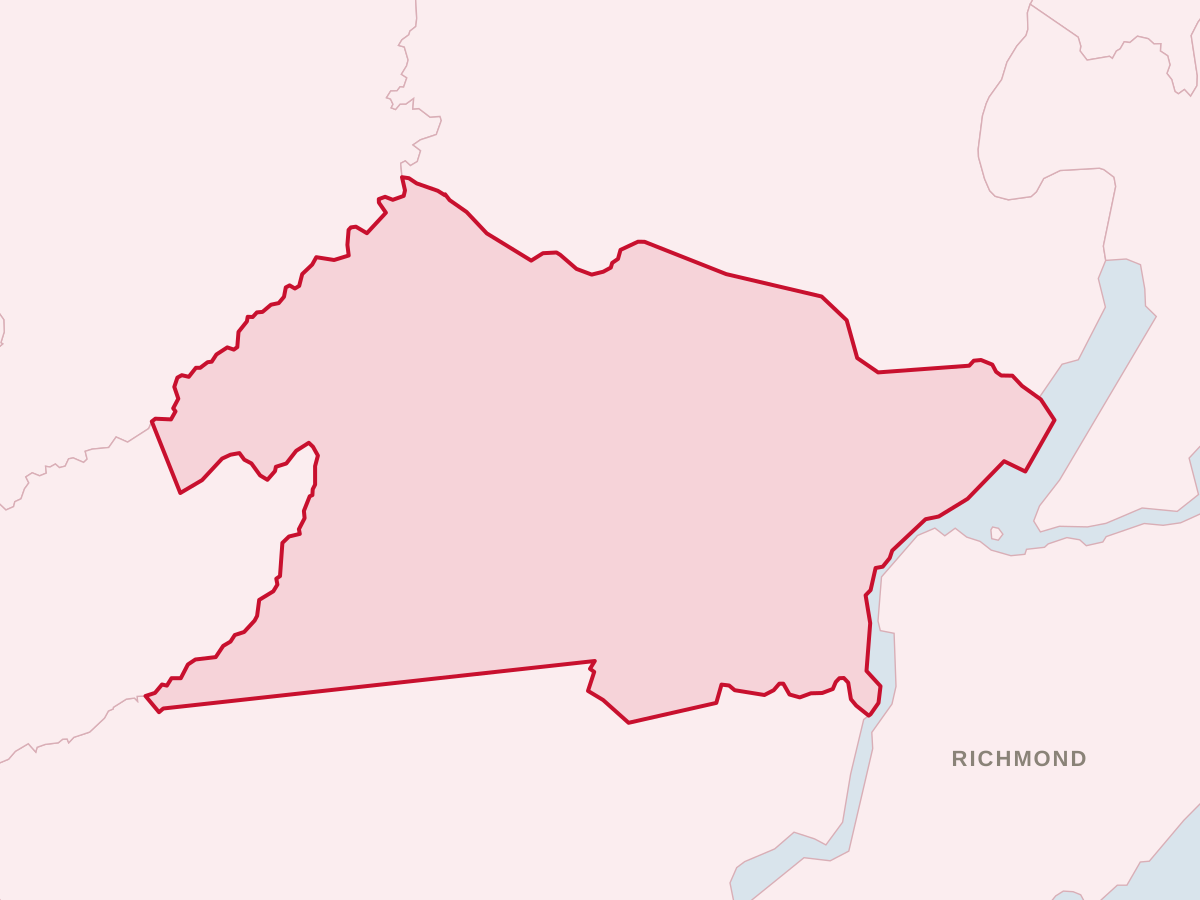
Much of Union County is flat and low-lying, down to sea level along the Arthur Kill. Only the northwestern corner rises, where the Watchung Mountains cross the county and Berkeley Heights reaches about 560 feet. Average January lows in Elizabeth are around 24 degrees, cold enough for freeze-thaw cycles to work into brick and mortar every winter. A cracked crown or a missing cap is usually where that damage starts.
Inland temperatures run a little cooler. In Berkeley Heights, average monthly temperatures range from about 29 degrees in January to about 75 in July, and the county's climate shifts from humid continental in the west to humid subtropical in the east.
Preservation boards and building departments
Several Union County towns have their own preservation bodies. Cranford's historic sites are overseen by its Historic Preservation Advisory Board, and Plainfield's Van Wyck Brooks district has been city-designated since 1982. Westfield has the Stoneleigh Park district and Summit a downtown district. If your home is locally designated, exterior chimney work can need approval from that body; otherwise, check with your town's building department.