
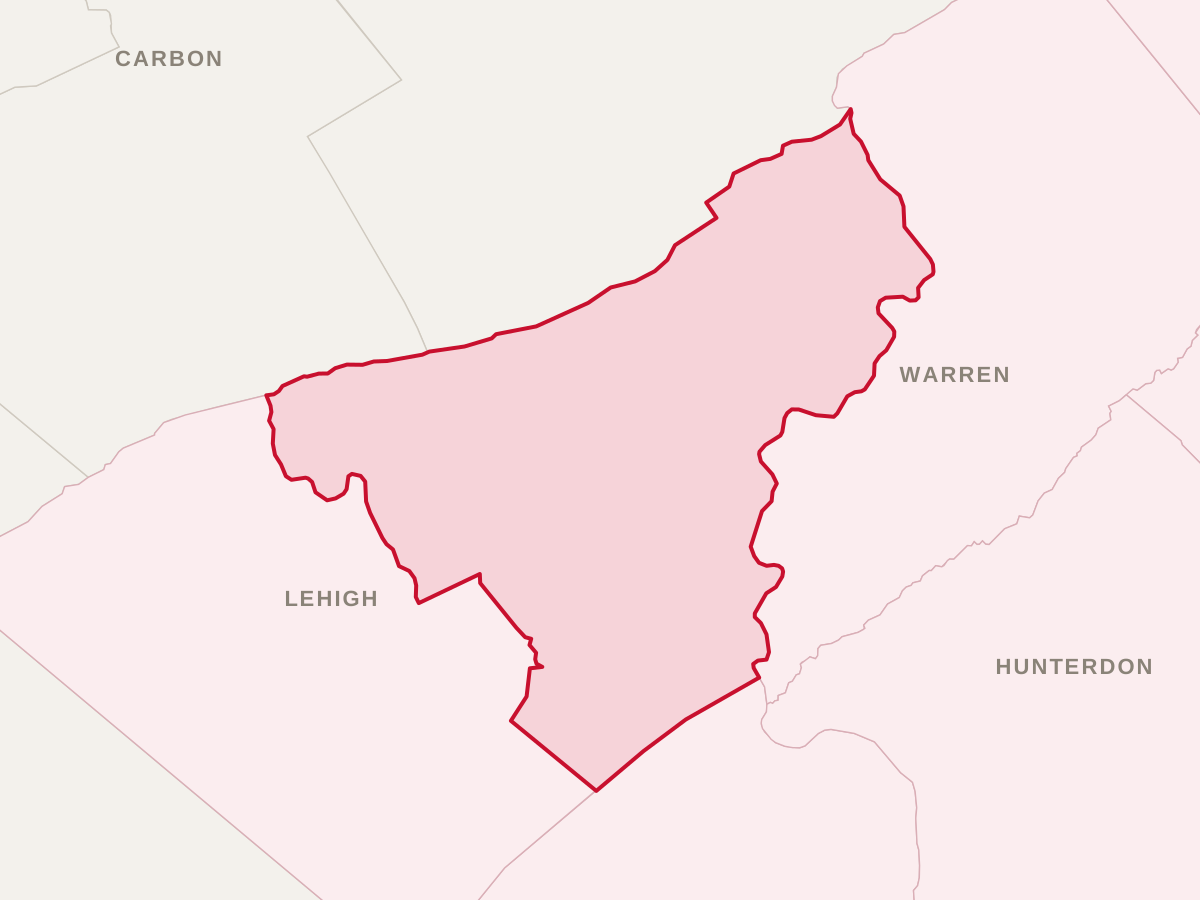
 Northampton County
Local guide
Chimney Care in Northampton County, PA: What Homeowners Should Know
Northampton County is one of the colder parts of the region, with January averages below freezing in Bethlehem and Wind Gap. Its houses run from Moravian-era stone in Bethlehem and Nazareth to trolley suburbs in Palmer and newer homes in Forks. Keep the crown and cap sound, use compatible mortar on old masonry and inspect yearly.
Colder than its neighbors to the south
Most of Northampton County has a hot-summer humid continental climate, and the northern tier near Kittatinny Ridge is colder still. Average temperatures in downtown Bethlehem run from 29.1 degrees in January to 74.1 in July, and in Wind Gap from 27.0 to 71.7. Easton usually gets about 30 inches of snow a winter, and spring and fall bring stronger winds. The hardiness zone is 7a for most of the county and 6b in the northern tier.
A month that averages below freezing is hard on masonry. Snow piles against the chimney on the roof, melts in the afternoon sun and freezes again at night, and each cycle works water deeper into the joints.
Moravian towns, river cities and stone farmhouses
German Moravian settlers founded Nazareth in 1740, and Bethlehem keeps the Historic Moravian Bethlehem District, with the Sun Inn of 1758 and the Moravian Book Shop of 1756 on Main Street. Each of Bethlehem's four sections has areas on the National Register. Easton, the county seat where the Lehigh River meets the Delaware, is divided into Downtown, College Hill, the South Side and the West Ward, with a Downtown Historic District around Centre Square.
Outside the cities, Palmer Township has many stone houses from the late 1700s and early 1800s, built near water and along the roads, and its population doubled in the 1920s as subdivisions grew along the trolley lines. Hellertown, founded in 1742, became an industrial town after the late 1840s, and the North Pennsylvania Railroad reached it in 1856. Forks Township farmed into the mid-1900s and has been mostly a residential suburb of Easton since the 1990s. Lower Saucon has large estates built by steel executives and the Ehrhart's Mill Historic District, and Nazareth saw a housing boom in the late 1900s after new highways such as Route 33.
What old stone and newer homes each need
On 18th and early 19th century stone houses, chimney mortar was typically lime-based and softer than the stone around it. That is by design: the mortar is meant to wear before the stone does. Repointing should use a compatible mix so the joints keep doing that job. Chimneys from the trolley-suburb era often have clay liners that are now a century old and may have cracked or shifted.
Newer houses in Forks and Nazareth tend to show problems at the top first: rusted caps, cracked crowns and flashing that has aged with the roof shingles. At the other end of the scale, Bethlehem's Moravian buildings from the 1750s show how long masonry can last when it is kept dry.
- Inspect chimneys, fireplaces and vents at least once a year, as NFPA 211 calls for
- Clean the flue when creosote or soot builds up
- After any chimney fire, have it inspected before the next use
- Fix crown cracks before the first hard freeze
Older flues and newer heating
In Easton, Bethlehem and the boroughs, many older houses still send boiler or furnace exhaust up a masonry chimney, often through a clay liner put in when the house was new. Over decades, heat, moisture and the acids in combustion gases loosen joints and crack tiles. When a heating system is replaced, the old flue may be far larger than the new appliance needs, which slows the draft and lets water vapor condense inside. A stainless steel liner sized to the appliance is a common fix, and the chimney deserves a check whenever heating equipment changes.
Working on historic houses here
Bethlehem, Easton and Nazareth all have historic districts, and many single buildings, such as Palmer's Seipsville Inn from 1760, are on the National Register. If your home is a designated landmark or sits in a historic district, ask the local historic preservation body whether exterior chimney work needs approval. Otherwise, check with your city, borough or township building department. Pro 1 Chimney is family-owned, with a licensed and insured crew of our own.


