
 Bucks County
Local guide
Chimney Care in Bucks County, PA: What Local Homeowners Should Know
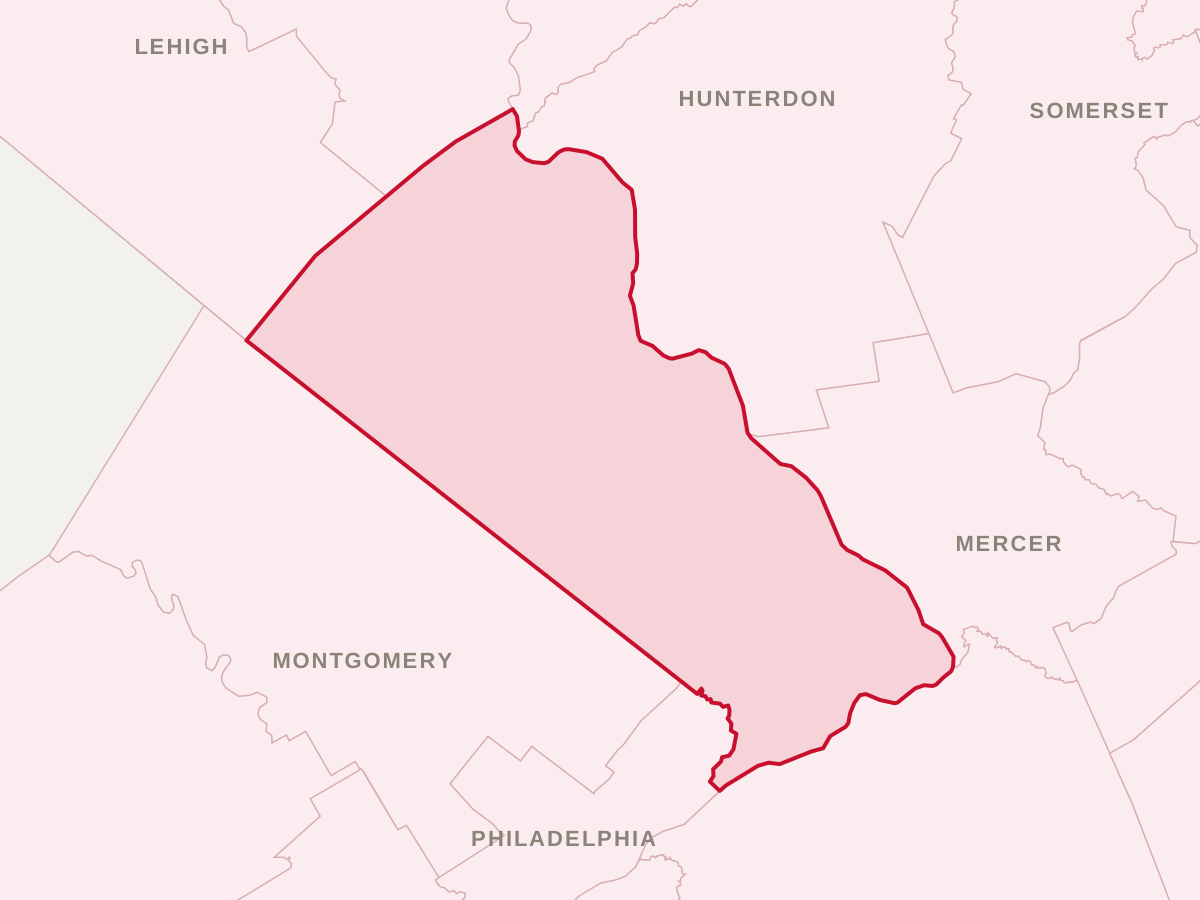
Bucks County runs from flat, busy Lower Bucks near Philadelphia to the hills around Doylestown and the river towns. Chimneys here span three centuries, from colonial Bristol to 1950s Levittown and 1990s Lower Makefield. Cold winters, ice storms and nor'easters test every crown and cap, so plan a yearly inspection and check historic district rules before visible work.
Lower Bucks: river towns and the 1950s
The southern third of the county, between Philadelphia and Trenton, sits on the flat Atlantic Coastal Plain and is the most populated and industrial part of Bucks. Bristol, settled in 1681, still has many historic and restored houses along Radcliffe and Mill streets, and its Harriman section grew from housing built for the World War I shipyards; most of it is still lived in today. Bensalem holds Andalusia, a National Historic Landmark, and Growden Mansion, home of Joseph Galloway, whom Benjamin Franklin often visited.
Levittown changed the area almost overnight. Between 1952 and 1958 its builder finished 17,311 homes on curving roads, using only six house models, such as the Levittowner, the Rancher and the Country Clubber. Warminster, by contrast, still had no residential subdivisions in 1955, only the Lacey Park housing complex off County Line Road.
Central and upper Bucks: county seat, canal towns and newer tracts
Doylestown, the county seat, added about 550 homes in the 1950s and more than 1,600 in the 1960s and 1970s, around an older core that lies in the Doylestown Historic District. The buildings Henry Chapman Mercer put up in the early 1900s, Fonthill, the Mercer Museum and the tile works, are known as the Mercer Mile. Along the Delaware, New Hope grew around mills Benjamin Parry rebuilt after a fire in 1790, and its center falls in the New Hope Village District. Newtown served as county seat from 1726 until 1813, and Warrington Township dates from 1734, its old village at the corner of Bristol and Easton roads. Quakertown has its own historic district, and Lower Makefield, which grew sharply in a 1990s housing boom, still includes the Dolington Village Historic District.
Ice storms, snow and July downpours
Doylestown has a hot-summer humid continental climate, with at least one month averaging at or below freezing. Its typical coldest night of the year falls just below zero, and the area gets about 30 to 36 inches of snow between November and April. Ice storms and snowstorms of a foot or more arrive every few years, mostly during nor'easters from December through February. July is the wettest month, with the peak of thunderstorm season.
Each of those threatens a chimney in its own way. Ice and snow sit on crowns and in the gap behind the chimney on the roof, then melt into any crack. Summer storms drive water sideways into brick and mortar joints. Chimneys on hilltops and open farmland also take the worst of winter wind, and in extreme cold, wind chills can fall below minus 12 degrees.
Matching the care to the house
The NFPA 211 standard calls for a yearly inspection of chimneys, fireplaces and vents, with cleaning when deposits build up.
Colonial and early 19th century houses in Bristol and New Hope may have several flues in one stack, some long out of use. Unused flues still take in rain and can shelter animals, so they should be capped or sealed and checked along with the rest.
- Colonial and 19th century stone or brick: soft lime mortar should be repointed with a compatible mix, not hard modern mortar
- 1950s and 1960s homes: original clay liners and crowns are now decades old and worth a close look
- 1990s and newer homes: if there is a factory-built fireplace with a metal chimney, check its cap, chase cover and pipe sections
- Every home: a cap on each flue and tight flashing at the roof
Approvals in Bucks County's historic towns
Doylestown, New Hope, Bristol and Quakertown all have historic districts. If your home sits in one, or is a designated landmark, ask the local historic preservation body whether chimney work you can see from the street needs approval. Elsewhere in the county, your borough or township building department can say what a repair needs. Pro 1 Chimney is a family-owned company with its own licensed and insured crew and 15+ years in the trade.


