 Chester County
Local guide
Chimney Care in Chester County, PA: What Local Homeowners Should Know
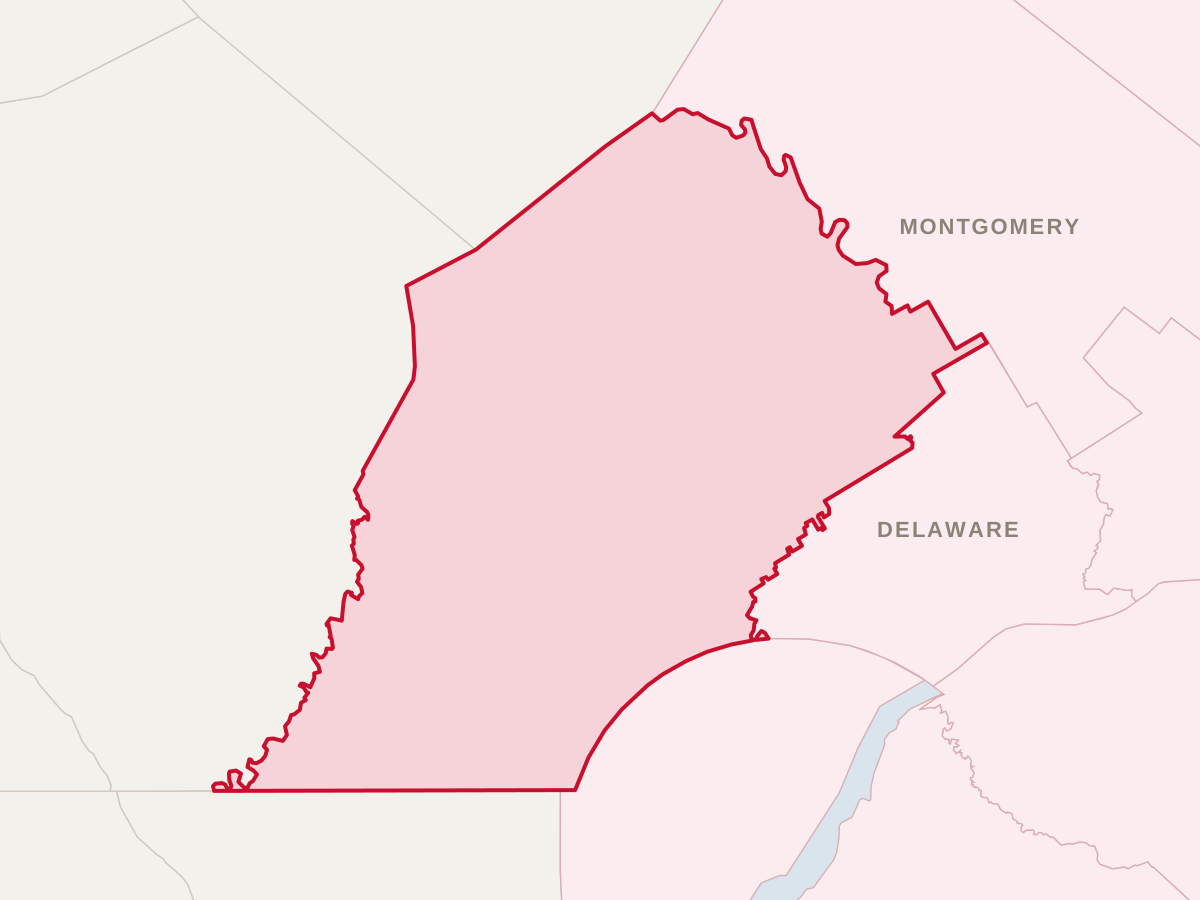
Chester County has colonial log and stone houses in the Great Valley, 19th century boroughs along Lancaster Avenue and large suburbs built in the last half-century. Winters with average lows near 22 degrees and nearly 28 inches of snow test every crown. Old masonry needs compatible mortar, newer homes need sound caps and liners, and all need a yearly inspection.
Three centuries along the road west
Chester County was one of the three counties William Penn created in 1682, and its oldest towns grew along the first road to the west, which became the Lincoln Highway and is still called Lancaster Avenue in many towns. Railroads followed the same route, and the county's developed areas still stretch along those lines. Downingtown, settled in 1716 and first called Milltown for its creek mills, keeps a log house from about 1700 and the East Lancaster Avenue Historic District. Tredyffrin, founded by Welsh settlers in 1707, has seven colonial log houses and cabins, and limestone kilns were once common in the Great Valley.
The boroughs have their own landmarks. West Chester, the county seat, centers on Thomas U. Walter's Classical Revival courthouse from the 1840s, and its downtown is a historic district. The Phoenixville Historic District, created in 1987, is the largest National Register site in the county. Coatesville grew along the old turnpike from the late 1700s and has its own historic district. Kennett Square, incorporated in the 1850s, takes the Square in its name from William Penn's original one-square-mile grant, and Malvern became a borough in 1889. Then came suburban waves: West Goshen grew fastest in the 1960s and 1970s, and West Whiteland, home to Exton, went from about 7,900 people in 1973 to more than 16,000 by 2000.
Piedmont winters
The county's rolling Piedmont hills have a hot-summer humid continental climate, apart from some southern lowlands and the Schuylkill valley. In West Chester, the coldest month averages highs near 39 degrees and lows near 22, so water in masonry can freeze at night and thaw by afternoon. Snowfall averages about 27.7 inches a year, and precipitation about 46.7 inches, enough to keep brick and stone wet for long stretches. West Chester's record low is 16 below zero.
Caring for old stone and log-era masonry
Colonial and early 19th century chimneys were typically laid in soft lime mortar, and fieldstone chimneys in particular depend on that mortar to stay tight. Repointing with a hard modern mix can trap moisture and damage the stone or brick around it, so matching the old material matters. Large old cooking fireplaces were built for open fires, and many have since been fitted with dampers, glass doors or stoves.
In the newer subdivisions around Exton, Malvern and West Goshen, the usual issues are different: cracked crowns, flashing that has aged with the roof, and caps that have rusted or blown loose.
- Look for open joints, loose stones or shifted bricks near the top of old chimneys
- Where an old chimney passes through a later addition or a newer roof, check the flashing closely
- Check the crown and cap on newer homes each year
- Watch for water stains on ceilings or walls around the chimney
Stoves and inserts in big old fireplaces
A wood or pellet stove, or an insert set into a wide colonial firebox, can make an old fireplace far more useful, but it changes how the chimney works. The flue of an old fireplace is usually much larger than a stove needs, and a stove venting into it can draft poorly and build creosote quickly. A properly sized liner running the full height of the chimney is the usual answer. If you use your fireplace or stove regularly, plan on a cleaning whenever deposits build up, and burn seasoned wood to keep those deposits down.
Historic districts and local approval
With districts in West Chester, Phoenixville, Downingtown and Coatesville, and sites such as the Paoli Battlefield in Malvern, many older houses sit in historic districts. If yours does, or is a designated landmark, ask the local historic preservation body before changing a chimney's visible stone, brick or cap. For other homes, check with your borough or township building department. Pro 1 Chimney is family-owned, and our own licensed and insured crew does the work.