
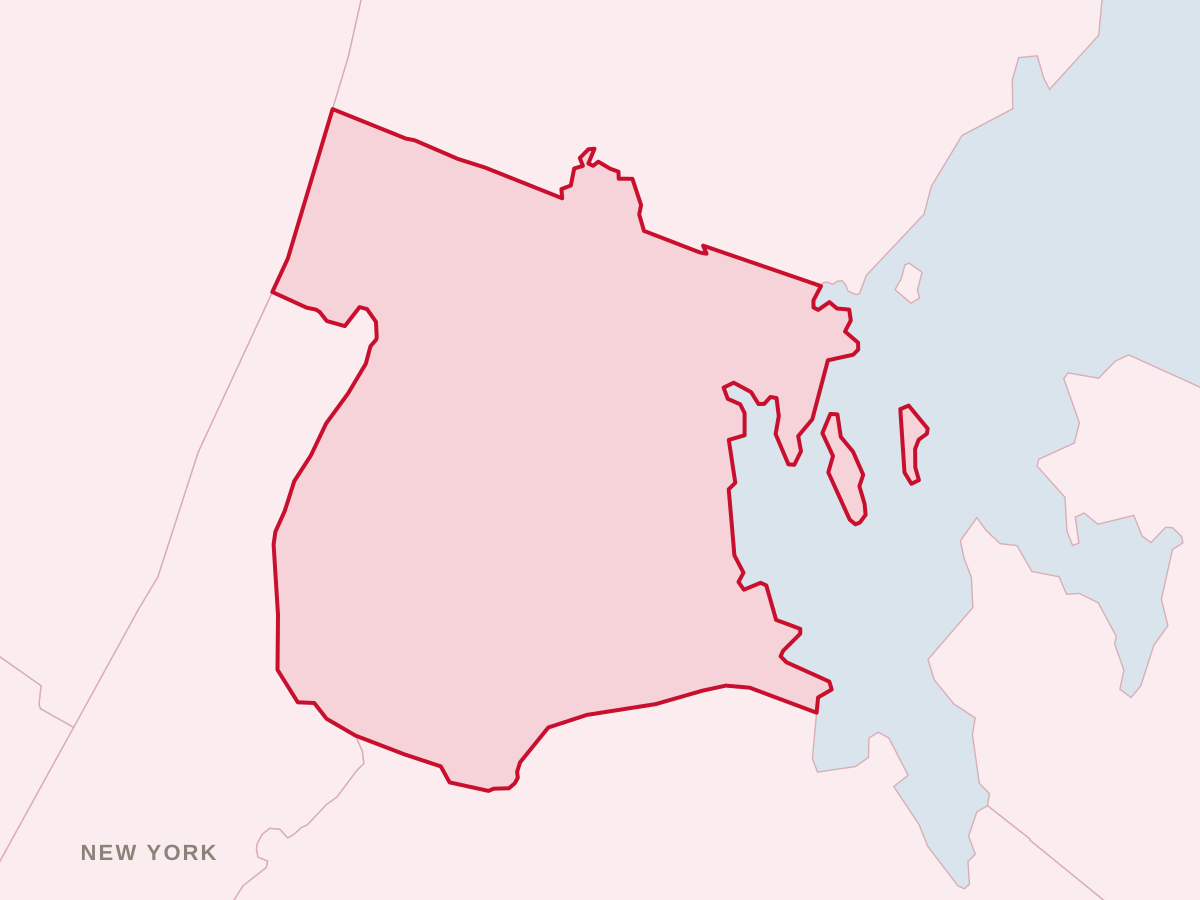
 The Bronx
Local guide
Chimney Care in The Bronx, NY: What Local Homeowners Should Know
The Bronx still leans on heating oil more than most of the city, and a third of its housing dates from before 1940. Riverdale and Fieldston have large Tudor and Georgian homes, while the East Bronx shore has bungalows and Victorians exposed to wind off the water. Annual flue checks and attention to caps and crowns are the core of chimney care here.
An oil-heated borough
Recent Census estimates show fuel oil heating about 17% of occupied homes in the Bronx, a larger share than in Brooklyn, Queens or Staten Island, with utility gas at about 54%. For a chimney, oil is a demanding fuel. It leaves soot and scale in the flue, and the sulfur in its exhaust can form acidic deposits that slowly attack mortar and clay liners. A flue that has served an oil boiler for decades deserves a close look every year, and cleaning whenever deposits build up.
When owners convert from oil to gas or install a higher-efficiency boiler, the old masonry flue is often too large for the new appliance. Cooler exhaust then condenses inside, and a properly sized liner is the usual remedy.
Apartment buildings carry the same issue on a bigger scale. Riverdale's 1950s six-story brick buildings and its 1960s towers vent central boilers through tall, exposed chimneys, and owners usually schedule that work outside the heating season.
Mansions, row homes and shore bungalows
About a third of the borough's housing units were built in 1939 or earlier, per recent Census estimates. In the northwest, Riverdale's early housing was large early-1900s mansions, mostly Georgian Revival and Tudor Revival, and Fieldston's 1920s houses were often Tudor, with local architect Dwight James Baum designing 62 of them. Riverdale also has six-story brick apartment buildings from the 1950s.
The East Bronx feels different. In the 1920s most large Throggs Neck estates were cut into row homes and tight bungalow lots, and Silver Beach Gardens and Edgewater Park grew from summer bungalow colonies into year-round neighborhoods. Morris Park's one- and two-family homes sit on the old racecourse land divided after 1910, and Pelham Gardens is mostly single-family homes, many with basement apartments. City Island keeps old Victorian mansions with tall spires and gables, mostly on the Long Island Sound side.
Kingsbridge mixes detached, semi-detached and attached homes with apartment buildings on slopes steep enough for step streets of up to 160 stairs. Wakefield was part of Westchester County until 1895 and grew modestly after the railroad arrived around 1840. Schuylerville, tucked between the Bruckner Expressway and the Hutchinson River Parkway, is mostly single-family and two-family houses.
Wind and water on the East Bronx shore
As a coastal city, New York is prone to strong winds, and the neighborhoods on Eastchester Bay and the Sound feel them first. Salt air corrodes plain steel caps and fasteners faster than inland air does, so stainless steel or copper caps hold up better near the water. Hurricane Sandy struck the city in October 2012, and after any major storm it is worth checking that caps, crowns and flashing are still sound.
Inland, the issue is the familiar freeze-thaw cycle: wet brick freezes, expands and spalls, and a cracked crown lets water into the stack.
A simple Bronx chimney routine
Whether the house is a Fieldston Tudor or a Throggs Neck bungalow, the routine is similar:
In houses with a basement apartment, the boiler and its chimney connection often sit close to living space. That makes a clear, sound flue and working carbon monoxide alarms especially important.
- Annual inspection of chimneys, fireplaces and vents, the interval NFPA 211 calls for.
- Cleaning when soot or creosote builds up, which happens faster with oil heat.
- A check of any bungalow chimney that was added or altered when a summer cottage became a year-round home.
- An inspection after a chimney fire or storm damage, before the system goes back into use.
Fieldston, Riverdale and other districts
Most of Fieldston lies in a historic district the Landmarks Preservation Commission designated in 2006, and Riverdale has its own historic district as well. On designated properties, exterior chimney work can need the commission's approval. For other homes, check with the city's Department of Buildings about what a larger masonry repair requires.


