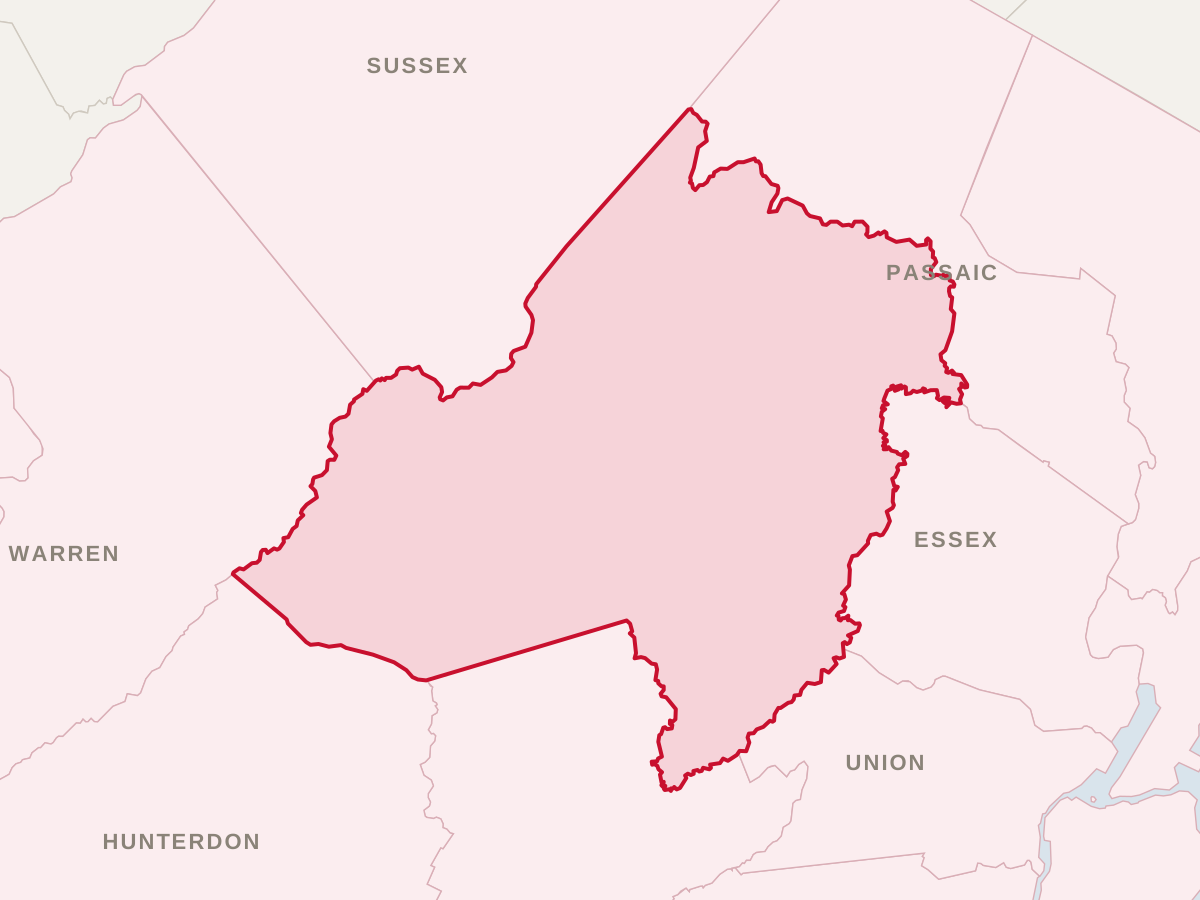
 Morris County
Local guide
Chimney Care in Morris County, NJ: What Local Homeowners Should Know
Morris County mixes prewar brick in Dover, Madison and Morristown with 1960s and 1970s suburbs and century-old lake colonies. January nights in Morristown average well below freezing, so wet masonry cracks and spalls. Gas heats most homes, but fuel oil still runs many boilers in the western townships. Have the chimney checked yearly and keep the crown and cap sound.
Iron towns, lake colonies and postwar streets
Morris County's housing reads like a timeline of its industries. Dover, on the Rockaway River, grew around iron works, rolling mills, stove and furnace works and silk mills, and about 31% of its housing units date from before 1940. Its Blackwell Street Historic District holds 52 contributing buildings. Madison, once called the Rose City for its rose growers, has a similar share of prewar homes, about 21%, and the Luke Miller House on Ridgedale Avenue is thought to date from around 1730.
Across the county, Census estimates for 2024 place about 14% of homes before 1940, and the 1960s were the busiest single building decade at roughly 17%. Parsippany-Troy Hills fits that pattern closely, with its largest share of housing, about 29%, built in the 1960s. Montville, Washington Township and Mount Olive lean newer, with median build years in the late 1970s.
Then there are the lakes. Denville's four main membership lake communities, Cedar Lake, Indian Lake, Rock Ridge and Lake Arrowhead, were developed about a century ago as summer colonies, and Rockaway Township takes in Lake Telemark and White Meadow Lake. A house that started life as a summer place may have a chimney built for occasional fires, so it deserves a careful look before it carries a full winter of use.
How Morris County homes are heated
Utility gas is the main fuel, heating about 73% of occupied homes countywide by Census estimates for 2024, with fuel oil at about 12%. Oil matters more as you head west. It heats about 30% of homes in Washington Township, 28% in Roxbury, 24% in Rockaway Township and 21% in Denville, while gas heats close to nine in ten homes in Madison and Hanover.
Older, non-condensing boilers and furnaces of either fuel send their exhaust up the chimney. Oil leaves soot and scale in the flue that has to be cleaned out. Gas exhaust carries a lot of water vapor, which can condense inside a cold, oversized masonry flue and slowly eat at old mortar and clay tile. When a boiler is replaced, the flue size deserves a second look, because a chimney sized for the old unit may be too large for the new one.
Winters in the hills
The county climbs from the Passaic River valley in the east to ridges above 1,300 feet in the west. In Morristown, average January lows run from about 18 to 23 degrees Fahrenheit, and the record low there is 26 below zero, set in February 1934. Average monthly precipitation ranges from about 3.1 inches in February to 5.3 inches in September.
That mix of wet months and nights below freezing is hard on brick. Water that soaks into porous brick or a cracked joint freezes, expands and pushes the face of the masonry apart, and every winter repeats the cycle. The crown at the very top takes the most weather, so small cracks there tend to grow into leaks that show up as stains in the attic or on a ceiling near the fireplace.
What this means for your chimney
Most problems here trace back to water, fuel deposits or a flue that no longer matches the appliance. A short list covers the usual checks:
- In prewar homes in Dover, Madison and Morristown, find out whether the flue has a liner and what shape it is in; many early chimneys were built with bare brick or with clay tiles that crack over time.
- On oil-heated homes in the western townships, clean the flue when deposits build up and look at it again whenever the boiler is serviced or replaced.
- If a furnace upgrade left the water heater venting alone into a big masonry chimney, ask whether the flue should be resized.
- At lake houses now used more in winter than they once were, have the fireplace and chimney inspected before the first steady season of fires.
- Keep a screened cap on top to stop rain, leaves and animals, which are common in wooded neighborhoods.
Historic districts and approvals
Morris County has many National Register districts, among them the Morristown District, Mount Tabor in Parsippany-Troy Hills, Ledgewood in Roxbury, Combs Hollow in Randolph and, in Washington Township, German Valley, Fairmount, Middle Valley, Pottersville Village and Schooley's Mountain. If a home is landmarked or inside a district the town regulates, rebuilding a chimney top or changing its look can need approval from the local historic preservation body. For everything else, check with your town's building department before work starts.