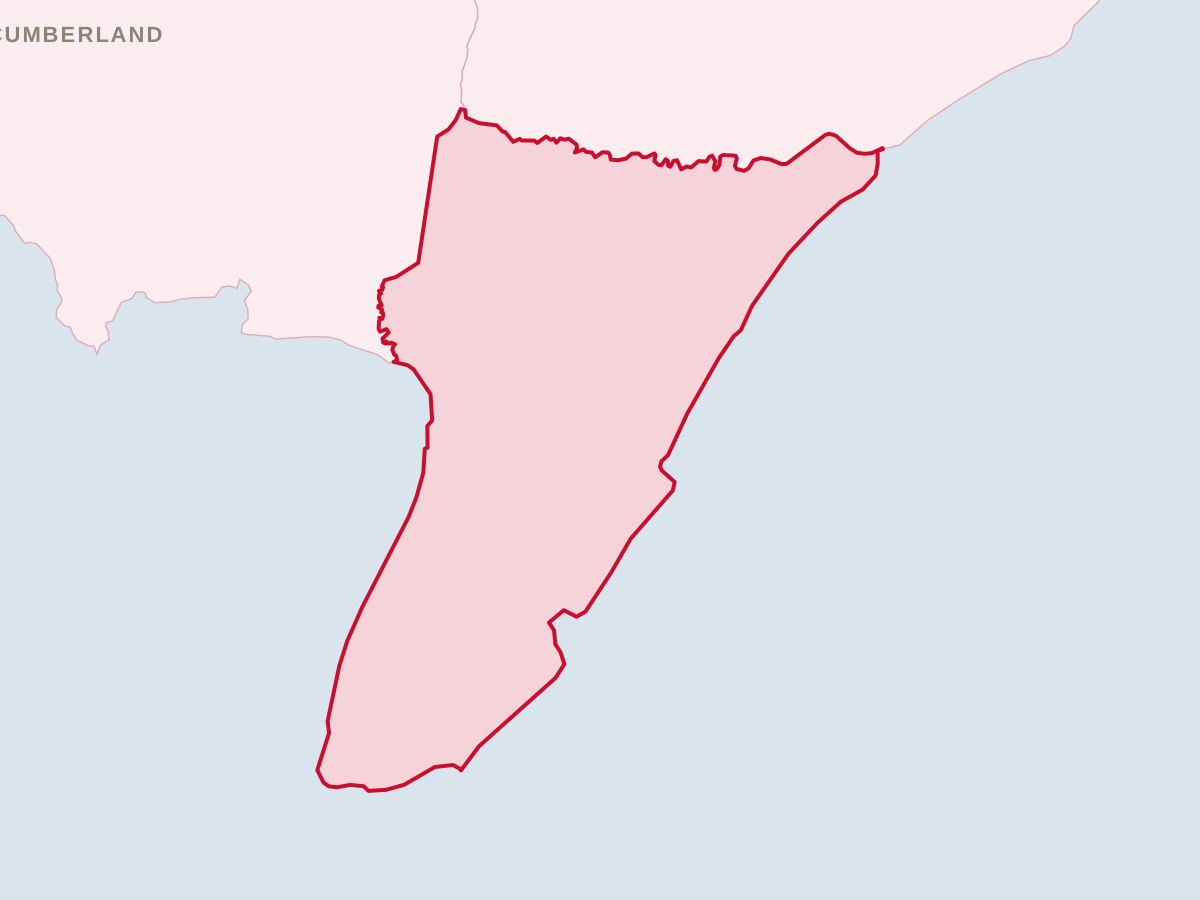
 Cape May County
Local guide
Chimney Care in Cape May County, NJ: What Homeowners Should Know
Cape May County holds one of the largest groups of Victorian houses in the country, plus shore homes on five barrier islands and newer houses on the mainland. Wind blows here all year and storm tides keep setting records, so caps, crowns and old mortar need regular attention, and historic houses may need approval before visible repairs.
A county of Victorian rooflines and shore cottages
After an 1878 fire destroyed 30 blocks of Cape May's center, the town rebuilt almost entirely in Victorian styles. The result is the second-largest collection of Victorian houses in the United States after San Francisco, and in 1976 the city, apart from the Coast Guard Training Center, was named a National Historic Landmark as the Cape May Historic District. The 1879 Emlen Physick Estate is one of its landmark properties.
Victorian houses often have tall, narrow chimneys with decorative brickwork at the top and several flues, some first built for coal grates. That brick and its lime mortar are softer than modern materials, so repairs need matching mortar rather than hard modern mixes, which can crack old brick.
Other towns have their own history. Ocean City has the Ocean City Residential Historic District, Wildwood keeps more than 200 Doo-Wop era motels in the Wildwoods Shore Resort Historic District, and Upper Township lists the Marshallville Historic District. Lower Township's roots reach back to Town Bank, a whaling village Dutch explorers founded around 1640, and Middle Township has the Cresse-Holmes House Historic District in Cape May Court House. Since the 1970s, building has shifted to the mainland because building on the barrier islands costs so much, with growth along Route 9 in Rio Grande, Cape May Court House and Marmora.
Approval comes first on landmark houses
Because nearly the whole city of Cape May is a National Historic Landmark district, and several other towns have districts of their own, many chimney jobs here start with a question about approval. If your house is in the Cape May Historic District or another designated district, ask the local historic preservation body whether rebuilding a chimney top, changing a cap or repointing visible brick needs its sign-off. For houses outside those areas, check with your town's building department. We can document the chimney's condition so you have something clear to show them.
Wind that never quite stops
The county's climate is moderate for New Jersey, often 5 to 10 degrees warmer in winter than surrounding areas, and it is windy all year. Cape May Court House still averages a January low of about 22 degrees, and the area gets 10 to 15 inches of snow in a typical year, so freeze-thaw cycles do reach the brick.
The bigger threat is storms. Hurricane Gloria brought a 101 mile an hour gust to Ocean City in 1985. Sandy caused major or severe damage to 29 percent of Ocean City's houses in 2012, and in January 2016 Winter Storm Jonas set a record tide of 9.0 feet at the Cape May to Lewes ferry terminal.
Heating season in a summer county
The completion of the Garden State Parkway in 1955 brought hundreds of thousands of visitors and a larger year-round population, and the people who stay through winter run their furnaces and boilers for months. In many houses the heating system vents into a chimney or flue of its own, separate from the fireplace. That flue gets less attention than the fireplace, yet it works every day of the heating season. Check that its liner is intact, that the connector pipe from the appliance is sound and that nothing nested in it over the summer.
Keeping a shore chimney sound
Many houses here sit closed through the off-season while the summer population tops 750,000. A chimney nobody watches for months can hide a nest, a loose cap or a fresh crack in the crown. Plan the yearly check for spring or early fall, before the house fills up or closes for the season.
- Check caps and chase covers for rust and loose fasteners each spring
- Look at the crown and the top courses of brick, where wind-driven rain hits hardest
- On Victorian chimneys, have soft or missing mortar repointed with a compatible mix
- After a hurricane or major nor'easter, have the chimney inspected before using it, as NFPA 211 advises after any event that may have caused damage