
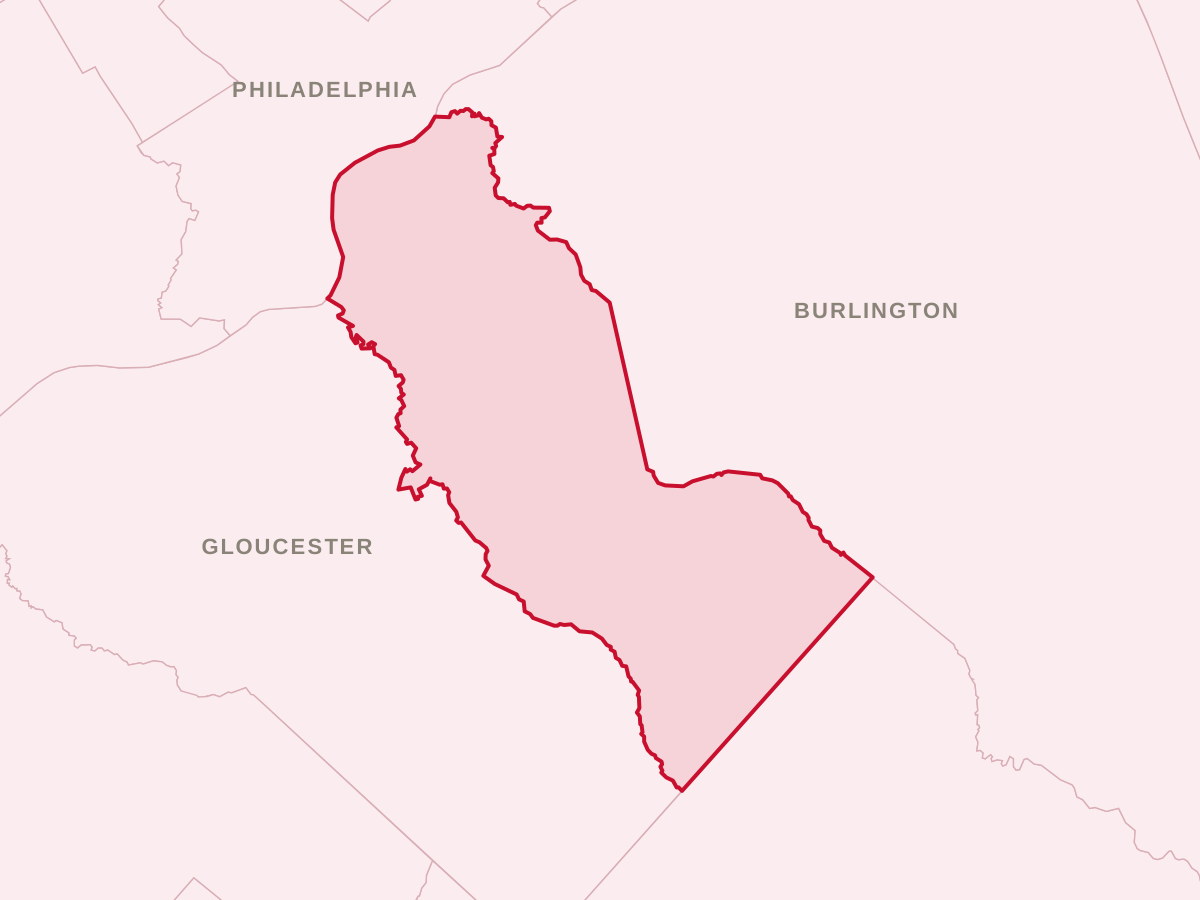
 Camden County
Local guide
Chimney Care in Camden County, NJ: What Homeowners Should Know
Camden County ranges from Philadelphia-style rowhouses in Camden to colonial Haddonfield, historic Collingswood and the postwar suburbs of Cherry Hill and Voorhees. About 17% of homes predate 1940. Gas heats most houses, so many chimneys vent a furnace. Winters are milder than in North Jersey but still freeze. Inspect yearly and watch for shared-wall issues in rowhouses.
Rowhouses, Quaker towns and the postwar boom
Rowhouses are the most common type of home in Camden, much like across the river in Philadelphia. The city also has Fairview, built as Yorkship Village, the first federally funded planned community for working-class residents in the United States, along with the Cooper Grant, Cooper Street and South Camden historic districts.
Haddonfield's first settler, in 1682, was Francis Collins, an English Quaker and bricklayer, and the Haddonfield Historic District was listed on the National Register in 1982. In Collingswood, the Stokes-Lees mansion on Lees Avenue dates to 1707, making it one of the oldest houses in the county, and both the Collingswood Commercial and Collingswood Residential historic districts were listed in 1990.
Beyond those older towns, the county is largely suburban. Cherry Hill's population and economy boomed after World War II and kept growing until the 1980s, and thousands of homes went up in the Sicklerville section of Winslow during the 1970s. Census estimates for 2024 put about 17% of the county's homes before 1940 and about 18% in the 1960s, the busiest decade.
Chimney care by house type
Each of those housing types brings its own chimney questions.
- Rowhouses: chimneys are often built into or beside the walls shared with neighbors, so a crack or leak can affect the house next door, and work at the top may involve more than one roof.
- Colonial and 19th-century homes in Haddonfield and Collingswood: soft old brick needs a matching mortar, and wide fireplaces should be checked for a proper liner before regular use.
- Postwar houses in Cherry Hill and similar suburbs: clay tile liners from that period can crack, and the chimney often carries furnace and water heater exhaust.
- Newer homes with factory-built fireplaces: units with metal flues need the cap, chase cover and flue sections inspected, since rust and loose joints are common failures.
What heats Camden County homes
Utility gas heats about 77% of occupied homes, by Census estimates for 2024, with electricity at about 17% and fuel oil at about 4%. That means most masonry chimneys in use here are venting a gas furnace, boiler or water heater, often alongside a fireplace flue that sees fires only now and then.
Gas exhaust carries water vapor along with carbon dioxide, and when it cools inside an old flue the moisture condenses on the walls. Over years it washes mortar out of the joints and breaks down clay tiles, sometimes leaving a pile of debris at the base of the flue. If an inspection finds that, a new liner sized to the appliance is the common fix.
Flat land, wet weather and freezing nights
The county sits on a flat, low coastal and alluvial plain, from sea level on the Delaware River to about 219 feet near the Burlington County line. It has a humid subtropical climate. In Camden, average January lows are about 26 degrees Fahrenheit, and the record low there is 11 below zero, from February 1934. Average monthly precipitation ranges from about 2.75 inches in February to 4.35 inches in July.
Winters here are milder than in the northern counties, but nights below freezing still come every year, and that is enough for freeze-thaw damage when brick and crowns are wet. The county's flat land and older stormwater systems also leave it open to flooding and extreme weather, so homes with chimney bases in damp basements deserve a look at the masonry and cleanout.
Approvals in historic towns
Camden County's National Register districts include Haddonfield, the two Collingswood districts, Cooper River Park, the Blackwood Historic District in Gloucester Township and the Camden districts named above. If your house is landmarked or inside a district the town regulates, changes to a chimney's exterior can need approval from the local historic preservation body. Otherwise, check with your town's building department about permits before work begins.


