
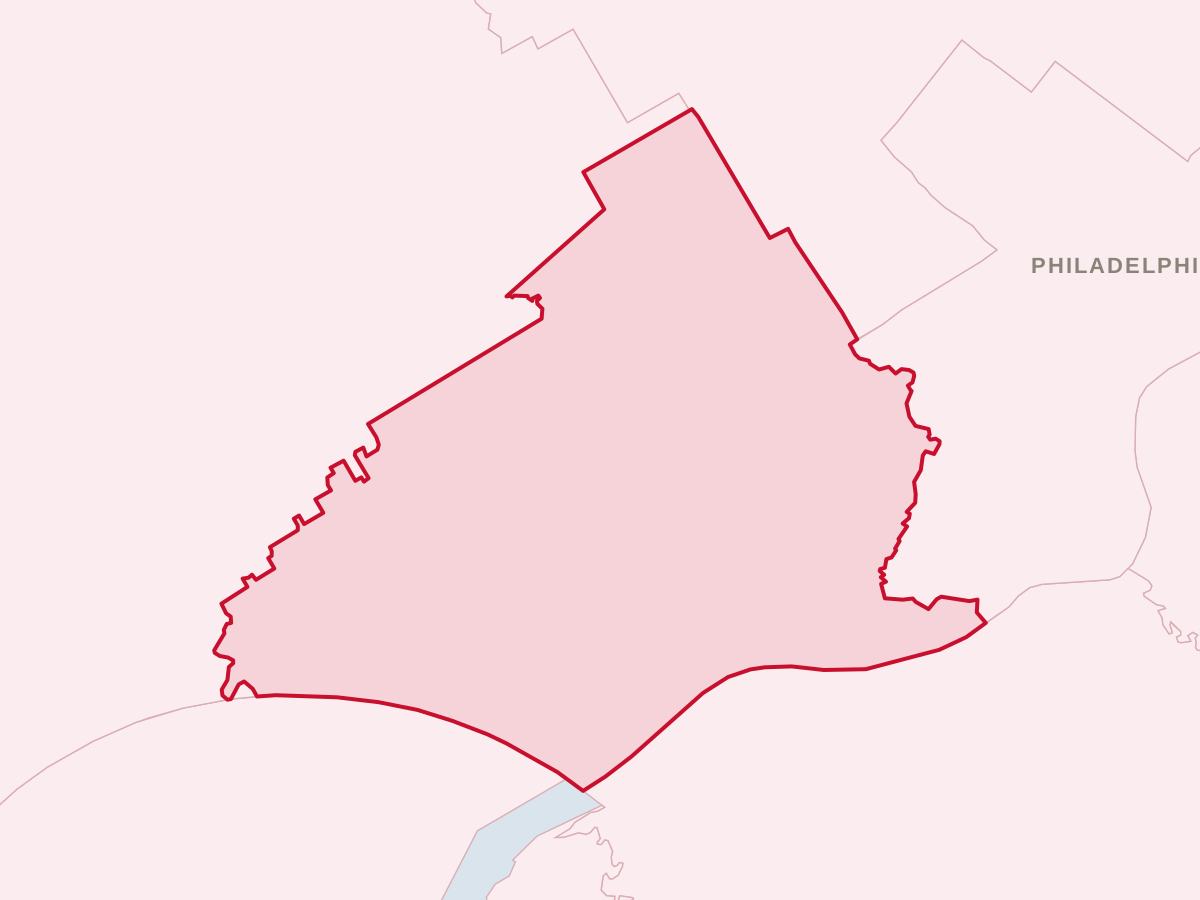
 Delaware County
Local guide
Chimney Care in Delaware County, PA: What Homeowners Should Know
Delaware County is small but packed with houses from every era, from colonial stone to Wayne's early suburbs and the postwar tracts of Haverford and Springfield. Its mild but wet winters still freeze and thaw the masonry. Look after the crown, cap and mortar each year, keep flues inspected, and check historic district rules in towns like Wayne first.
Early suburbs and stone-front tracts
Delco is the third-smallest county in Pennsylvania by area and the fifth-most populous, so a great deal of housing sits in a small space. Wayne, in western Radnor, was one of the first suburban developments in the United States, and it has North Wayne, South Wayne and Downtown Wayne historic districts. Swarthmore's housing dates mostly from the Victorian years through the 1920s, after rail service made it a commuter town. In Media, county seat since 1850, a 1940 state guide noted that nearly all houses had been built after the Civil War.
Haverford Township was mostly farmland until the 1910s; Llanerch and Brookline were planned along the rail lines, but the big tracts, along with Chatham Park, came after World War II. Springfield's Stoney Creek development, started in 1949, has stone-front houses that are similar but not identical. Upper Darby grew up around the El, which reached 69th Street in 1907, and today includes Drexel Hill, Primos, Secane and Stonehurst. In Chester, textile mills lined Chester Creek by the mid-1800s, and the city grew quickly during both world wars as shipyards and factories drew workers. West Chester Pike runs through Marple Township, which includes Broomall, Larchmont and Lawrence Park. Much older buildings survive too, from the Radnor Friends Meetinghouse of 1717 to the Lower Swedish Cabin, thought to date from 1654.
Mild for Pennsylvania, still hard on masonry
Most of the county has a humid subtropical climate, with a humid continental pocket in the higher northern areas, and the hardiness zone reaches 8a in Ridley Township near the Delaware River. Even so, Delco sits between Philadelphia and Wilmington, where January daily averages run about 33.7 and 32.4 degrees, right at the freezing line. Brick and stone that take on water from rain or melting snow freeze and thaw over and over each winter, and every cycle pushes cracks a little wider. Snow and ice that sit on a flat crown for days at a time do the most harm.
The flue that runs all winter
Not every chimney here is for a fireplace. In many older houses the fireplace has been closed off while the chimney keeps venting a gas or oil boiler and a water heater from the basement. That flue works every day of the heating season, and the moisture in gas exhaust can condense on the inside of an old clay or brick flue and wear it from within. Crumbs of tile or mortar at the cleanout door, or a damp patch on the chimney wall in the basement, are early signs. If the heating system was replaced recently, ask whether anyone checked that the flue suits it.
Where approval may be needed
Media's Courthouse Square and Lemon Street districts, Wayne's three districts and older landmarks such as the Grange Estate in Havertown and the Minshall House in Media show how much history is still lived in here. If your house is a designated landmark or sits in a historic district, ask the local historic preservation body before changing a chimney's visible brick, stone or top. For everything else, check with your township or borough building department.
Practical upkeep for Delco homes
Where stone facing meets brick or the roof, mortar joints and flashing are common leak points. Twins and row houses share walls, so a failing flue can affect the house next door. Older chimneys in Media and Swarthmore may still have their original clay liners or no liner at all. Springfield's Stoney Creek houses went up in the five years after 1949, and their crowns and liners deserve a look if they have never been replaced.
- Inspect chimneys, fireplaces and vents once a year, as the NFPA 211 standard calls for
- Clean when deposits build up, from wood or from an oil-fired boiler
- Seal or rebuild cracked crowns before winter
- Have flashing checked where the chimney meets the roof


