 Middlesex County
Local guide
Chimney Care in Middlesex County, NJ: What Homeowners Should Know
Much of Middlesex County was built after World War II, around older centers like New Brunswick, Perth Amboy, Metuchen and Woodbridge. Gas heats about four in five homes, so many masonry chimneys vent a furnace and water heater. Bay storms and winter freezes test crowns and caps. A yearly inspection and a properly sized liner handle most of the risk.
Brick, bayfront Victorians and postwar suburbs
Few places are as tied to brick as this county. Clay deposits in Sayreville fed a brick industry from the early 1800s until 1970, and one Sayreville firm grew into one of the largest brickmakers in the world. Perth Amboy's waterfront has a red brick promenade and many large Victorian homes, some on hills above the bay, along with 18th-century survivors such as the Proprietary House and the Kearny Cottage.
New Brunswick's Livingston Avenue Historic District covers architecture from 1870 to 1929, Metuchen's Main Street was laid out in 1705, and Woodbridge, chartered in 1669, is the oldest original township in the state. Piscataway's East Jersey Old Town Village gathers 16 relocated and rebuilt houses like the farmhouses once common in the area.
Most homes, though, are postwar. East Brunswick became suburban through large-scale home and road building after World War II, and suburban-style building in South Brunswick also started after the war. Census estimates for 2024 put about 15% of the county's homes in the 1950s and another 15% in the 1960s, with only about 10% older than 1940. Monroe Township adds a cluster of senior communities that began with Rossmoor.
What a typical Middlesex chimney needs
A postwar house here usually has one masonry chimney carrying the furnace and water heater exhaust, sometimes with a fireplace flue beside it. Those chimneys are now well past half a century old, and age shows in predictable places:
- Clay tile liners from that era often have cracked or shifted tiles, and the joints between them can open up.
- Mortar near the top of the stack wears out first, where wind and rain hit hardest.
- Fireplaces used only a few times a year still need the damper, smoke chamber and flue checked, since creosote and debris build up even with light use.
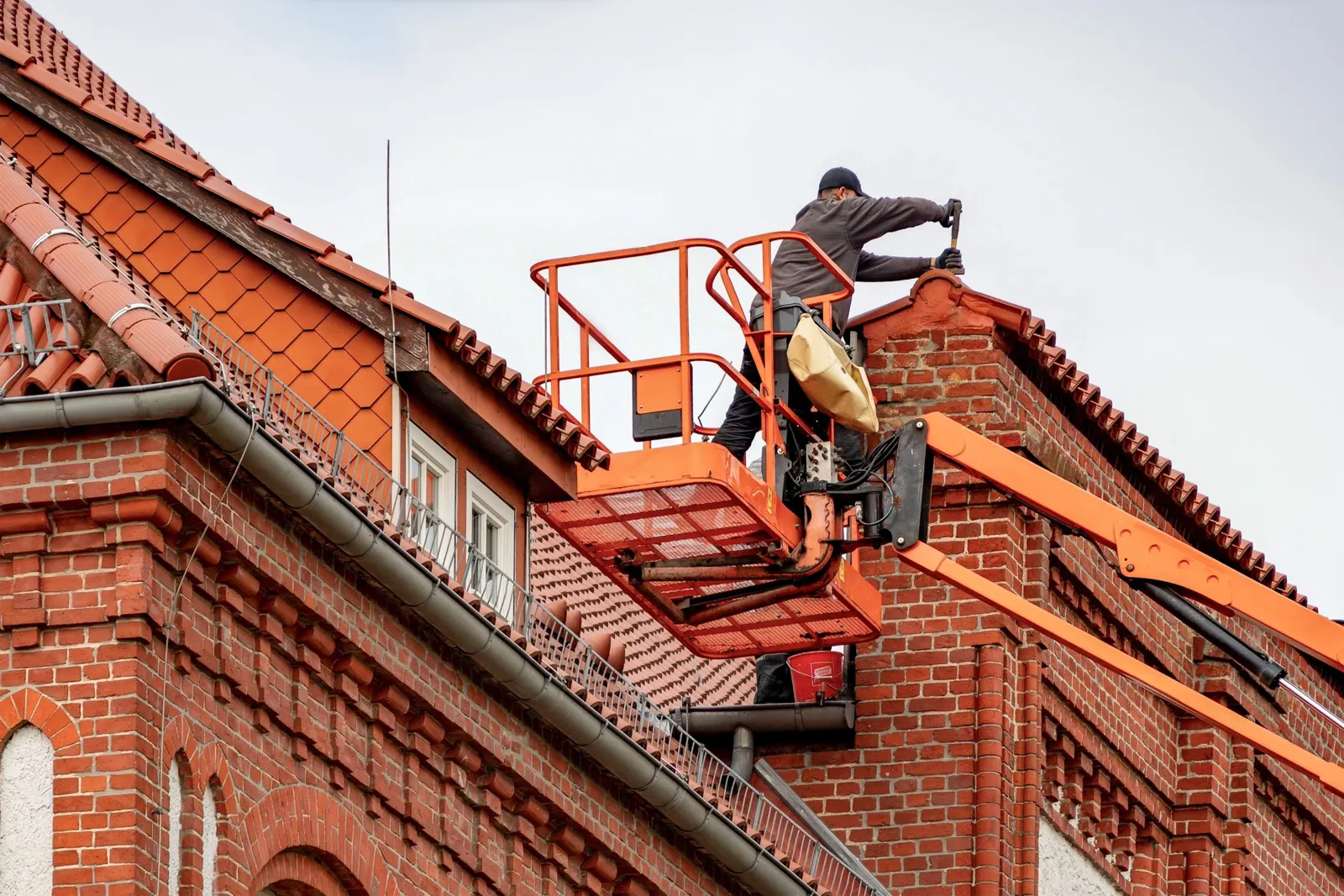
- Brick from the 1800s, like much of what stands in New Brunswick and Perth Amboy, is softer than modern brick, so repointing should use a mortar that is not harder than the brick around it.
Bay storms and inland freezes
Middlesex has a hot-summer humid continental climate that shades into humid subtropical along Raritan Bay and the Arthur Kill. In New Brunswick, average January lows are about 22 degrees Fahrenheit, and the record low is 13 below zero, from January 1984. July is the wettest month there, with about 5.1 inches of rain on average.
The bayshore takes the wind. Hurricane Sandy in 2012 hit the Watson-Crampton neighborhood of Woodbridge especially hard, and after the flooding many owners in Sayreville's river floodplain took a federally funded buyout of 250 houses. Near open water, salt-laden wind wears on metal caps, chase covers and flashing faster than it does inland, so bayfront homes in places like Laurence Harbor deserve a closer look at those parts.
Gas heat is the rule here
Utility gas heats about 80% of occupied homes in Middlesex County by Census estimates for 2024, with electricity at about 15% and fuel oil near 3%. That makes the gas-venting chimney the most common kind in the county.
A gas flue rarely fills with soot, but the exhaust holds a lot of moisture. When it condenses inside an unlined or oversized masonry chimney, it softens mortar and flakes the inner face of the brick, and debris collects at the base of the flue. After a furnace replacement, confirm that the chimney still suits whatever vents into it.
Permits and historic properties
National Register districts in the county include Livingston Avenue in New Brunswick, Road Up Raritan along River Road in Piscataway, Old Bridge Village in East Brunswick, Middlesex Avenue-Woodwild Park in Metuchen and the Short Hills Battlefield district in Edison. If a house is landmarked or in a district the town regulates, chimney work that changes the exterior can need approval from the local historic preservation body. Otherwise, check with your town's building department before starting.