
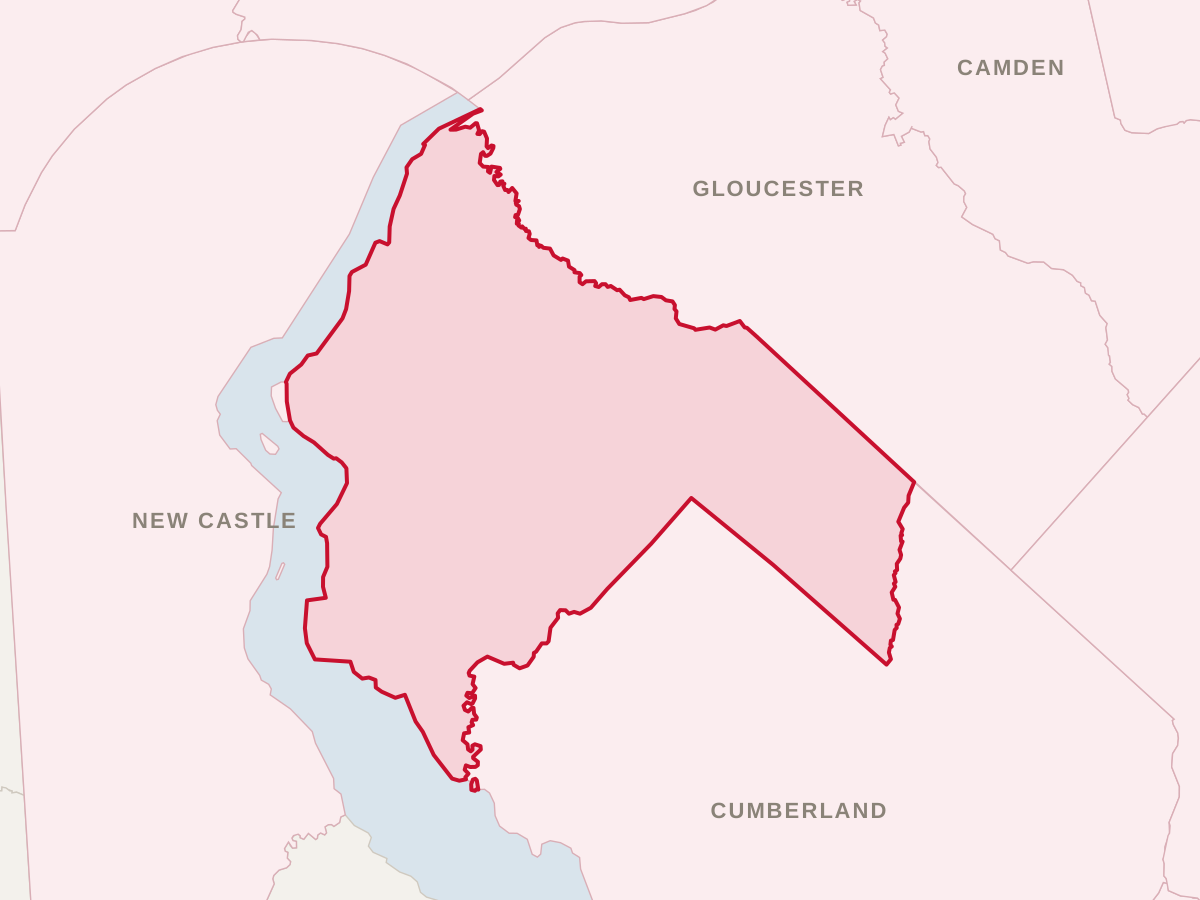
 Salem County
Local guide
Chimney Care in Salem County, NJ: What Local Homeowners Should Know
Salem County leans older and more rural than its neighbors: about 22% of homes predate 1940, and nearly a quarter burn fuel oil, with propane and wood heating many others. Salem City has three National Register districts and a 1735 courthouse of local brick. Winter nights near the Delaware freeze. Inspect every flue yearly and clean oil and wood flues as needed.
Oil, propane and wood heat
Census estimates for 2024 put utility gas in about 56% of occupied homes, fuel oil in about 23%, electricity in about 11%, propane or other tank gas in about 6% and wood in about 2%. In homes that burn oil or propane, the boiler or furnace usually vents into a chimney.
That fuel mix shapes the care. Oil flues collect soot and scale; wood stoves and fireplaces leave creosote, which is flammable; and propane exhaust carries water vapor that condenses in cool flues. A farmhouse with an oil boiler and a wood stove has two flues with two different kinds of wear, and both should be inspected each year.
Old brick and river towns
Salem City's Old Salem County Courthouse was built in 1735 of locally made brick and now holds the city's offices. Its Market Street, Broadway and Hedge-Carpenter-Thompson historic districts are all on the National Register, and Hancock House was the site of a Revolutionary War surprise attack on sleeping militiamen.
Settlement here is old. Swedes and Finns were living in what is now Pennsville by 1671. Woodstown, formed in 1882, has National Register houses including the Zaccheus Dunn, Joseph Shinn and James and Mary Lawson houses. Penns Grove began to industrialize around the time it became a borough in 1894, and in the early 1900s many Italian immigrants who worked at the Carneys Point plant settled on Pitman Street. In Pittsgrove, the Moshe Bayuk House is the last building of the Alliance Colony, a Jewish farming community founded in 1882.
The county also grew through postwar suburban development. Census estimates for 2024 put about 22% of homes before 1940 and about 19% in the 1950s, so a large share of chimneys here are more than 65 years old.
Flat land, river wind and freezing nights
The county is almost uniformly flat coastal plain, bordered on the west by the Delaware River and drained by the Salem River, Alloway Creek and other streams. The climate is humid subtropical. In Salem, average January lows are about 25 degrees Fahrenheit, and the record low there is 14 below zero, from January 1985. Monthly precipitation ranges from about 2.8 inches in February to 4.6 inches in July. Salem's January average sits near 33 degrees, so many winter days swing above and below freezing.
Open, flat country gives wind a long run at a chimney, and wind-driven rain gets into cracked crowns and open joints. Once the masonry is wet, a night in the low twenties is enough to freeze that water and widen the damage.
Practical care for Salem County homes
Older houses and delivered fuels add up to a fairly clear routine.
- Inspect each flue at least once a year, as NFPA 211 calls for, and clean it when deposits build up.
- Burn only dry, seasoned wood in stoves and fireplaces to limit creosote.
- In prewar brick homes, check whether the flue has a liner at all before relying on it for a wood stove or boiler.
- Repoint old brick with a mortar no harder than the brick, so the brick is not the part that cracks.
- Keep a screened cap on every flue to keep out rain, birds and animals common on farm properties.
- After a chimney fire, or any other event that may have damaged the chimney, have it inspected before the next use.
Salem's districts and local rules
If your home is in one of Salem City's three districts, is otherwise landmarked or sits in a district the town regulates, exterior chimney work can need approval from the local historic preservation body. For other properties, check with your town's building department before starting a rebuild or relining.


