
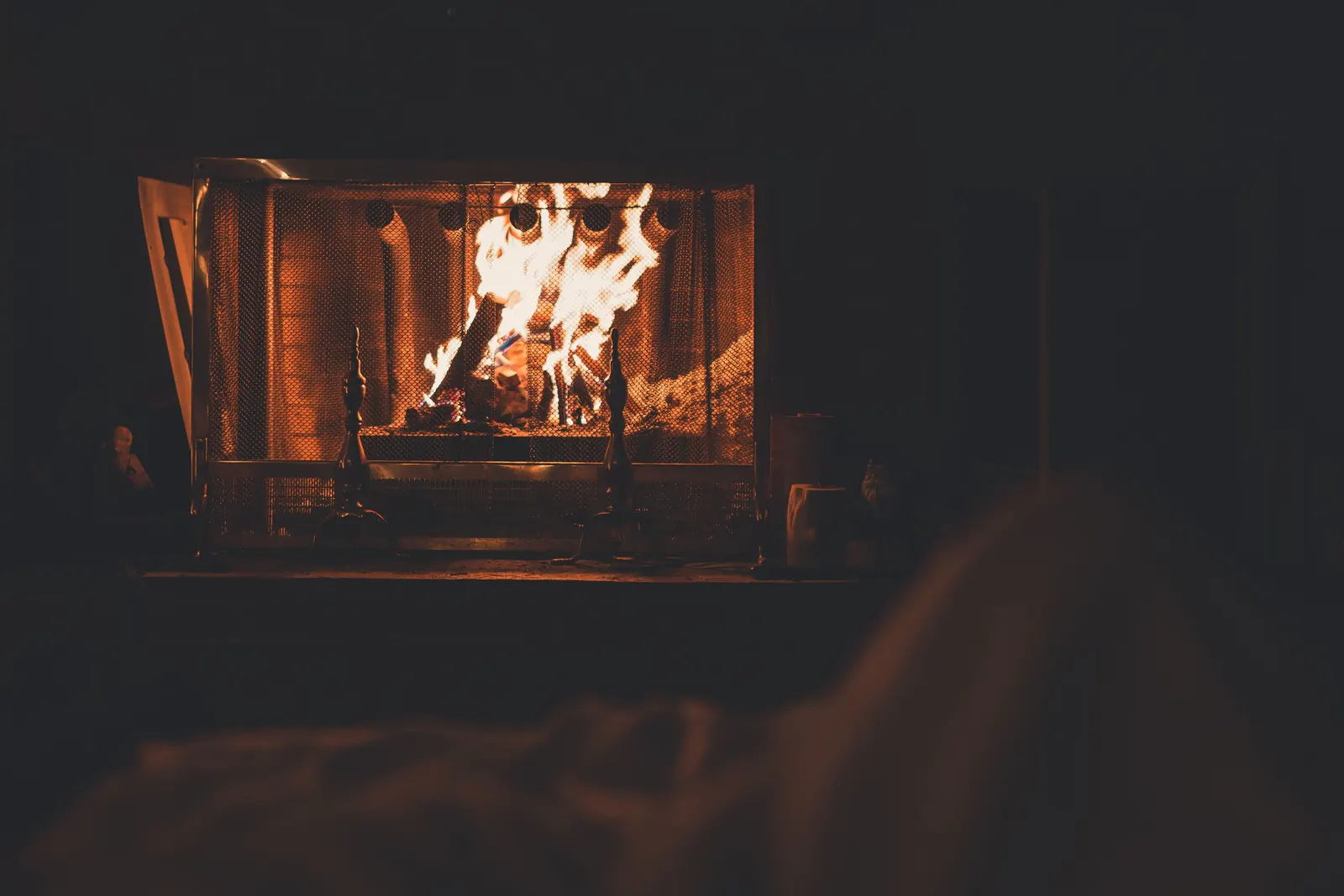
What can go wrong after everyone is asleep
An open fireplace has no door and no air control. A burned-through log can roll against the screen or off the grate. A pocket of sap or moisture can pop an ember past the opening onto a rug or a pile of newspapers. As the fire dies and the flue cools, the draft weakens, and a gust of wind across the chimney top can push smoke back down into the room. Awake, you would notice each of these within seconds. Asleep, you may not notice until a smoke alarm sounds.
Night also changes the house around the fire. Bedroom doors close, the heating system cycles, bathroom and kitchen exhaust fans may run, and in a tight, renovated house those can pull air down through the flue rather than letting smoke rise. That reversal, often called negative pressure, is a common reason a fireplace that drafts well in the evening smokes at two in the morning.
The damper trap
The most dangerous bedtime habit is closing the damper partway, or all the way, to keep heat in once the flames die down. With coals still glowing, the fire keeps producing smoke and carbon monoxide, and a closed damper sends both into the room instead of up the chimney.
The U.S. Fire Administration describes carbon monoxide as colorless and odorless, undetectable by human senses, which is why a sleeping household gets no warning without an alarm. It notes that CO poisoning can happen when a fuel-burning appliance is not working or not vented properly. A fireplace with its damper closed on live coals is exactly that situation. Leave the damper wide open until the ashes are completely cold, even if the room cools down overnight.
Winding the fire down for bed
If you light a fire in the evening, plan the end of it as carefully as the start. A small fire is easier to finish than a big one, so size the last loads to the time you have left.
- Stop adding wood a couple of hours before bedtime so it can burn down to coals
- Spread the remaining coals across the grate so they cool faster
- Cover them with a layer of ash until no glow shows
- Leave the damper fully open, and close the screen or glass doors as your fireplace's instructions direct
- Pull rugs, cushions, kindling and newspapers well back from the hearth
- Check that smoke and carbon monoxide alarms near the bedrooms work
Embers, ash and the next morning
Coals buried in ash can stay hot far longer than most people expect, which is why a fireplace that looks dead at midnight can still have live embers at breakfast. Leave the ash where it is until it is cold to the touch, and keep the damper open the whole time.
The EPA's wood-burning guidance says to remove ashes regularly into a covered metal container and store that container outdoors on a nonflammable surface. A cardboard box, a plastic bucket or a paper bag of ash left on a porch or in a garage is a common way for a house fire to start the day after a fire that seemed to be out.
How to tell the fire is really out
A fire that has stopped flaming is not the same as a fire that is out. Before you head upstairs, look for these signs that the fireplace is safe to leave:
- No glow anywhere when you stir the ash gently with a poker
- No smoke rising from the firebox, not even a thin wisp
- No hissing, ticking or popping from the coals or the logs
- The screen and doors are closed and the damper is still open
- Nothing that can burn within three feet of the hearth
Closed wood stoves and inserts overnight
A closed wood stove or fireplace insert is a different appliance. It controls the fire with a door and an air setting, and many are designed to hold a fire for long periods. Overnight burning in one of those is common, but only within its manual: the right fuel, a load size the manufacturer allows, the door closed and latched, and the air setting the instructions permit.
The habit to watch is turning the air down hard to stretch a load until morning. The EPA's guidance notes that for most appliances a smoldering fire is not safe or efficient, and smoldering wood leaves creosote in the liner fast. Stove owners who burn this way through a cold winter often find heavy deposits by midseason, so a mid-winter check is worth considering.
Leaving a gas fireplace on overnight
Gas fireplaces vary, and the answer depends on which kind you have and what its manual says. A sealed, direct-vent unit with a fixed glass front draws combustion air from outside and sends exhaust out through its own vent, and many are designed to run as a heater for long stretches. Vented gas logs sitting in an open masonry fireplace are mostly decorative and rely on an open damper and a working chimney. Vent-free units release their exhaust into the room, and their instructions usually limit how long and where they can run; in New York City, installing unvented gas logs and gas fireplaces is prohibited by the Mechanical Code.
Whichever you have, read the operating section of the manual, and do not run any gas appliance overnight that has not been inspected and serviced. A CO alarm, or anyone in the house feeling ill, means everybody leaves first; the call to 911 or the gas company happens from the street.
If an alarm sounds during the night
A smoke alarm or a carbon monoxide alarm at night means everyone gets up and out, not that someone goes downstairs to investigate. Once outside, dial 911, or the gas company when a gas appliance is involved, and wait for them before going back in. Do not reset or silence a CO alarm and go back to bed, even if the fireplace looks quiet. After any night like that, have the fireplace and chimney checked before the next fire.
Alarms and the chimney behind the fire
USFA guidance places CO alarms in a central spot outside each separate sleeping area, with one on each floor. In a brownstone or rowhouse with bedrooms on the top floors and the fireplace on the parlor floor, that usually means more than one alarm, and in a house with a boiler in the cellar venting into the same chimney stack, one in the basement as well.
A fire that burns an hour or an evening still depends on the chimney carrying its smoke away. Cracked flue tiles, a cap clogged with soot, a nest in the flue or heavy creosote can turn an ordinary evening into a dangerous night. Under NFPA 211, every chimney, fireplace and vent is due for an inspection each year. Ours is a family-owned crew, and we tell you plainly whether your fireplace or stove suits the way you use it.
Common Questions
Is it safe to sleep with a fireplace on?
Is it safe to go to bed with embers still in the fireplace?
Can I close the glass doors and go to bed?
Why does my fireplace smoke into the room late at night?
Need help with this? See our chimney inspection service, or call (844) 468-2410 for a free written estimate.

