
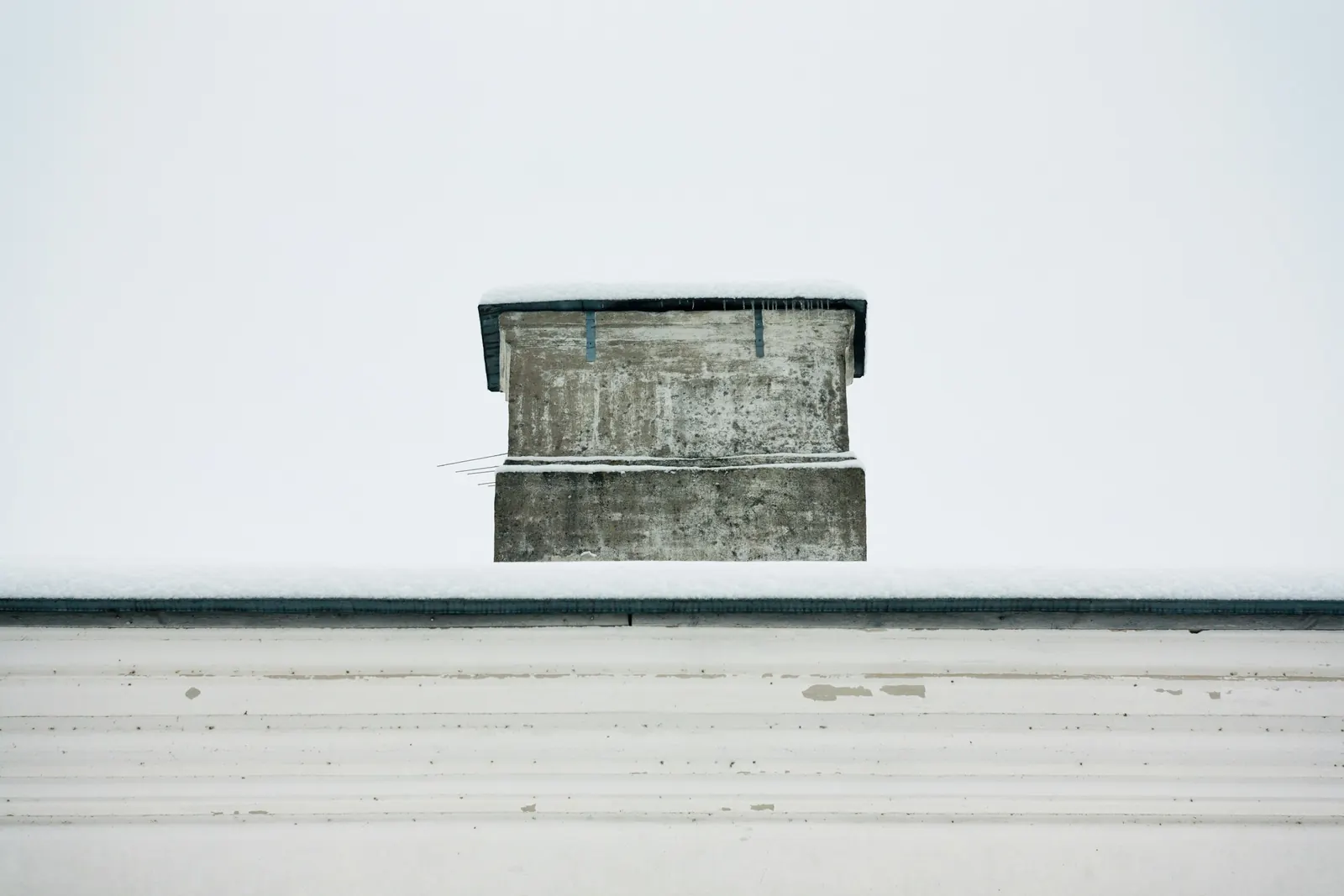
What a chase cover does
Not every chimney is brick. Many newer homes, additions and townhouses have a factory-built fireplace with a metal chimney pipe running up inside a box framed out of wood and finished with siding, stucco or a thin brick veneer. That box is the chase. The chase cover is the metal lid on top of it. The flue pipe passes through a raised collar in the center, and a storm collar and a termination cap finish it off above the cover.
The cover's job is simple: shed every drop of rain and snowmelt off the top of the chase and away from the framing. Unlike a masonry crown, it has no mass to absorb water. It either sheds water or lets it straight through.
Where you find them in this region
Chase covers are common on homes built from the later decades of the last century onward in suburban New Jersey, Bucks, Montgomery, Delaware and Chester counties outside Philadelphia, and northern Delaware developments, as well as on Long Island and in Westchester. In the city they show up on rear additions, converted lofts and newer townhouse rows, where a prefab fireplace was easier to fit than a masonry one.
Because these homes are often a similar age, whole neighbourhoods of chase covers reach the end of their life within a few years of each other. If a neighbour's chase already shows rust streaks on its chase, yours may not be far behind.
Why chase covers fail
Many builders install covers made of thin galvanized steel. The zinc coating wears off, water sits on a flat or dished top, and rust eats through. Once it starts, each rain makes it worse, and a pinhole becomes a hole within a season or two.
- Thin galvanized steel that rusts through from the top down
- A flat or sagging top that holds puddles instead of shedding water
- No cross-break or slope, so water runs toward the flue collar
- Caulk around the collar that dried, cracked and pulled away
- A cover cut too small, so water gets behind the siding at the edge
- Loose fasteners that let wind lift and bend the edges
Signs you can spot without a ladder
Rust streaks running down the siding or stucco from the top of the chase are the classic sign. Stains that seem to start at the chimney cap often trace back to the cover underneath it. From the yard, a sagging or dented top, patches of orange or a wavy edge may be visible. Stay off the roof; chase tops are high and the metal is slick when wet.
Inside, the clues show up around and inside the fireplace: water in the firebox after storms, rust on the metal firebox panels or the damper, stains on the wall or ceiling near the fireplace, peeling paint on the chase wall, or a musty smell when the weather turns humid. In a closet or attic that backs onto the chase, damp or darkened framing is a strong sign.
What water does inside the chase
The inside of a chase is a wooden box. Water that gets past the cover soaks the plywood sheathing and the framing, and wood that stays wet softens and rots. The insulation inside the chase flattens and stops working, which can make the fireplace wall cold and drafty.
Water also reaches the factory-built chimney itself. The metal sections, the firestop spacers where the pipe passes through floors, and the firebox are designed to stay dry. Rust inside them is more than cosmetic, because those parts are what keep the hot flue a safe distance from the wood around it. A technician checks them whenever a chase has been leaking.
Ice adds its own damage. Water that collects in a sagging cover or behind the siding freezes on cold nights, and the expansion pries the cover's seams and the trim boards further apart, so a chase that leaked a little one winter often leaks much more the next.
What a good replacement has
A replacement cover is made to measure for the chase, and the details make the difference between a cover that lasts and one that rusts like the last.
- Stainless steel, which resists rust far better than galvanized
- Cross-breaks, shallow folded ridges from corner to corner, or a sloped top so water runs off
- A drip edge folded down the sides so water falls clear of the siding
- A raised collar around the flue pipe, sealed so it can move with heat
- Correct size, overlapping the chase walls on all sides
- Fasteners through the side skirt rather than the top
Paint, patch or replace
Painting surface rust on a cover that is still solid can buy time, and resealing a cracked collar can stop one specific leak. Neither fixes a cover that holds water. Once the metal has holes, a sag that ponds, or seams that have opened, patching usually just moves the leak an inch over.
When the cover is replaced, the flue pipe's termination cap and storm collar are checked at the same time, and the cap is replaced if it is rusted too. Those parts belong to the factory-built chimney system, so replacements follow the manufacturer's instructions for that model. If water has been getting in for a while, the framing and sheathing at the top of the chase may need repair before the new cover goes on.
How the replacement visit goes
A chase cover is not ordered from a catalog by size alone, because chases framed on site are rarely perfectly square. The first visit is mostly measuring and checking, and the install happens once the custom cover is made.
On install day, the old cover comes off, which is the first good look anyone gets at the top of the framing. Soft or blackened wood is cut back and replaced before the new cover is fastened, and the flue pipe is checked for rust where the old collar sat. The job ends with a look inside the firebox to make sure the next rain stays outside.
- Measure the chase top on all four sides and note any out-of-square corners
- Count and measure every flue pipe that passes through it
- Read the fireplace's data plate so replacement cap and collar parts match the system
- Probe the top of the sheathing and framing for soft or wet wood
- Inspect the firebox, damper and visible chimney sections for rust
What drives the price
The cost of a new chase cover depends on the size of the chase, whether it is a standard rectangle or an unusual shape, how many flue pipes pass through it, the metal chosen, how high and steep the roof is, and whether water damage inside the chase needs repair. A cover on a single-story addition with a low-pitch roof is a very different job from one on the peak of a three-story house.
We measure the chase, look at the fireplace and framing below, and give a free written estimate before ordering the cover, so any framing or cap work is listed and explained up front.
Common Questions
What is a chimney chase pan?
Why are there rust stains under my chimney cap?
Can a rusted chase cover be painted instead of replaced?
Is a chase cover the same as a chimney cap?
Need help with this? See our caps & crowns service, or call (844) 468-2410 for a free written estimate.

