
How downdraft shows itself
Most people notice downdraft before they can name it. A cold breeze flows out of the fireplace. Ash puffs onto the hearth on a gusty day. The damper rattles. Old smoke smell fills the room on a windy or bitter night. When a fire is lit, smoke curls out of the top of the opening instead of going up, and sometimes a gust sends a puff back into the room mid-fire.
Noticing when it happens is half the diagnosis. Downdraft on windy days only points to wind. Downdraft on cold, calm nights before any fire is lit points to a cold flue. Downdraft whenever certain appliances run points to the house itself.
Pressure zones around the roof
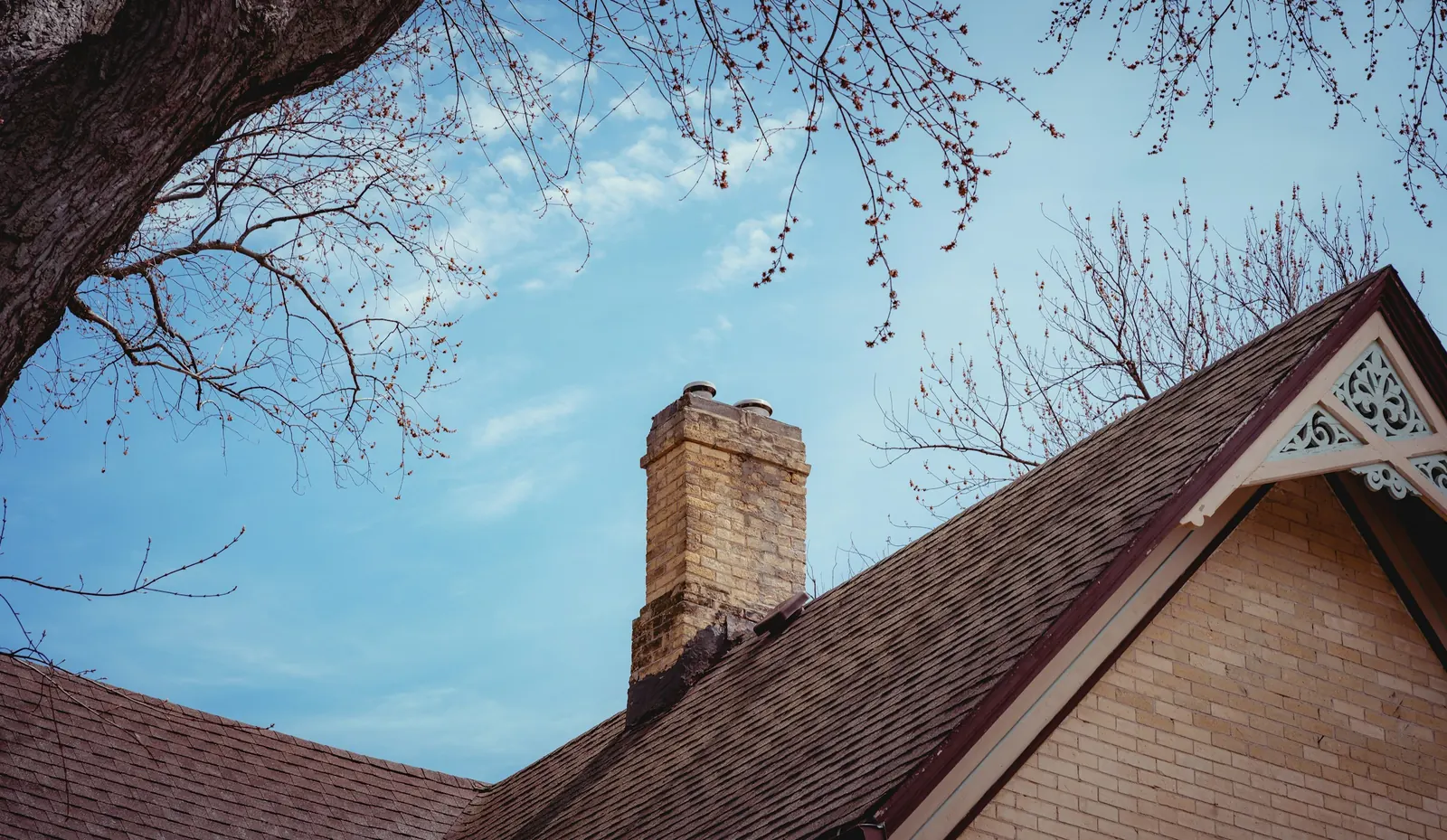
Wind blowing across a roof does not move smoothly. On the side facing the wind it piles up and builds pressure. Over ridges, parapets and the edges of taller buildings it separates, tumbles and swirls. If the top of the chimney sits in one of those high-pressure or swirling zones, gusts push straight down the flue.
Direction matters as much as speed. Many chimneys behave all winter until the wind swings round to one particular quarter, often the northeast in a nor'easter or the northwest behind a cold front, and then they backdraft every time. Keeping track of which wind causes it helps pin down what the chimney is reacting to.
Taller neighbours, parapets and trees
On blocks of attached houses in New York, Philadelphia and the older New Jersey cities, the troublesome chimney is often the one beside a taller neighbour, or one that sits low behind a parapet wall. A chimney that drew well for generations can start smoking the winter after the house next door adds a story or a rooftop addition, because its top is suddenly in that building's wind shadow.
Fireplace codes use a familiar rule for chimney height: the chimney should rise at least three feet above where it passes through the roof and at least two feet above any part of the building within ten feet of it. Many older chimneys predate that rule or were overtaken by later building next door. A row of tall trees close to the house can cause the same swirling, and it changes as the trees grow.
- A taller building or addition next door
- A chimney top below the roof ridge or a parapet
- Tall trees close to the house
- A cap with open sides that lets wind blow across and into the flue
Cold air sinking in an outside chimney
A chimney built on an outside wall, like the gable-end stacks on many colonials and capes, loses heat to the outdoors on three sides. Between fires, the air inside the flue cools to nearly the outdoor temperature. Cold air is heavy, so on a freezing night it slides down the flue and spills into the warmer room through the damper, especially a damper that no longer seals.
This is also why lighting a fire in a cold chimney can be smoky for the first few minutes. The fire has to push that column of cold air out before the flow reverses and the chimney starts pulling upward. An interior chimney, surrounded by the warm house, has far less of this trouble.
A first-floor fireplace on a two-story exterior chimney is the classic case: a tall column of cold air sits above the damper all winter, waiting for any gap.
When the house itself is pulling
If air comes down the chimney in any weather and gets stronger when the kitchen hood, clothes dryer or bathroom fans run, the cause is inside. Those fans push air out, and the house pulls replacement air in through the easiest opening, which is often an idle fireplace flue. A boiler or water heater drawing combustion air from the basement adds to it, and tighter windows and weatherproofing leave fewer leaks to supply that air.
A simple check: with the downdraft happening, open a window near the fireplace an inch or two. If the cold flow or smoke stops within a minute, the house is short of air. That is fixed with a makeup air supply or by changing how the fans are used, not at the chimney top.
Matching the pattern to the cause
Most chimneys show one dominant pattern, though an older house can have two causes working together.
| When it happens | What you notice | Usual cause |
|---|---|---|
| Windy days, often one wind direction | Gusts of smoke or ash into the room | Chimney top in turbulent air |
| Cold, calm nights with no fire | Steady cold breeze from the fireplace | Cold air sinking in an exterior flue |
| Whenever exhaust fans or the dryer run | Smoke or odor pulled into the room | House short of air |
| First minutes of every fire | Smoke rolls out, then clears | Cold flue not yet drawing |
| After a neighbour builds higher | A fireplace that drew well now smokes | Chimney now in a wind shadow |
Fixes that address each cause
For wind, the remedy is usually up on the chimney top. A cap designed to block wind from blowing across the flue, or one that turns with the wind, stops many gusts from getting in. Where a taller building is the cause, extending the chimney so its top clears the turbulent air may be needed, and on a party-wall chimney that takes the neighbour's agreement. Where extending is not possible, a chimney fan is the fallback.
For cold downdraft, the goal is to keep the cold column out of the room. A top-sealing damper closes the flue at the top, so the chimney stays nearer room temperature and cold air cannot pour down. Warming the flue with a rolled sheet of lit newspaper held up near the open damper before lighting helps the fire take over faster. For a house short of air, makeup air and sensible use of exhaust fans do the work.
What an inspection checks
A chimney inspection sorts out which cause you have before anything is bought. The technician looks at the cap, the height of the chimney against the roof and the buildings around it, the damper and how well it seals, and the flue itself, since a partial blockage makes every kind of downdraft worse. Indoors, the exhaust fans, the dryer and the heating equipment are part of the picture. You then get the fix matched to the cause, rather than a cap tried on the chance it helps.
Expect questions about the pattern: which wind, which time of day, which appliances were running. Notes kept over a few windy and cold evenings shorten the visit and make the diagnosis far more reliable.
Common Questions
Why does my chimney downdraft only when it is windy?
Why is there a downdraft when it is cold outside?
Why do I smell smoke with a chimney downdraft?
Can downdraft be dangerous?
Will glass doors stop a downdraft?
Need help with this? See our chimney inspection service, or call (844) 468-2410 for a free written estimate.

