
The first minute
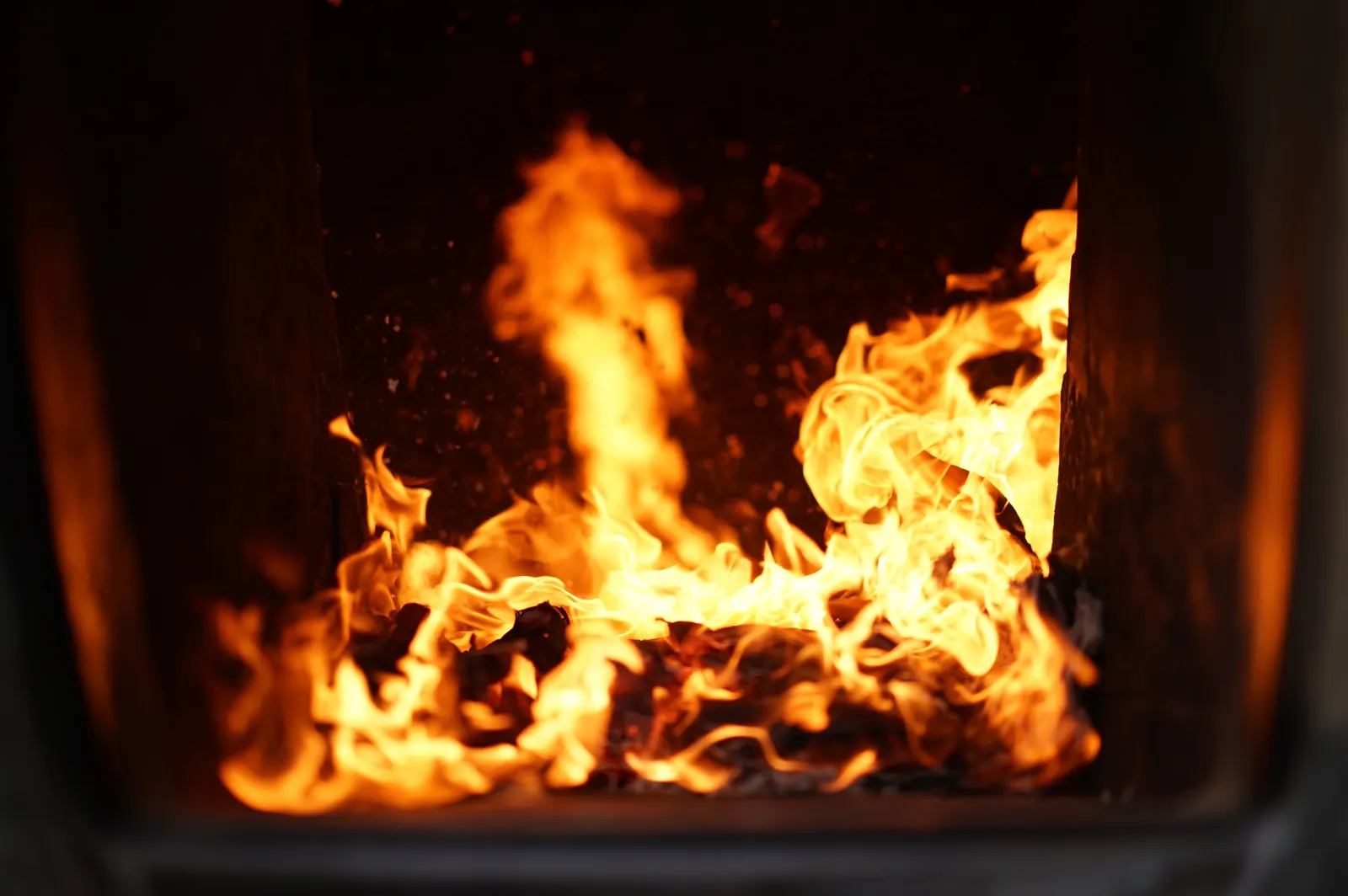
Chimney fires often announce themselves with a sound people compare to a freight train or a jet overhead, together with loud popping and cracking from inside the walls. Thick smoke may pour out of the top, and sparks or flames can shoot above the chimney. Do not wait to be certain or go outside to look first. Act on the sound.
Shout to everyone in the house and get them out. If you live in an attached house, a twin or a building with shared chimneys, warn the neighbors on either side on your way, since the chimney mass and the roofline may be shared.
- Get everyone, including pets, out of the house
- Call 911 from outside and say it is a chimney fire
- Mention it if a boiler, furnace or stove also vents into that chimney
- Knock on the doors of attached neighbors
- Stay out until the fire department says it is safe
On the way out, only if it takes seconds
The fire feeds on the air pulled in through the fireplace or stove. Cutting that air slows it. If you are passing the fireplace anyway, close the glass doors. On a wood stove or insert, close the door and shut the air controls. If the boiler or furnace shares the chimney and the thermostat is right there, turning it down so the burner stops firing is reasonable, but do not go down to a basement to do it.
Do not stop for more than that. Do not try to drag burning logs out of the firebox, carry a smoking grate outside, or hunt for a fire extinguisher to aim up the flue. Getting people out is the job.
Water, ladders and other bad ideas
Water and a hot flue are a bad combination. Cold water hitting clay tiles and brick heated by a chimney fire can crack them, and the burst of steam can scald anyone standing at the opening. A garden hose on the roof does nothing for a fire burning inside a flue and puts a person on a ladder in the dark, with smoke and sparks coming out beside them. Firefighters have the equipment and training for this, and they handle it from the outside and the inside together.
Do not reopen a stove's air controls or the fireplace doors to check on the fire, and do not go back in for belongings, a phone charger or a pet that has hidden. Tell the firefighters where the pet is likely to be.
What to tell the dispatcher
Clear, short information helps the crew that arrives. When you call 911, give the address first, then say you believe there is a chimney fire. A few other details matter:
- Whether everyone is out of the house, and if not, where they are
- Whether the house is attached, with neighbors on one or both sides
- What burns on that chimney: fireplace, wood stove, insert, boiler or furnace
- Whether you see flames at the top or smoke inside the rooms
- Any way the crew can reach the roof, such as a rear yard or roof hatch
Wood stove and insert chimney fires
Stoves and inserts have their own signs: a stovepipe glowing dull red, a roaring or ticking sound from the pipe, and smoke leaking where the pipe joins the chimney. Stove chimney fires often follow long stretches of slow, low-air burning, which coats the pipe and liner with creosote. The same steps apply: close the stove's door and air controls if you can do it in passing, get out and call 911.
Afterward, the stovepipe, the liner and the connection at the thimble all need to be checked. Overheated pipe can warp and pull apart at its joints, and a stainless liner can buckle or separate at its connections without anything showing from the room.
While firefighters work, and right after
Expect the fire department to check more than the chimney top. Crews commonly look at the walls, ceilings and attic around the chimney for heat that has traveled through cracks in the masonry, and in attached houses they may check next door too. They may need to open a section of wall or ceiling if they find hot spots. Follow their instructions on when the house can be re-entered and whether the heat can stay on.
Once you are back inside, leave the fireplace and stove cold. If the boiler or furnace shares the chimney and the house needs heat, ask the fire department or your heating technician whether it is safe to run before the chimney has been checked. In freezing weather, a few hours without heat is safer than running an appliance into a damaged flue.
The smell and soot afterward
Burnt creosote leaves a strong, sharp odor that can hang in the house for days, especially in the rooms around the chimney and in humid weather. Open windows when it is safe to, and keep the fireplace doors closed and the damper shut once the flue is completely cold, so air does not pull the smell down the chimney into the room. Flakes of burnt creosote may fall into the firebox for a while. Leave them for the sweep, who will clean the flue as part of the inspection and can tell from the residue how far up the fire went.
What the fire may have damaged
NFPA 211 calls for inspecting a chimney after any event that may have damaged it, and a chimney fire is the textbook case. Heat inside the flue can climb far beyond what the chimney sees in normal use, and the damage is usually out of sight. Plan on a full inspection of the flue from bottom to top, along with:
- Clay flue tiles, which crack and shift from rapid heating
- Mortar joints between tiles and in the surrounding brick
- Metal liners, connectors and the damper, which can warp
- The crown, cap and flashing at the roof
- Wood framing, trim and insulation close to the chimney
Making another one less likely
Chimney fires feed on creosote, so the prevention is about creosote. Burn dry, seasoned wood. Build bright, moderate fires rather than smoldering ones, and keep the damper fully open while anything burns. Keep paper, cardboard and holiday greenery out of the fireplace. Stick with a once-a-year inspection under NFPA 211, plus a sweep when the flue needs one.
After a chimney fire, the repair might be as small as replacing a damper and a few tiles or as large as relining the flue. We are licensed and insured, and we write up what the fire damaged and what the repair involves in a free written estimate, which doubles as a clear record of the chimney's condition.
Common Questions
How do you put out a fire in a chimney?
How do you put out a wood stove chimney fire?
Can I use my chimney if the fire went out by itself?
Should I call 911 if the chimney fire seems small?
Need help with this? See our chimney inspection service, or call (844) 468-2410 for a free written estimate.

