
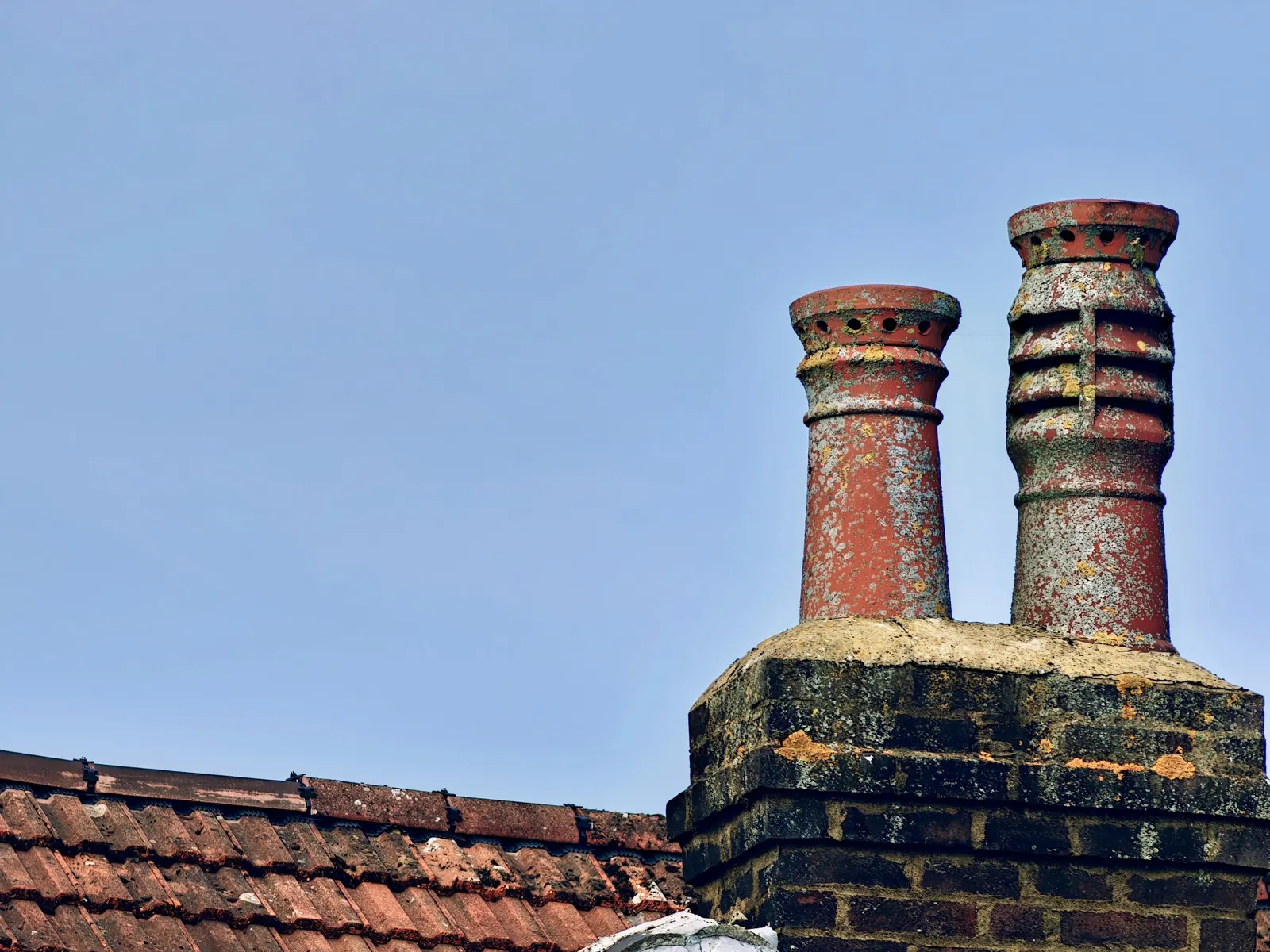
What a chimney pot does
A pot is a short tube, usually round, square or octagonal, that sits on the top of a chimney directly over a flue. It extends that flue a little higher, so exhaust leaves above the crown and above the turbulent air that rolls over the brick. On a chimney with several flues, separate pots also keep the smoke from one flue from drifting straight into the next.
That extra height can steady the draft, especially on a short stack. Pots are not a cure for a chimney that is far too low or a flue that is the wrong size, but on many older houses they were part of how the chimney was designed to work, and removing them can change how the flues behave.
Reading the pots on your roof
People often ask what the number of pots means. Usually each pot marks one flue, and each flue served one fireplace, stove or boiler. A chimney with four pots typically had four flues, often fireplaces on several floors of a brownstone or a Victorian. In attached houses, a single stack can carry flues for two homes, so some of the pots on your chimney may belong to the neighbor.
Not every pot is in use today. Many sit over fireplaces that were sealed decades ago, and a few were added purely for looks. Knowing which pot connects to which fireplace or appliance matters before anything is capped, reset or removed, and it is one of the first things a technician sorts out on a multi-flue chimney.
How a pot is set on the chimney
A traditional pot stands on the flue tile or on the top course of brick, and it is held by a sloped bed of mortar built up around its base. That bed is called flaunching. It holds the pot in place and is shaped to shed rain away from the flue. Some pots also have a metal strap or bracket for extra security, particularly tall ones in exposed spots.
Clay and terra cotta pots are fired, so they handle heat well and can last a very long time. Metal pots are lighter and are made in shapes that match many older designs. Whatever the material, the pot is only as secure as the flaunching and the masonry under it.
How chimney pots fail
In the northeast climate the usual sequence starts with the flaunching. Rain soaks into small cracks in the mortar bed, freezes overnight and opens the cracks wider. Over a few winters the bed loosens, water reaches the flue, and the pot begins to rock in the wind. Cracks in the pot itself tend to come later and are often caused by the same freeze-thaw cycle working on a small chip or flaw.
Other causes are less common but worth knowing. Acidic condensation from a modern gas boiler running into an old unlined flue can attack the mortar at the top. Strong gusts work on a pot that is already loose. A lightning strike or a falling branch can crack one outright. And a cap that was fastened directly to an old pot with screws can split it as the metal heats and cools.
Signs a pot needs attention
Chimney pots sit at the very top, so most problems are easiest to spot from the street or the yard with binoculars on a clear day. Water inside the house is the other common clue, since a loose pot often lets rain into the flue below it.
- Cracks running up the pot, or pieces missing from the rim
- A pot leaning, or moving visibly in strong wind
- Mortar around the base cracked, gapped or washed away
- Water or rust in the fireplace or at the boiler cleanout after rain
- Bits of terra cotta on the roof, in the gutter or on the hearth
Repair or replace, and how urgent it is
A sound pot that has only lost its bedding can be lifted, the old flaunching cleaned off and the pot reset in a new mortar bed shaped to shed water. A pot that is cracked through, spalling or broken should be replaced. Patching a cracked clay pot rarely holds through another winter.
A pot that is leaning or rocking is a safety issue, not a cosmetic one. It sits high above a roof, a yard or a sidewalk, and a piece of fired clay falling from that height can do real harm. Keep people clear of the area below until it is secured, and treat it as a repair for this week rather than this season.
Matching pots on older and landmarked homes
Replacement pots come in clay and metal, in many shapes and heights. The inside opening has to fit the flue it sits on, so the pot does not choke the draft. On older houses it is also worth matching the original shape and color, because the pots are a visible part of the roofline.
On landmarked buildings and in historic districts, pots and other rooftop details can be protected features. The city's guidance for landmarked property lists restoring architectural details as an example of work under a Permit for Minor Work, so confirm the building's status before a pot is changed or removed.
Caps and toppers for chimney pots
An open pot lets in rain, birds and animals. Pot caps are made to fit over or into the top of a pot, usually with a hood for rain and mesh sides for animals and sparks. Toppers and cowls are fixed or rotating hoods meant to steady draft in windy spots. Fit matters: a cap that is loose on the pot will eventually blow off.
The fuel matters too. On a flue that serves an oil boiler, fine mesh can clog with soot and choke the exhaust, so the cap has to suit that appliance. On a flue that serves gas equipment, the appliance's venting instructions govern what may sit on top.
What the visit includes
On the roof, the technician checks each pot by hand for movement, looks at the flaunching, the crown and the flue tile under the pot, and confirms which flue the pot serves. Inside, the fireplace or boiler flue below gets a look for water and fallen debris. You then get an explanation of what each pot needs and a written price, with no hidden fees, before any pot is reset or replaced.
Common Questions
What do chimney pots mean?
Can you put a cap on a chimney pot?
What are chimney pot toppers?
Can a chimney pot be removed?
Why is my chimney pot leaning?
Need help with this? See our caps & crowns service, or call (844) 468-2410 for a free written estimate.

