
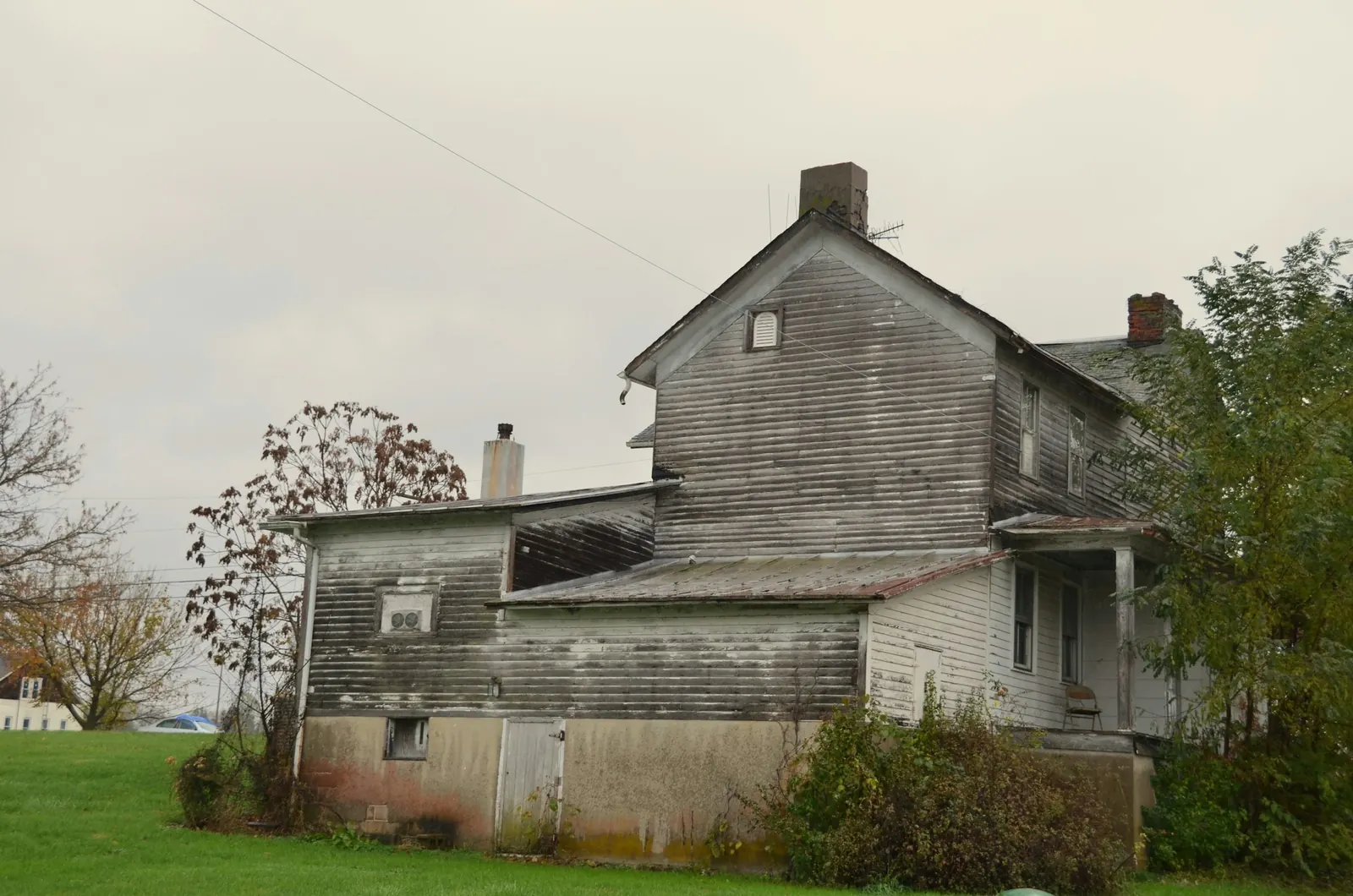
Why rebuilds have no standard price
Rebuild is a word that covers a wide range of work. On one house it means the top six or eight courses of brick and a new crown. On another it means taking a leaning stack down through the attic to a sound base. The labor, the setup and the materials in those two jobs are not in the same category, even though both are called a chimney rebuild.
Any figure quoted without seeing the chimney is a guess at which of those jobs you have. The honest way to price it is to look at the brick, the crown, the flue and the roof around it, decide how far down the damage goes and price that scope.
Partial rebuild or full rebuild
Most rebuilds are partial. Weather hits the part of the chimney above the roof hardest: it is exposed on every side, it gets wet from rain and snow, and it freezes and thaws all winter. The top courses loosen, spall or begin to lean while the brick below the roofline, protected inside the house, stays sound. The crew takes the chimney down to solid masonry, usually near the roofline, and rebuilds it with new or salvaged brick, a new crown and new flashing.
A full rebuild means taking the chimney much further down, sometimes to the footing. That happens when the base has settled, the stack leans from low down, or water and flue gases have rotted the mortar through the whole height. It is a larger structural job and often involves permits and interior work.
Signs that point toward a rebuild
Small, scattered damage can usually be repaired by repointing and replacing individual bricks. These signs suggest the damage is wide enough that rebuilding the affected section will be the sounder answer:
- The top of the chimney leans or has visibly shifted off line
- Several courses of brick are loose, cracked or have faces popping off
- Mortar joints are recessed deep or wash out when touched
- Cracks run through bricks as well as joints
- The crown is broken into pieces and the brick below it is soaked
- Bricks or fragments are turning up on the roof or in the gutter
What drives the price
Every chimney is quoted on its own, but the same factors move the number. The amount of brick that comes down and goes back up is the core of it. Height and access come next: a tall chimney on a steep or slate roof needs roof brackets, extra ladders or scaffolding, and a rowhouse on a busy street may need sidewalk protection before work starts.
Then come materials and the parts around the brick. Matching an old brick in size and color, a mortar mixed to suit soft brick, a properly formed crown, new step and counter flashing, a cap and any flue work all add to the total. Permits, where the scope requires them, are part of the price too, and debris removal from a dense block takes planning.
Brick, mortar and the crown
Chimneys on prewar houses in this region were often built with soft brick and lime-rich mortar. A rebuild that uses a very hard modern mortar against that brick can force movement and water into the brick faces, which then spall. Choosing a mortar that suits the brick is part of doing the job right, and it is one reason a careful rebuild costs more than the cheapest possible one.
The crown matters as much as the brick. A thin, flat layer of mortar on top will crack and start taking water within a few winters. A proper crown is thick enough, slopes away from the flue, overhangs the brick with a drip edge so water falls clear of the face, and leaves room for the flue tile to expand.
What can change once work starts
Some problems only show once the old brick is opened: a cracked or missing flue liner, mortar eaten away from the inside by boiler gases, gaps between flues in a shared stack, or rotted roof framing around the chimney. A good estimate says what happens if one of these turns up, how it will be shown to you and how it will be priced, so there is no argument halfway through the job.
Time spent looking before quoting reduces those unknowns. Checking the flue from the top and bottom and looking at the chimney from the attic often reveals the deeper problems in advance.
What the job looks like day to day
A partial rebuild follows a predictable order. The roof around the chimney is protected, staging goes up, and the old brick comes down course by course until the crew reaches masonry that is solid and firmly set in its mortar. Old flashing comes off with it. The flue tile is checked and extended or replaced as needed, and the new brick is laid with joints tooled to shed water.
The crown is formed last, followed by new flashing tied into the roofing and set into the fresh mortar joints, and finally the cap. Debris is lowered rather than thrown, and the roof and gutters are cleaned before the crew leaves. Throughout, the technician should be able to show you what was found under the old brick.
Timing and weather
Mortar has to cure without freezing, so masonry work in deep winter is slower and needs protection, and some jobs are better scheduled once temperatures allow. That said, a chimney that is leaning or dropping bricks should not wait for spring. It can usually be made safe in the cold months and finished properly when conditions suit.
Plan around the heating season as well. If the chimney carries a boiler flue, the rebuild schedule has to keep that appliance venting safely, or allow for a short planned shutdown.
Comparing rebuild estimates
Two quotes for a chimney rebuild can describe very different jobs. Lay them side by side and check that each one states how far down the chimney comes, the brick and mortar to be used, the crown design, whether flashing and a cap are included, how the flue is handled and how debris leaves the site. A low number that leaves out the crown or the flashing is not a lower price for the same work.
Ours are itemized in writing, with upfront pricing, so you can see what each part of the job costs and ask about any line you do not understand.
Common Questions
How much should a chimney rebuild cost?
Is replacing a few bricks cheaper than a rebuild?
Does a chimney rebuild include a new liner?
How long does a partial chimney rebuild take?
Can a chimney be rebuilt in winter?
Need help with this? See our chimney rebuild service, or call (844) 468-2410 for a free written estimate.

