
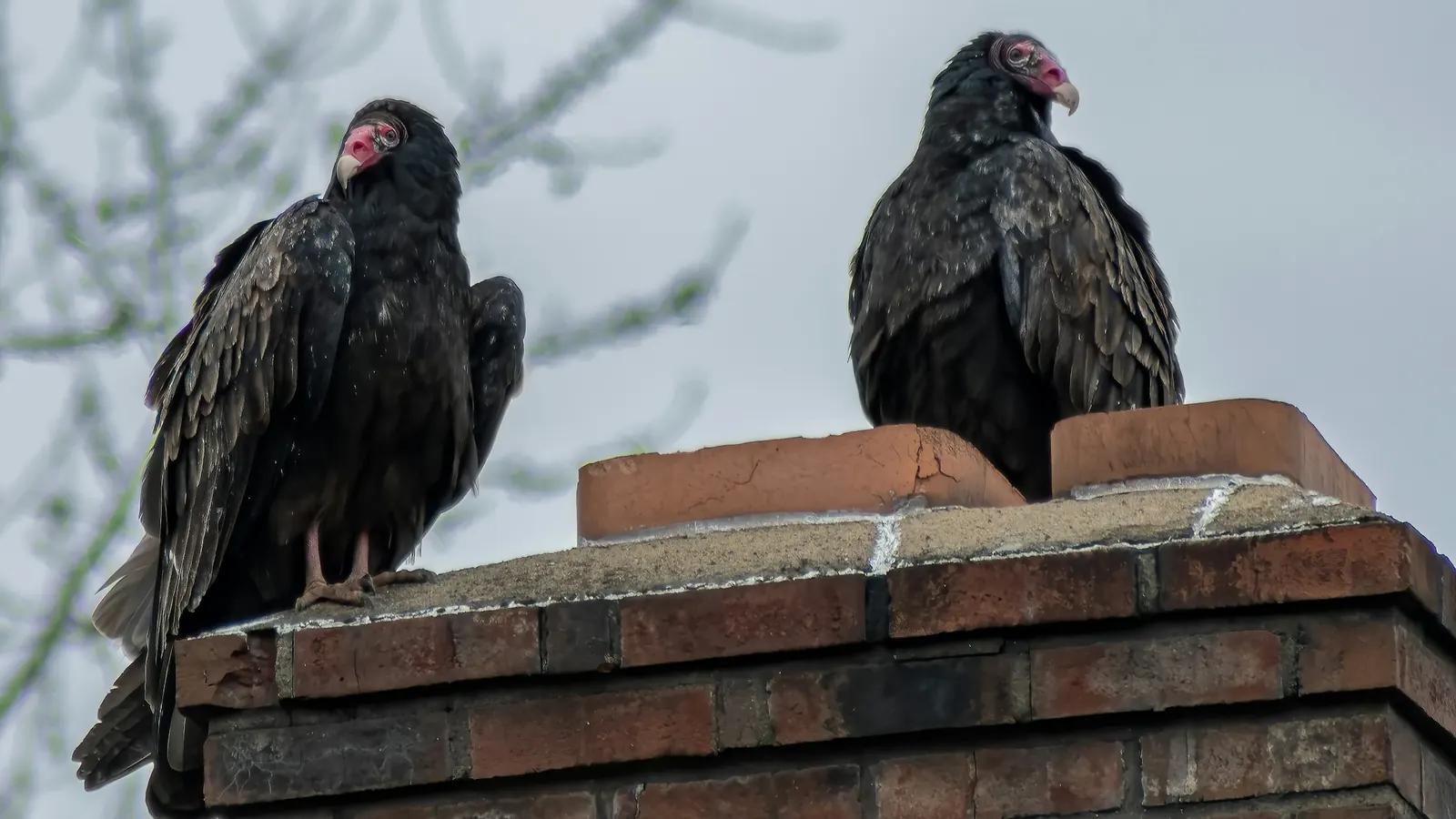
What a chimney swift is
A chimney swift is a small, sooty gray bird, about five inches long with a wingspan of around a foot, according to the Pennsylvania Game Commission. It spends most of the day in the air, catching flies, flying ants, beetles and other insects on the wing, and its flight looks jerky and bat-like. Birders describe it as a cigar with wings.
What sets it apart from most birds is its feet. A swift cannot perch on a branch. Its tiny feet have four clawed toes facing forward, built for clinging to upright surfaces. Before there were houses, swifts used hollow trees. Today, the Game Commission notes, they nest almost entirely in human-made structures: chimneys, silos, air shafts and old wells. A rough masonry flue in an old house is close to ideal.
The nest and the nesting season
The nest is a small half-saucer of twigs, broken off dead branches in flight and cemented to the flue wall with the birds' sticky saliva, which hardens as it dries. It sits on the side of the flue, not on the damper, and it is light. Unlike a squirrel or raccoon nest, it does not usually fill the flue.
The female lays three to six white eggs, which both parents incubate for 18 to 21 days, per the Game Commission. The young leave the nest about a month after hatching and join the feeding flocks. In late summer, swifts gather in the evening and pour into large chimneys to roost together before migrating, then winter mainly in the Amazon Basin of South America.
The same note says swifts are particularly common in urban areas in river valleys. That describes Philadelphia, the river towns of New Jersey and much of the Hudson valley, so a summer of chattering in a city chimney is nothing unusual.
Swifts or bats? Telling them apart
Both show up in chimneys in warm months and both make noise, but they behave differently, and the difference decides what happens next.
| Sign | Chimney swifts | Bats |
|---|---|---|
| When you hear them | Loud chattering in daylight, peaking when parents fly in to feed | Faint squeaks and rustling, mostly at dusk |
| At night | Quiet | Leaving to feed, returning before dawn |
| What you find | Twig nest on the flue wall, a few twigs or feathers on the damper | No nest; crumbly droppings on the smoke shelf or hearth |
| Season | Gone by early fall | Can be present for longer and may seek gaps into the house |
| Watching from outside | Birds diving into the flue top in daylight | Small shapes flitting out at dusk |
Why older chimneys attract them
Swifts need a dark, sheltered vertical shaft with a rough wall their claws can grip. An uncapped masonry flue on an older brownstone, twin or colonial offers exactly that: open at the top, protected from storms and predators, with brick or clay tile that is far from smooth. A flue that has not been used for heating in years is even more appealing, because it stays quiet and free of smoke through the summer.
A smooth stainless steel liner gives their feet much less to hold, and a mesh cap keeps them out entirely. That is why the summer chattering is heard most in older neighborhoods where many chimneys were never capped or relined, and why a flue that was relined and capped years ago rarely hosts them.
Are chimney swifts protected?
They are. The chimney swift appears on the federal list of birds protected under the Migratory Bird Treaty Act. The U.S. Fish and Wildlife Service says a permit is required to destroy an active nest, meaning one with eggs or chicks in it. A permit is not needed to destroy an inactive nest, as long as the nest is destroyed and not kept.
In practice, that means waiting out the season. The Game Commission also notes that aerial insect-eaters like the swift have been declining, which is part of why conservation groups put effort into protecting roosts and nest sites. Treat this section as background, not legal advice; for an unusual case, contact the Fish and Wildlife Service or your state wildlife agency.
While they are in the chimney
Keep the damper and any glass doors closed so a young bird cannot flutter down into the room. Do not light a fire, burn candles in the firebox or run anything that sends smoke up that flue. If a chick drops onto the smoke shelf, leave it be; the parents often keep feeding it there. If one ends up in the room, a licensed wildlife rehabilitator can tell you what to do.
The noise peaks as the young grow and demand food, then stops when they fledge. A closed damper and a door to the room usually make it bearable for the few weeks it lasts.
There is one situation that cannot wait. If the swifts chose a flue that serves a water heater or boiler running in summer, that flue has to stay clear for exhaust to escape. Call a chimney professional and your state wildlife agency right away rather than letting the appliance run into a partly blocked flue.
What a homeowner can check safely
Stand outside on a summer evening and watch the chimney top for a few minutes. Swifts circle and then drop straight into the flue, which tells you which flue they use. On a multi-flue rowhouse chimney, that matters: it may be the fireplace flue nobody uses, or it may be the boiler flue.
Inside, look at the damper and the firebox for small twigs, a feather or two, and a little white or dark debris. A flashlight up the flue from below will rarely show the nest itself, and opening the damper while young are present risks a bird coming into the room, so keep looking to a minimum.
- Note which flue the birds enter at dusk
- Check whether that flue serves a working water heater or boiler
- Keep the damper closed and the fireplace screen or doors shut
- Write down the date the noise stops, so fall work can be planned
After they leave: sweeping and capping
Fall is the time to deal with the chimney. Once the noise has stopped and the birds are gone, the flue is swept to remove the old nest, droppings and twigs, and inspected, since an uncapped flue that hosted birds has also been taking rain. A cap with mesh sides then goes on each flue so they cannot return in spring.
On older chimneys where several flues end at the top, a single multi-flue cap or separate caps keep every flue closed. Any flue you plan to use for a fireplace or heating appliance should be capped. Some owners of unused chimneys choose to leave one open for the birds; the Game Commission notes that purpose-built swift towers also exist for people who want to give them a home away from the house.
Common Questions
How long do chimney swifts stay in a chimney?
Can I remove a chimney swift nest?
When is chimney swift nesting season?
Will chimney swifts come back next year?
Do chimney swifts damage the chimney?
Need help with this? See our caps & crowns service, or call (844) 468-2410 for a free written estimate.

