
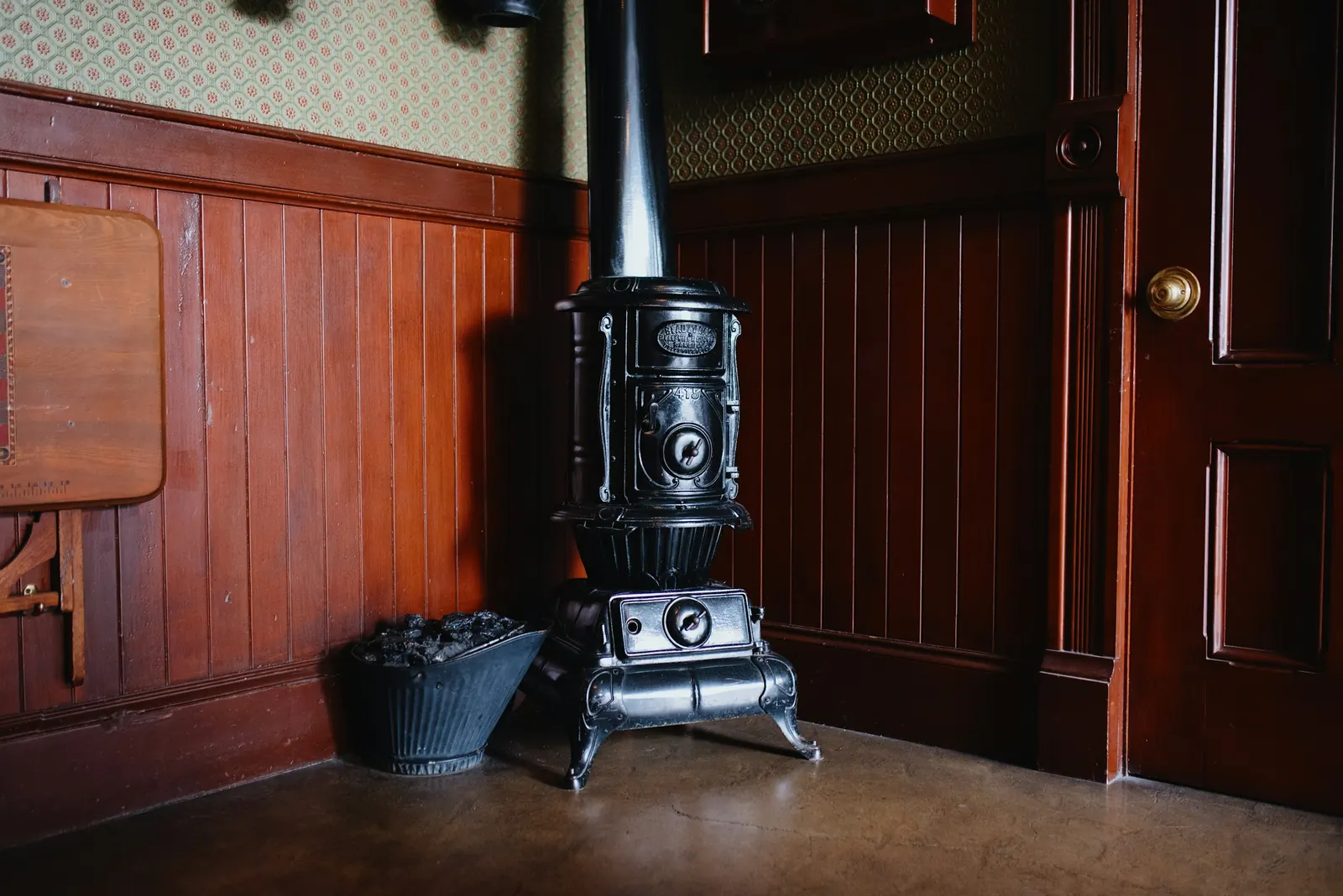
Why coal is different from wood
Anthracite, the hard coal still burned in many Pennsylvania and New Jersey homes, burns long, hot and steady with little visible smoke. That sounds easy on a chimney, and in one sense it is: coal makes very little creosote. But its exhaust carries sulfur compounds and very fine fly ash. When either meets moisture, from condensation in a cool flue or from humid summer air, they form acidic deposits that eat into mortar, clay tile and the wrong kind of metal.
So a coal chimney fails differently. Instead of a creosote fire, the typical problem is a liner or mortar joints slowly corroded away, often unnoticed until pieces fall or exhaust leaks.
Coal and wood compared
This comparison shows why a chimney that served a wood stove well may need changes for coal.
| Factor | Wood | Coal |
|---|---|---|
| Main deposit | Creosote, flammable | Fly ash and sulfur residue, acidic when damp |
| Main chimney risk | Chimney fire | Corrosion of liner and mortar; CO leakage |
| Smoke at the top | Visible when burning poorly | Little visible smoke even when venting poorly |
| Draft needs | Strong draft at startup | Steady, controlled draft, often via a barometric damper |
| Cleaning timing | Before the season and as needed | Promptly at the end of the season, and as needed |
The liner
A coal stove needs a flue lined with a material that tolerates coal exhaust. A clay tile liner in sound condition can serve, though acidic deposits eventually attack its mortar joints. For a stainless steel liner, the listing matters: liner manufacturers specify which of their products and alloys are listed for coal, and a liner listed only for wood or gas is not the right choice. The stove's manual and the liner's listing together decide.
Sizing follows the stove maker's instructions for the outlet size and chimney height. An oversized flue runs cool and gathers more acidic condensation, so the same logic that applies to wood stoves applies here: match the liner to the stove.
Draft control and connectors
Coal burns most evenly with a steady, moderate draft. Too much pull in cold, windy weather drives the fire hot and wastes fuel; too little lets gases linger. Many coal stove manufacturers call for a barometric draft control in the connector pipe, a weighted flap that opens to admit room air when the draft gets too strong, and specify the setting. Whether one is required, and where it goes, comes from your stove's manual.
Connector pipe should be the gauge and material the manual calls for, run with a rise toward the chimney, with secure joints and proper clearance to combustibles. Coal exhaust shortens the life of thin pipe, so check it every season.
Cleaning: spring matters most
With wood, people sweep before the season. With coal, the more important cleaning is at the end of it. Fly ash left in the flue and connector over a humid summer absorbs moisture and becomes corrosive, quietly attacking the liner and pipe until fall. Cleaning the flue, the connector and the base of the chimney soon after the last fire removes that ash before it does damage.
During the season, check the connector and the base of the chimney for ash buildup, especially if the stove becomes harder to control or exhaust smell appears near the stove. Fine coal ash can also block a cap screen; a cap suited to coal use helps.
Carbon monoxide and coal
Coal fires produce carbon monoxide, which is dangerous, and because coal burns with so little visible smoke, a venting problem is easy to miss. A cracked liner, a blocked flue, a loose connector or a downdraft can let exhaust into the house without any smoky smell to warn you.
Every home with a coal stove needs working CO alarms, including near sleeping areas and on the level with the stove. At the first alarm or any sign of illness, take everyone outdoors and phone 911 from there. Do not reopen the stove to investigate.
Coal-era fireplaces are a separate case
Many New York brownstones and Philadelphia rowhouses have small, shallow fireplaces built for coal grates in the nineteenth century. Those are not the same as a modern coal stove, and their flues are often unlined or lined with deteriorated tile. Burning coal in one today, or converting it to wood, calls for a full inspection first. In most cases a liner is part of making it usable.
Switching fuels on the same chimney
Owners sometimes move between coal and wood, or replace a coal stove with an oil or gas boiler on the same flue. Each switch is a reason to inspect and clean first. Wood burned in a flue coated with coal ash adds creosote on top of acidic residue. A gas appliance placed on a former coal flue meets old deposits that can flake off and block its smaller vent, and its cooler, wetter exhaust needs a liner sized for it.
In New Jersey, replacing a fuel-fired appliance on an existing chimney brings the state's chimney verification into the permit, which asks whether the flue is clean of residue from earlier solid or liquid fuel use and properly lined and sized for the new appliance.
What an inspection looks for
A coal chimney inspection pays particular attention to corrosion: flaking or pitted stainless steel, crumbling mortar joints between clay tiles, white or yellowish crusts at the base, and connector pipe thinned by rust. It also checks the barometric damper, the cleanout door seal, clearances around the stove and connector, and whether the liner's listing covers coal.
If you are switching a chimney from wood or oil to coal, or installing a coal stove for the first time, the inspection should come before the stove is connected, since many towns treat a new solid-fuel appliance as permitted work.
Call for an inspection if pieces of tile or metal flakes appear in the ash, the stove becomes hard to regulate, you notice exhaust smell near the stove, the barometric damper chatters constantly, or the chimney has not been cleaned since last season ended. Each visit ends with a written report, and any relining is priced on paper, free of charge, before work begins. Coal stove owners in our area often find it simplest to book that visit right after the heating season ends, when the cleaning matters most.
Common Questions
What kind of chimney liner do I need for a coal stove?
Does a coal stove need a barometric damper?
When should a coal stove chimney be cleaned?
Can I burn coal in a wood stove?
Does coal cause creosote?
Need help with this? See our chimney liners service, or call (844) 468-2410 for a free written estimate.

