
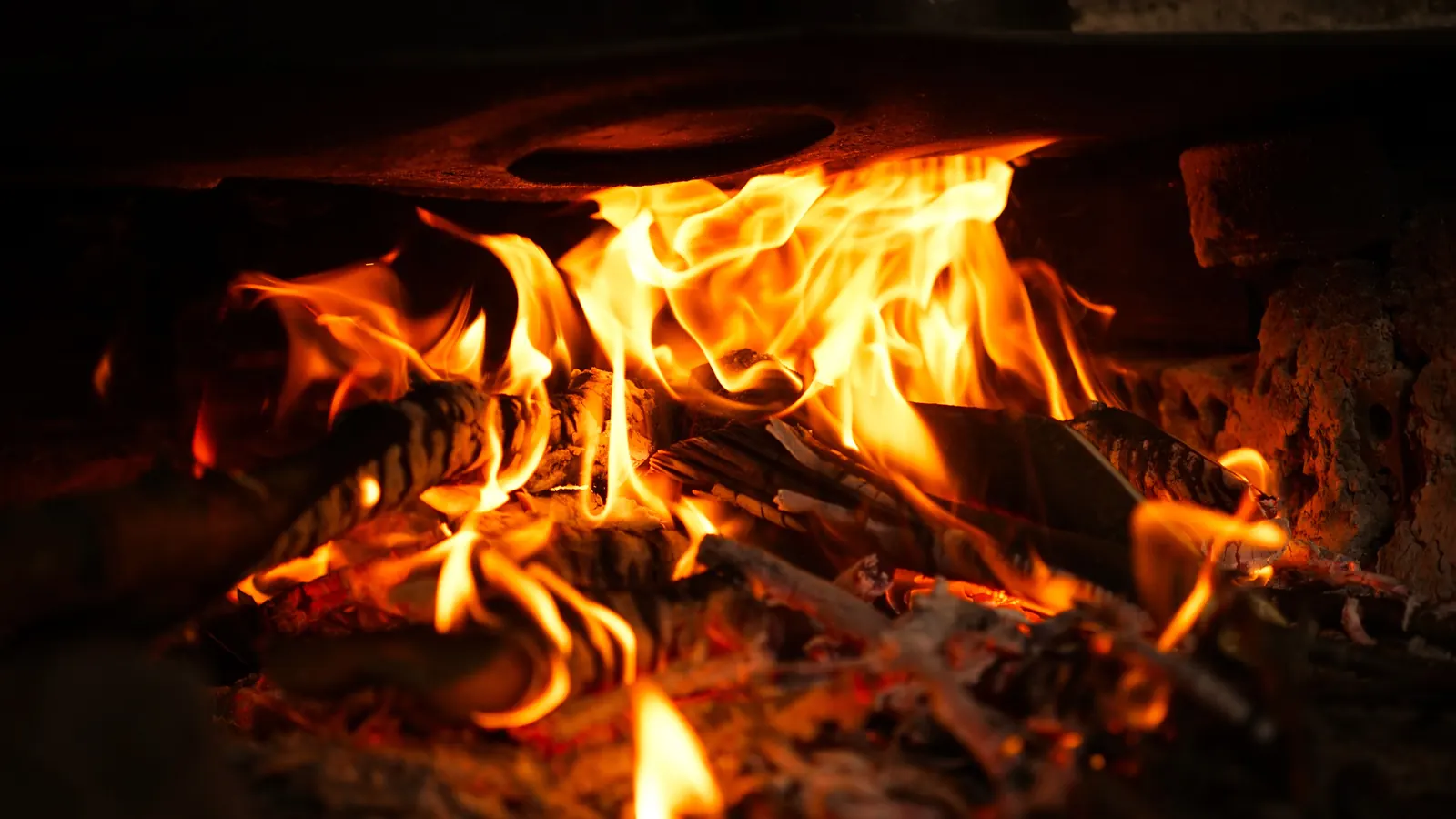
What firebrick is there to do
The inside of a masonry fireplace, the firebox, is lined with firebrick: dense brick made to take direct flame, laid with thin joints of refractory mortar that is also made for high heat. Behind that lining is ordinary brick, and not far beyond it, in most houses, are wood joists, studs and trim.
As long as the firebrick is whole and tight, the heat of the fire stays in the firebox and goes up the flue. Once there are open gaps, heat and small embers can work their way into masonry and spaces that were never meant to get hot. That, not the look of a crack, is what decides whether a repair is urgent.
Normal wear or real damage
Firebrick heats up and cools down every time the fireplace is used, and fine surface cracks are part of that life. A lining can have a few hairline cracks for many years without any loss of protection. What matters is whether the brick is still solid, flat and held firmly in place.
- Usually fine: hairline cracks with the brick tight and flat
- Keep an eye on: cracks that grow wider from one season to the next
- Repair: cracks you can fit the edge of a coin into
- Repair: chunks missing, bricks that move when pressed, or joints worn deep
- Repair: a back wall that bows, leans toward the room or has separated from the sides
Why fire bricks crack
In the fireplaces of older brick homes, from the boroughs to the Delaware Valley, the same handful of causes come up again and again, roughly in this order:
- Repeated heating and cooling, made worse by very large, very hot fires
- Rain falling down a flue with no cap, soaking the firebox so the next fire cracks wet brick
- Refractory mortar joints eroding with age, letting bricks shift and crack at the edges
- Logs dropped or thrown against the back wall, and grates pushed hard against it
- Water poured on a burning fire to put it out, chilling hot brick suddenly
- Old fireboxes, often from the coal era, built with ordinary brick rather than firebrick
The joints matter as much as the bricks
A firebox can fail at the mortar long before the bricks themselves look bad. Refractory mortar joints are thin by design, and over many seasons of heat, ash and moisture they shrink, crumble and wash out. Once a joint opens, the bricks on either side lose their support, start to rock, and crack at the edges where the load now concentrates.
Open joints are also the easiest path for heat to reach the masonry behind the lining. A wall of perfectly sound firebrick with deep, empty joints offers less protection than a wall of hairline-cracked brick with tight joints. That is why a technician looking at a firebox runs a tool along the joints rather than only glancing at the brick faces, and why repointing is often the first, most cost-effective repair.
Checking your own firebox
Once the fireplace is completely cold, sweep or vacuum the ash and take a strong flashlight to the sides, the back and the floor. Look along the joints as well as the bricks. Mortar that has worn back from the brick face, sandy grit collecting on the floor, or gaps where you can see into the wall behind are all worth noting.
Press gently on any brick that looks cracked. If it moves, sounds hollow or sheds pieces, it needs attention. Check the back wall from the side to see whether it is straight. A wall that leans toward the room, or a gap opening where it meets the side walls, means the panel is moving, and that is a rebuild rather than a patch.
Take a few photos so you can compare next season. Cracks that stay the same are less of a worry than ones that are clearly growing.
How cracked fire bricks get repaired
The repair is matched to the damage. Small cracks in otherwise sound brick can be filled with a refractory product made for that use, applied and cured the way its instructions say. Eroded joints are raked out and repointed with refractory mortar. Badly cracked or broken bricks are cut out one by one and replaced with new firebrick set in refractory mortar.
When many bricks are damaged, or the back wall has moved, rebuilding that panel is the sounder repair, and sometimes the whole firebox is relined at once. On older fireboxes, a rebuild is also a chance to correct dimensions or replace ordinary brick with proper firebrick, which matters if the fireplace will see regular use.
The firebox floor
The firebrick floor of the firebox, the inner hearth, takes ash, embers and the weight of the grate and logs. Broken or loose floor bricks let embers drop into gaps, where heat can build up under the fireplace close to the floor framing. Floor bricks that rock, have sunk or have open joints around them are replaced and the joints repointed.
Cracks in the outer hearth, the part that extends into the room, are a separate question, but the same rule applies: gaps that could let an ember fall through need attention.
Factory-built fireplaces use panels, not bricks
Metal factory-built fireplaces have refractory panels instead of loose bricks, often molded to look like brick. They follow different rules. Cracked panels are replaced with the panels the manufacturer specifies for that model, and the manufacturer's instructions say how much cracking is acceptable before replacement. The model label, usually inside the firebox or behind the screen, identifies which parts fit.
Using the fireplace in the meantime
With fine hairline cracks in tight brick, the fireplace can usually be used as normal while you plan an inspection. With wide cracks, missing pieces, loose bricks or a moving back wall, hold off until the firebox has been repaired. Prevention helps the new brick last: a cap to keep rain out, moderate fires of dry, seasoned wood, logs set down rather than dropped, and letting a fire burn out instead of dousing it with water.
During a visit we look over the firebox, the damper and the smoke chamber above it, since cracked firebrick and a rusted damper often share a cause in water coming down the flue. You get a clear explanation of what is cosmetic and what is not, and upfront pricing for the repair that fits.
Common Questions
Is it safe to use a fireplace with cracked fire bricks?
Can I fix fireplace brick cracks with regular mortar or caulk?
Should cracked fire bricks be replaced all at once?
Why did my fire bricks crack after only one season?
Is the black on my fire bricks damage?
Need help with this? See our fireplace repair service, or call (844) 468-2410 for a free written estimate.

