
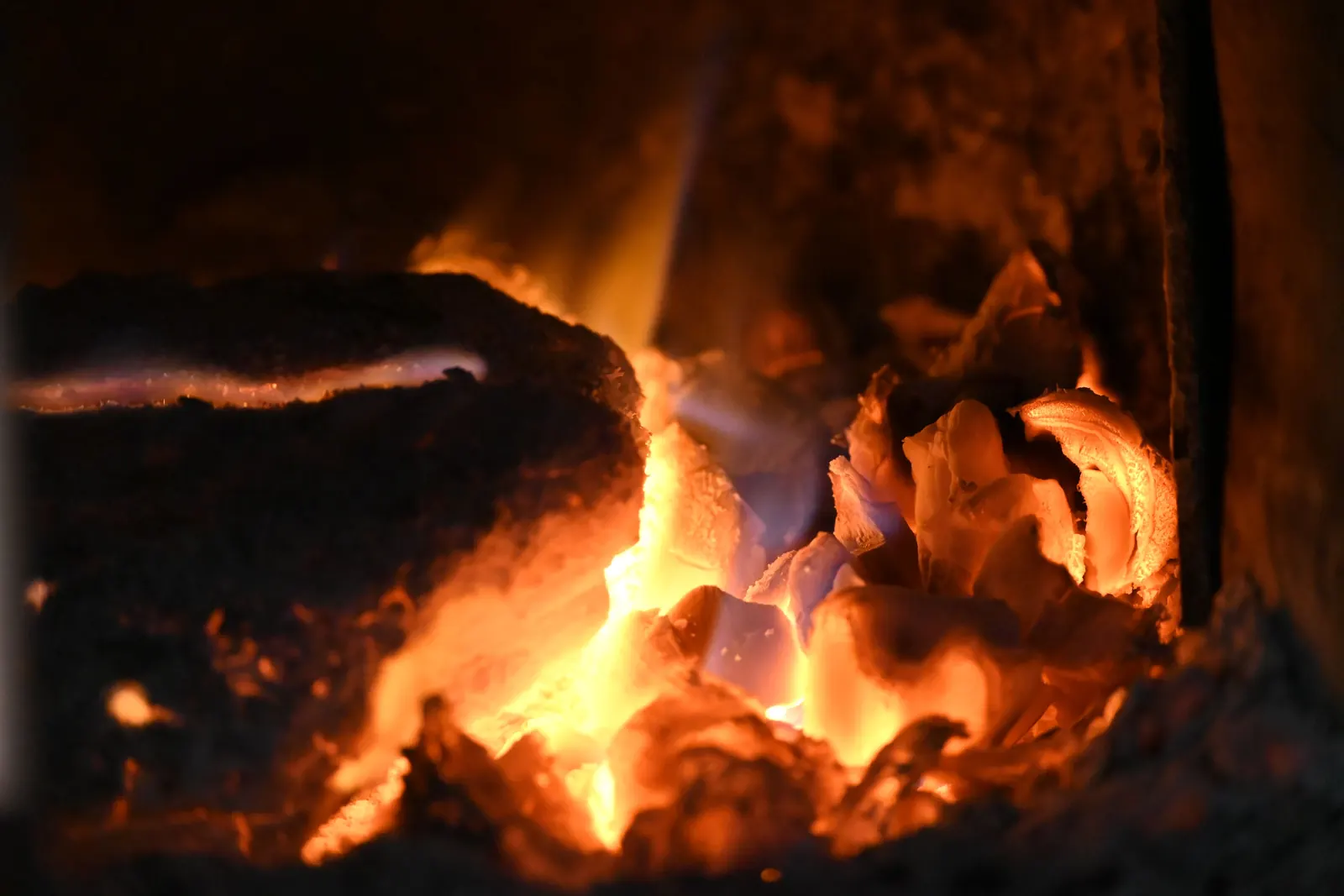
What a sweeping log is
A creosote sweeping log looks like a manufactured fire log in a paper wrapper, but it carries additives meant to treat the creosote already on the flue walls. You burn it on its own in a fireplace, usually following a fire so the flue is warm. As it burns, the additives rise with the smoke and settle on the deposits above.
The idea is that sticky, tar-like creosote is changed into a drier, more brittle form. Over the next one or two weeks of normal fires, some of that treated material loosens and drops down the chimney, landing on the smoke shelf, the damper or the grate. On a thin, flaky layer, that can noticeably reduce what is stuck to the walls.
Where these products can help
The households that get some value from a sweeping log or a creosote spray are those that burn often, use reasonably dry wood, and already have the chimney inspected and cleaned on schedule. For them, a treatment partway through the season can slow down the buildup of light deposits, so the next professional cleaning goes more easily.
In other words, they work at the margin, on a flue that is already in decent shape. They are least useful in exactly the situations where people tend to reach for them: a chimney nobody has looked at in years, a fireplace that smokes, or a stove that has been run low all winter.
What no treatment can do
A chemical works only on the surface it reaches, and only on certain kinds of deposit. It has clear limits:
- Hard, glassy third-stage creosote is not removed by a log or a single spray
- Loosened flakes still sit inside the chimney until they are vacuumed or brushed out
- Nests, leaves, fallen brick and broken tile are left exactly where they are
- Cracked flue tiles, open mortar joints, a rusted damper or a failing crown stay hidden
- Soot and scale in an oil boiler or gas furnace flue are a different problem altogether
Sprays, powders and professional treatments
Creosote remover sprays and powders work on the same principle as the logs. Powders are usually sprinkled onto a hot fire, and sprays are applied to a fire or the firebox as the label directs. Follow those directions exactly: these are chemicals designed for a hot firebox, and using them any other way can be unsafe.
Sweeps also use chemical treatments, but differently. For glazed creosote that brushes cannot shift, a professional modifier is applied directly to the flue walls, sometimes over a series of fires, and the changed deposit is then removed mechanically and the flue checked. The chemical is one step in a cleaning, not the cleaning itself.
- Sweeping log: treats light creosote so some flakes fall during later fires, but leaves those flakes on the shelf, heavy deposits in place and any damage unseen
- Spray or powder: a similar treatment applied during a fire, with the same limits, and only as good as how closely the label is followed
- Professional chemical treatment: changes glazed creosote so it can be removed, and works when it is followed by mechanical cleaning
- Mechanical sweep and inspection: brushes and vacuums the whole flue and checks its condition, leaving a clean flue and a clear picture of its state
Where the loosened flakes end up
Creosote that falls does not leave the house. Most of it lands on the smoke shelf, the ledge behind the damper, and on the damper plate itself. In rowhouse and brownstone chimneys with offset flues, some collects at the bend where the flue jogs sideways. On a stove or insert, flakes drop into the connector pipe, its elbows and the base of the liner.
Those piles sit right above or near the fire. A hot fire, a flare-up from paper or kindling, or a spark can ignite them. That is why the packaging for these products commonly presents them as a help between professional cleanings, and why the loosened material should be cleared rather than left to accumulate through the season.
Stoves, inserts and the appliance manual
Most sweeping logs are sold for open fireplaces. Before using one in a wood stove or fireplace insert, read the appliance's manual: some stove manufacturers restrict or prohibit manufactured fire logs, because the wax and additives burn differently from cordwood and can overheat a small firebox or damage a catalytic combustor.
Inserts deserve particular care. The liner above an insert is narrow, and flakes knocked loose inside it tend to drop back onto the top of the appliance, where they cannot be seen from the room.
The real risk: false confidence
The bigger problem with these products is not what they do but what people stop doing. A homeowner burns a log each fall, assumes the chimney is clean, and skips the inspection. Meanwhile the deposits the log could not reach keep building, a tile cracks from a hot fire, or a bird builds a nest on top of the flue.
NFPA 211 sets an annual inspection for chimneys, fireplaces and vents, with cleaning whenever it finds deposits. That routine catches what no treatment can: the condition of the liner, the damper and the masonry.
The top of the chimney is a blind spot as well. A missing cap, a crown cracked by last winter's freeze-thaw cycles or flashing pulled loose in a nor'easter lets water into the flue, and wet creosote is exactly the sticky, smelly kind a log treats least well. None of that is visible from the living room.
What does more than any product
The habits that keep creosote thin cost nothing extra and work every time a fire is lit. Wood that has dried long enough to crack at the ends and feel light for its size burns with active flame instead of hissing and smoking. Fires built with enough kindling to get hot quickly, and fed with a few pieces at a time rather than packed full, send hotter smoke up the flue, and hot smoke deposits far less on the way out.
Air control matters as much as fuel. A damper left only partly open, glass doors shut tight on a young fire, or a stove turned down to stretch a load all slow the smoke and cool it. If a fireplace still coats up quickly despite good wood and good habits, the cause is usually the chimney itself: an oversized or cold flue, an exterior chimney on an outside wall, or a draft problem. Those are worth diagnosing, because no log in a box can correct them.
When to book a sweep instead
Skip the log and call for a cleaning if any of the following is true. A sweep brushes and vacuums the whole flue, clears the smoke shelf and damper, and reports on what it found; our own crew does that work and tells you plainly what the flue looks like.
- Black flakes or chunks keep falling into the firebox
- A strong campfire or tar smell fills the room on humid days
- Smoke rolls into the room when a fire is lit
- You cannot remember the last cleaning or inspection
- Shiny, bubbly or glassy deposits are visible above the damper
Common Questions
Do fire logs to clean a chimney replace a chimney sweep?
Should I use a creosote sweeping log before the sweep comes?
Do creosote remover sprays and powders work?
Can a sweeping log cause a chimney fire?
Can I burn a sweeping log in a wood stove?
Need help with this? See our chimney sweeping service, or call (844) 468-2410 for a free written estimate.

