
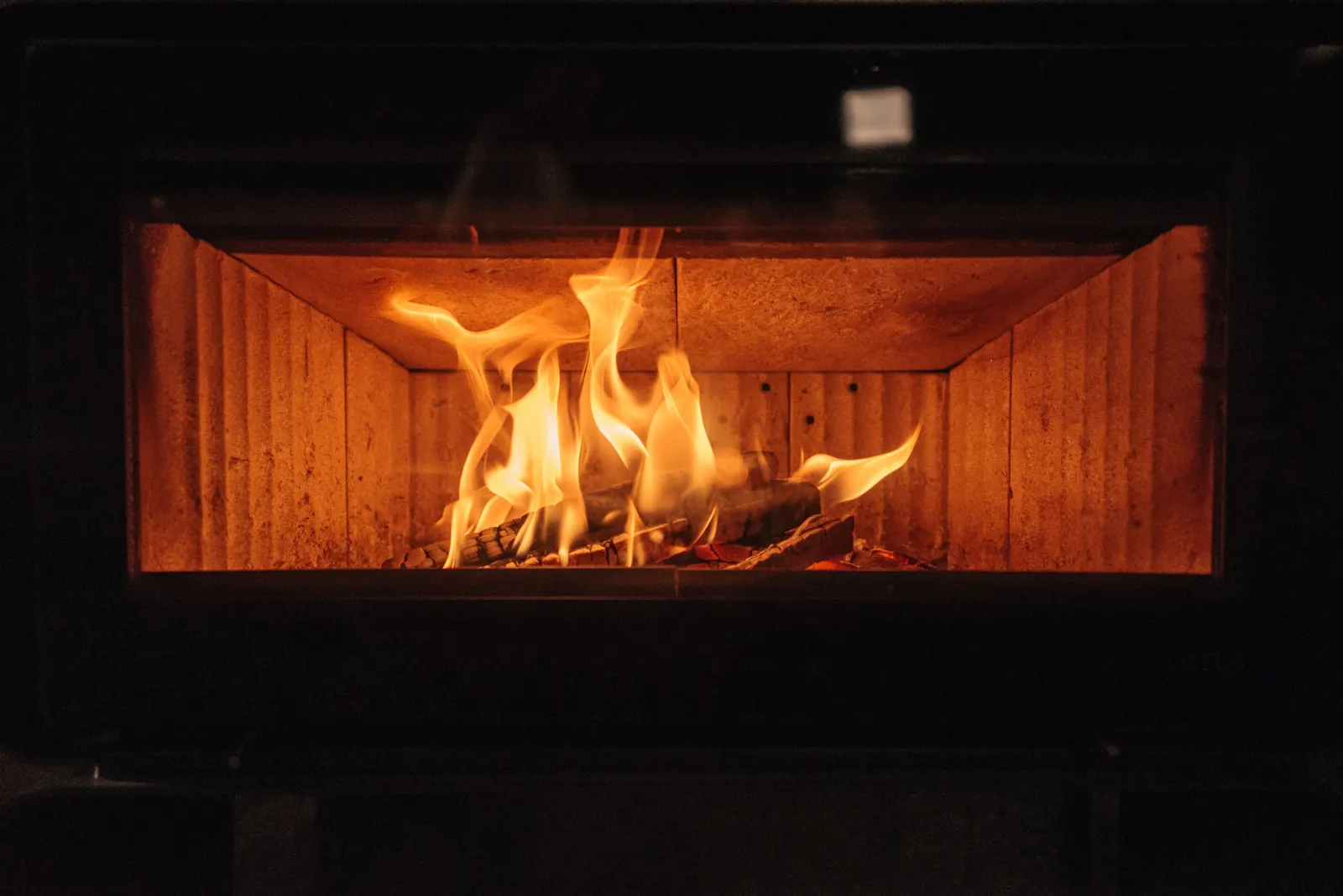
Why people make this switch
Plenty of fireplaces in the region have not burned wood in decades. Brownstone parlors in Brooklyn and Harlem often have small coal-era openings behind marble mantels, many Philadelphia rowhouses have shallow fireboxes on a shared party-wall stack, and colonials in New Jersey and on Long Island have big brick fireplaces that cost more in drafts than they give back in heat. An electric unit gives these rooms a flame effect and some heat without smoke, ash or a chimney fire risk.
It also suits homes where wood burning is impractical: a flue that failed inspection and is not worth relining yet, a building that does not allow open fires, or an owner who simply wants the look. Whatever the reason, the masonry fireplace and the chimney above it do not disappear when the electric unit goes in.
Insert, log set or wall unit
Three kinds of electric products end up in old fireplaces. The choice depends on the size of the opening, how much heat you want, and whether you care about the original surround.
- Measure the opening at the front and the back, since many fireboxes taper
- Check the depth from the face to the back wall at the bottom and at the top
- Note where the damper handle or chain sits so the unit does not block it
| Option | How it fits | Good to know |
|---|---|---|
| Electric insert | A box sized to the firebox, with a trim panel over the gap | Neat finished look; measure width, height and depth at front and back |
| Electric log set | Logs with a heater and flame effect that sit on the hearth | Works in odd sizes and shallow coal fireplaces; the opening stays visible |
| Wall or mantel unit in front | Mounted on or in front of the face, not in the firebox | Leaves the firebox untouched but changes the room more |
The chimney is still a hole in the roof
An electric fire heats the room, but an open flue above it keeps drawing warm air out of the house all winter, the same way an unused fireplace does. In older homes the throat damper is often warped or rusted and closes poorly, so an electric insert can sit in a constant cold downdraft. Warm air also leaks out around the insert's trim if the flue behind it is open.
Water and animals do not care what is in the firebox. An uncapped flue lets rain run down onto the smoke shelf and the back of the insert, and birds, squirrels and raccoons use an open chimney as a nest site. The electric unit can end up as the floor of that nest. A cap on top and a closed, sealed damper below are the basic fix.
Ways to close off the flue
The right closure depends on whether you might burn wood again. A top-sealing damper at the chimney top, with a cable down to the firebox, closes tightly and keeps the flue usable later. An inflatable draft stopper above the old damper is cheap and reversible but has to be removed before any fire is ever lit. A sheet-metal block-off plate sealed at the damper area is a more permanent closure.
Before sealing, have the flue swept. Creosote left from years of wood fires gives off a sour, smoky smell in humid weather, and an electric insert does nothing to stop that odor drifting into the room. A sweep and a cap usually solve it, and a closed flue keeps the remainder of the smell up the chimney.
Check what else uses the chimney
Many older chimneys in the region hold more than one flue, and in some the boiler or water heater vents into a flue right beside the fireplace, or, in poorly altered houses, into the same one. Blocking a flue that also carries furnace exhaust can send carbon monoxide into the house. Before any plate, plug or balloon goes in, someone needs to confirm which flue serves what.
From inside you can look up past the damper with a flashlight and see whether a pipe from the basement enters the same passage, but the reliable answer comes from an inspection of the whole chimney. Whatever you decide, keep working carbon monoxide alarms on every level, as you would in any home with a fuel-burning appliance.
Power: the part people skip
Most electric inserts and log sets plug into a standard household outlet, and their heaters draw a steady load for hours. Running the cord out of the firebox, across the hearth and into a wall outlet several feet away is common and not ideal: the cord gets stepped on, pinched under the trim or run under a rug. Insert manuals generally warn against extension cords and power strips for that reason.
A cleaner setup is an outlet near the firebox or, where the design allows, inside it, wired by a licensed electrician to local electrical code with a permit if your town requires one. Ask whether the circuit already carries other loads such as a window air conditioner or space heater, since a dedicated circuit avoids nuisance trips. Hardwired models exist as well; they need an electrician from the start.
How much heat to expect
Plug-in electric fireplaces on a standard household circuit are supplemental heaters. They warm a room, not a floor. In a masonry fireplace, some of that heat soaks into the cold brick around the insert before it reaches you, especially in the first hour. Units with a front-facing blower and a trim panel that seals the opening deliver more of their heat into the room than an open log set sitting deep in a big firebox.
If the goal is real heat for a cold room, the comparison shifts toward a gas insert or a wood insert with a lined flue. If the goal is the look of a fire and some comfort on cool evenings, electric does that without any venting work at all.
Keeping the option of a real fire
An electric insert slides out. As long as the firebox, damper and flue are left intact, the fireplace can be returned to wood or converted to gas later. Avoid fixes that are hard to undo, such as mortaring the throat shut or packing the flue with insulation. If a future buyer wants a working fireplace, a reversible closure and a chimney with a recent inspection make that easier.
Before the electric unit goes in is also a sensible time to have the chimney looked at: cap, crown, flashing and damper. Water damage and loose brick keep progressing whether a fire burns below or not.
Common Questions
Does an electric fireplace need a chimney?
Can I put an electric insert in an old coal fireplace?
Should the damper be closed behind an electric fireplace?
Can I plug an electric fireplace into an extension cord?
Need help with this? See our fireplace repair service, or call (844) 468-2410 for a free written estimate.

