
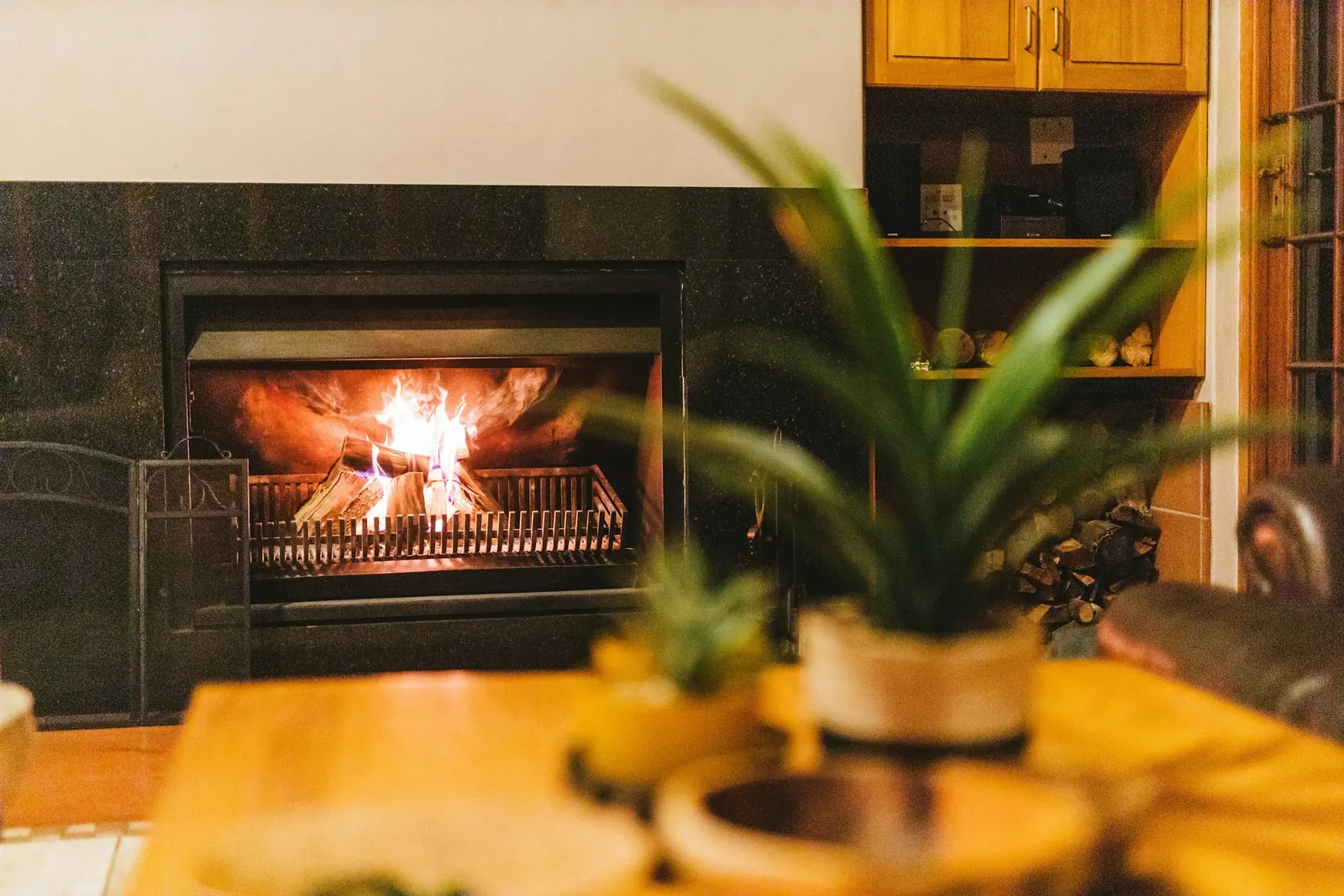
The rule, and the reason behind it
The damper is a movable plate or lid that opens and closes the flue. Open, it lets smoke and combustion gases rise out of the house. Closed, it stops the chimney from acting as a hole in the roof. Every decision about its position comes down to one question: is anything burning or smoldering in the firebox?
If the answer is yes, it stays open. If the answer is no, and no gas appliance relies on that flue, it should be closed. Most mistakes happen at the edges: lighting a fire before checking the plate, or closing it too early while the coals are still alive.
Open for every fire
A fire needs a clear path for smoke and gases to leave. A closed or half-open damper sends smoke into the room within minutes, and with it carbon monoxide, which you cannot see or smell. Open the damper before you strike a match, not after the room starts to fill.
Open means fully open. A damper handle can sit in the open position while the plate itself has slipped, rusted on its pivot or been blocked by debris. A glance up with a flashlight before the first fire of the season, and any time the fire seems reluctant to draw, confirms the plate is out of the way.
Opening the damper a few minutes before lighting also gives the flue a chance to start moving air. On a cold night, a chimney full of chilled air can push smoke into the room at first; holding a burning twist of newspaper near the throat for a minute warms that column and turns the draft upward before the kindling goes in.
When it is safe to close after a fire
Flames die down long before a fire is finished. A bed of embers can glow for hours under a layer of gray ash and keep giving off gases, including carbon monoxide. Closing the damper on those embers traps the gases in the house, which is the main reason this matters.
Leave the damper open until the ashes are cold to the touch, which often means the next morning. If you are worried about warm air escaping overnight, close the glass doors or set the screen and leave the damper alone. Do not shovel live coals into a bag or bin to close up early; ashes belong in a metal container with a lid, outdoors and away from the house.
Damper position at a glance
Here are the usual situations in a home with a masonry fireplace. Where your appliance instructions say something different, they take priority.
- About to light a wood fire: fully open, checked by eye
- Fire burning or embers still glowing: open
- Ashes cold to the touch: closed
- Between fires and through the summer: closed
- Vented gas logs installed: held open as the gas log instructions require
- Insert or stove with a liner through the throat: usually removed or fixed open for the liner
Closed between fires and all summer
An open flue is a direct opening from your living room to the outdoors. In winter, heated air escapes and cold air pours down in its place, especially in tall homes where the house itself pulls air through any opening. In summer, humid air sinking down the flue picks up the smell of old soot and creosote and carries it into the room. Birds, bats and squirrels can find their way down an open, uncapped flue in any season.
So close the damper in summer and on any day you are not burning. If yours does not seal well even when shut, or you can feel a steady draft around its edges, that is a sign the plate is warped or the frame is worn, and a top-sealing damper may serve you better. A cap on the chimney top keeps rain and animals out regardless, but it does nothing to stop warm air leaving through an open damper.
How to tell if the damper is open
Many dampers are hidden above the firebox opening, and their handles do not make the position obvious. With the fireplace cold, try these checks.
- Shine a flashlight up past the opening: open shows the flue or daylight, closed shows a metal plate
- Feel for moving air near the throat: a steady draft means it is open
- Hold a lit incense stick near the throat and watch which way the smoke goes
- Note the handle position on a rotary knob, push-pull lever or chain when you know the plate is open
- Look at the chimney top from the street: a top-sealing damper's lid is visible when open
Gas logs are different
Vented gas logs installed in a wood-burning fireplace send their exhaust up the chimney like a wood fire does. Their manufacturers typically require the damper to be fixed open, often with a clamp or stop that keeps it from closing all the way, so a pilot or burner cannot run with the flue shut. Follow the instructions that came with your set, and leave any damper clamp in place.
Sealed gas fireplaces and inserts with their own vent pipe do not use the masonry damper at all. If you are not sure which kind you have, have it checked before the next cold snap rather than experimenting with the damper.
Older fireplaces that break the pattern
Older homes in the region hold some fireplaces that do not fit the usual picture. Many brownstone and rowhouse parlor fireplaces were built for coal and have a shallow firebox with a narrow throat and no damper at all, or a cast-iron insert whose damper was lost long ago. Rumford fireplaces have a tall, streamlined throat that needs a damper made for that shape. In those cases the question is not open or closed but whether there is anything to close, and a top-sealing damper is often the practical way to add one.
One chimney can also hold several flues. The fireplace damper controls only the fireplace flue. A flue serving the boiler or water heater in the same chimney has no damper for you to set, and nothing about the fireplace damper changes how that appliance vents.
When the damper will not move or will not seal
Stuck, loose, rattling or handle-less dampers are common in older fireplaces, and rust from rain coming down an uncapped flue is the usual cause. Do not light a fire if you cannot confirm the damper is open.
A stiff damper can sometimes be freed and adjusted. One that is rusted through, warped or cracked is replaced, or bypassed with a top-sealing damper mounted at the chimney top and worked by a cable from the firebox. Inflatable draft stoppers and fireplace plugs can block drafts in an unused fireplace, but they must come out before any fire is lit.
Common Questions
Should the chimney flue be open or closed in summer?
Is my chimney open or closed if I cannot see the damper?
Can I close the damper to keep heat in while the fire dies down?
How long after a fire should I wait to close the damper?
Should the damper be open with a wood stove or insert?
Need help with this? See our fireplace repair service, or call (844) 468-2410 for a free written estimate.

