
What a screen does well
A freestanding or hanging mesh screen is the simplest protection in front of a fire. It catches sparks from popping wood, keeps a shifting log or a rolling ember on the hearth, and keeps pets and small children back from the flames. It barely changes the fire itself, so you feel the full radiant heat and see and hear everything. It needs no installation, works with almost any opening, and comes out of the way for loading wood or cleaning ash.
What it does not do is close anything. When the fire is out, the opening is still a direct path up the flue, and nothing but the damper stands between your living room and the outdoors. A screen also has to fit: one that is too short or too narrow for the opening lets sparks escape at the edges.
What glass doors do well
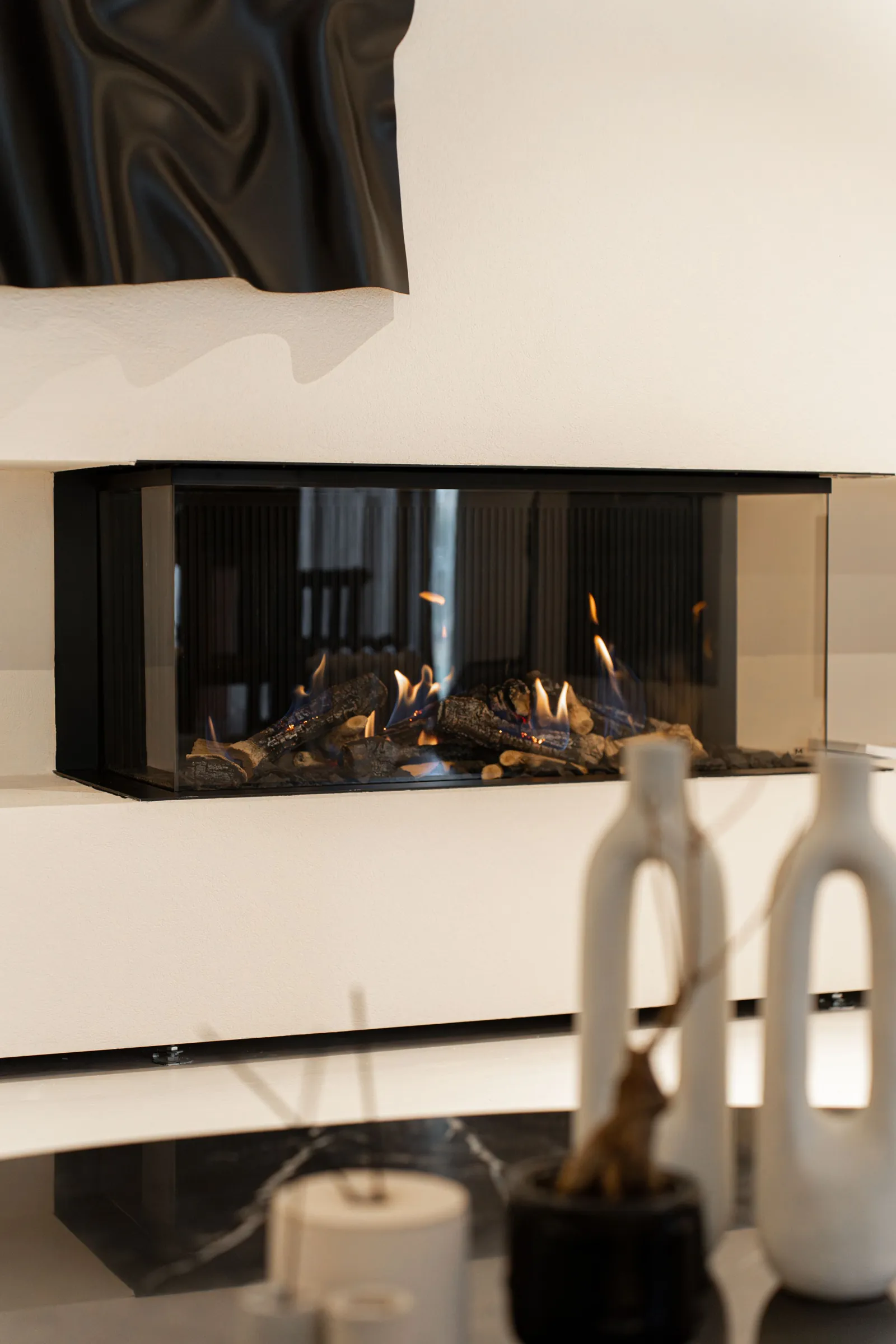
Glass doors are mounted on a frame fitted to the fireplace opening. Closed, they seal the front of the fireplace. That cuts the warm room air pulled up the chimney when the fire is out, stops cold air and creosote odors from drifting down into the room, and keeps soot and ash inside the firebox. As a fire dies down, closed doors add a barrier against embers while the house sleeps, provided the instructions allow it.
Most door sets include a mesh curtain behind the glass. With the glass open and the mesh drawn, you get the screen's job while the fire burns hard; with the glass closed, you get the seal. That combination is why doors are popular in older homes where the fireplace is the drafty spot in the room.
How they compare
Laid side by side, the differences are mostly about what happens when the fire is not burning:
| Question | Mesh screen | Glass doors |
|---|---|---|
| Sparks during a fire | Stops them if it covers the opening | Glass or built-in mesh stops them |
| Drafts with the fire out | No effect; damper does the work | Reduces them when closed |
| Heat you feel from the fire | Nearly all of the radiant heat | Less with glass closed; full with mesh only |
| Installation | None | Measured and mounted to the opening |
| Upkeep | Brush off soot occasionally | Glass cleaning, hinge and latch care |
| Factory-built fireplaces | Usually fine in front of the opening | Only doors listed for the model |
Fitting doors to an old brick opening
Openings in brownstones, rowhouses and older colonials are rarely square. Brick faces bow, lintels sag slightly over the decades, and many openings are arched or wider at the bottom than the top. A door frame forced onto an uneven face leaves gaps that leak air and puts stress on the glass. Doors for these openings are measured carefully, sometimes at several points, and some need a custom-sized or arched frame.
Mounting matters as much as size. Most masonry doors attach with clips or anchors set into the opening or the brick face, and loose face brick or crumbling mortar has to be repaired first or the frame will not stay tight. If the face brick has pulled away from the firebox, leaving a gap, that is a repair to make before any doors go on.
Using doors with a fire burning
Door instructions vary, and following them is what keeps the glass intact. Some doors are designed to be open with the mesh drawn while the fire burns strongly and closed only as it dies down; others allow burning with the glass closed. Closing glass on a roaring fire that the doors were not designed for can overheat the glass and the frame and crack the panes.
Whatever the door type, the damper stays fully open whenever there is fire or hot coals in the firebox, and doors are not a reason to close it early. Closed doors do not make it safe to leave a fire unattended or to go to bed with the damper shut over warm ash.
Drafts and energy
When the fireplace is not in use, closed doors in front of a closed damper reduce the heated air lost up the chimney and the cold air that sinks down it. The damper remains the main seal. A rusted, warped or broken damper leaks no matter what is in front of it, and on many older fireplaces the original throat damper no longer closes tightly. A top-sealing damper at the flue outlet is a common fix when that is the case.
While a fire burns, doors do not turn an open fireplace into a heater. Most of the fire's heat still goes up the flue, and closed glass blocks part of the radiant heat that reaches the room. If heating the room is the goal, an insert is the option that changes the outcome.
What drives the cost of glass doors
Doors are priced by the opening and by the build. These are the factors that move the number:
- Opening size and shape, and whether a stock size fits or a custom frame is needed
- Frame material and finish
- Type of glass and whether a mesh curtain is included
- How the frame mounts to the masonry or the factory-built unit
- Any face brick, mortar or damper repair needed before the doors can sit flat
Looking after either one
Screens need little more than an occasional brushing to clear soot from the mesh, plus a check that the frame still stands square and the mesh has no torn spots a spark could slip through. Doors ask a bit more. Clean the glass only when it is cold, with a cleaner made for fireplace glass, since a wet cloth on hot glass can crack it. Keep hinges and the mesh curtain rods free of ash so they move easily.
Once or twice a season, look at the frame where it meets the brick. A gap opening along one side means the clips have loosened or the masonry has moved, and both are easier to put right early than after a pane has cracked.
Choosing for your household
If you burn often and mainly want protection from sparks, a well-fitted screen is simple and effective. If the fireplace sits unused for long stretches and the room feels drafty, or you want ash and soot kept out of sight, doors with a mesh curtain do more. Households with small children or pets often want both a barrier during the fire and a closed opening afterward, which again points to doors. Have the opening measured, the damper checked and a free written estimate in hand before ordering, so the doors fit the fireplace you actually have.
Common Questions
Are glass doors safer than a fireplace screen?
Can I add glass doors to any fireplace?
Do I still need a screen if I have glass doors?
Should fireplace glass doors be open or closed during a fire?
Do glass doors stop a fireplace draft?
Need help with this? See our fireplace repair service, or call (844) 468-2410 for a free written estimate.

