
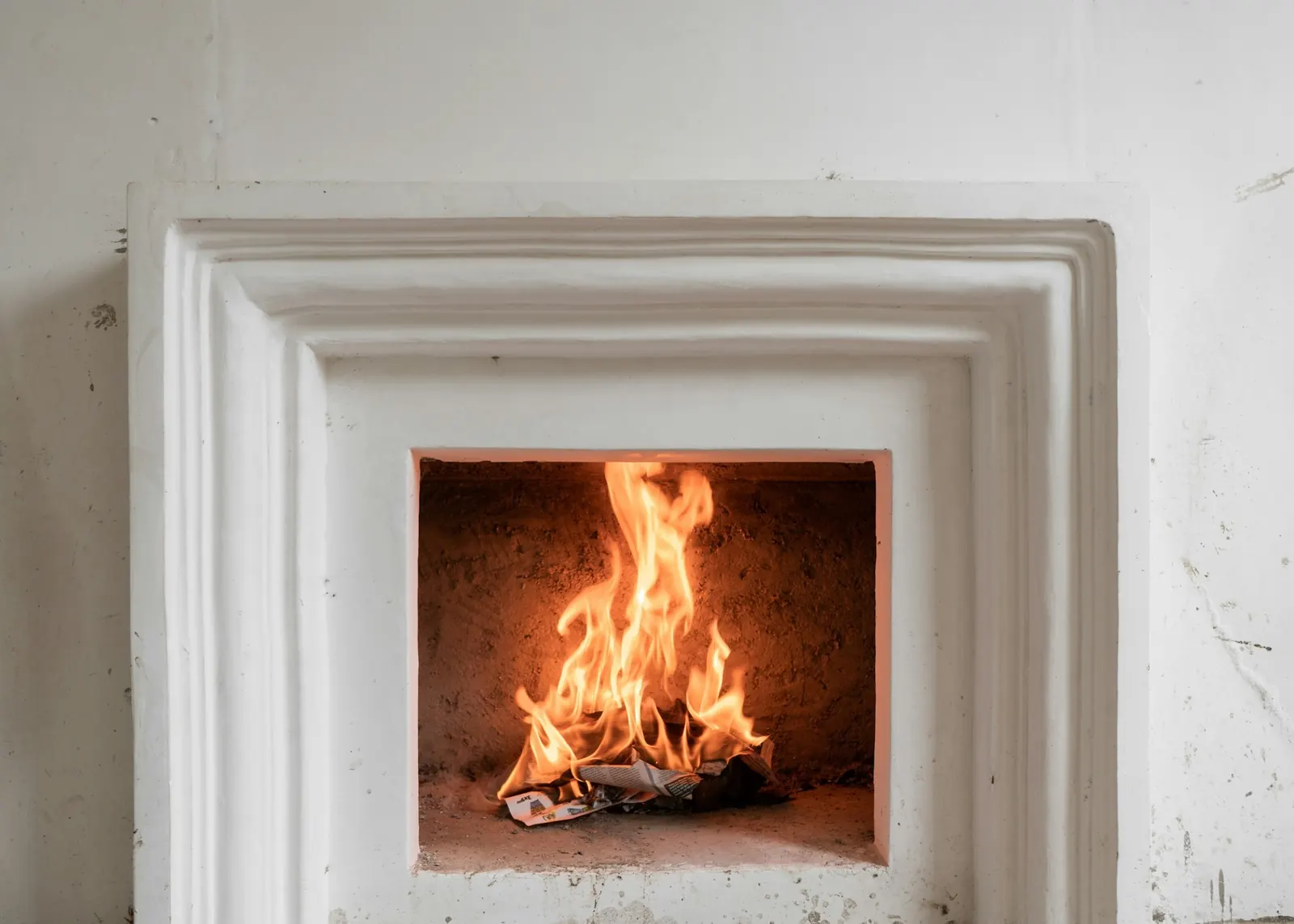
Find where the smell starts
Before guessing at causes, narrow down the place. Stand close to the glass or screen, then near the control panel or lower grille where a blower lives, then along the wall and mantel above and beside the unit. Notice whether the smell begins the moment the burner lights, only after the fan kicks on, or only after an hour of steady heat. Note too whether it is present when the fireplace is cold.
Those observations sort the problem quickly. A smell centered on the firebox at startup points to coatings or whatever is burning. One that arrives with the fan points to the blower or its wiring. A smell that builds slowly near the trim or wall points to heat reaching something outside the unit. A plastic or chemical odor with the fireplace off usually comes down the flue.
A new gas fireplace, stove or insert
Factory-built fireplaces, inserts and stoves are finished with high-temperature paint, and many steel parts carry a thin film of oil from manufacturing. Ceramic logs and refractory panels can contain binders as well. The first time the unit reaches full heat, those coatings cure and give off a sharp, chemical smell that many owners describe as burning plastic, sometimes with a light haze.
Most manuals describe this break-in period and how to run through it, often on high for a set time with windows open and people and pets out of the room. The smell should weaken noticeably each time. If it is just as strong after the period the manual describes, or it returns after weeks of normal use, the cause lies elsewhere.
Blowers, wiring and controls
Many gas fireplaces and inserts have a blower that pushes room air around the hot firebox. Its fan collects dust, lint and pet hair through the off season, and the first runs in autumn scorch that layer. That smell is dusty and short-lived. A motor with worn bearings or a failing winding runs hot and gives a more acrid, electrical smell that some people call fishy, and it may hum louder than it used to.
Wiring is the more serious concern. Insulation on wires routed too close to the firebox, a loose connection at the fan, or an outlet inside the cavity that was not meant to sit in the heat can all soften and smoke. A remote receiver or battery pack left on the hearth or tucked near the burner can melt. A breaker that trips when the blower runs, browned plastic on a switch plate, or a smell that clearly follows the fan rather than the flame all mean the unit should be turned off and stay off until it is serviced.
What is going into a wood fire
With a wood-burning fireplace, the source is usually the fuel. Packaging, plastic-coated paper, glossy magazines, wrappers from fire starters, painted or pressure-treated lumber, pallets with treated parts, composite decking offcuts and household trash all produce harsh, plastic-smelling smoke. Some also leave residue in the flue that keeps smelling long after the fire is out.
Clean, dry, split firewood and plain newspaper or kindling are what belong in the firebox. Wood that hisses, sizzles at the ends or is hard to light is too wet; it smolders, smokes heavily and coats the flue with creosote, which has its own sharp, tarry smell.
Heat reaching trim, mantel and walls
A fireplace heats more than its firebox. A television mounted directly above, vinyl or plastic trim pieces, a foam or plastic mantel decoration, artificial garland, candles left on the mantel and even the backing of a rug on the hearth can all get warm enough to soften and smell. New paint on the surround or a freshly finished mantel can also give off odors for a while when the heat first reaches it.
Each factory-built fireplace and insert has clearances to mantels, trim and walls set in its installation instructions, and those figures govern that particular model. A hot smell coming from inside the wall, or paint that browns or blisters above the opening, suggests heat is reaching framing or materials that should not see it. That is a stop-and-inspect situation, not an inconvenience to live with.
When the smell comes down the flue
With the fireplace cold, a plastic odor usually rides in on air flowing down the chimney. A shopping bag or nest built with plastic scraps can sit on the smoke shelf or on top of the damper, and a missing cap lets more debris collect. In attached houses where several flues share one stack, smoke from a neighbor who burns trash or treated wood can be pulled down an open flue next door.
A sweep clears whatever is lodged in the flue, and a cap with mesh sides keeps animals and wind-blown litter out. If the smell is fresh smoke from another household, the fix is sealing your own flue during the months you do not burn.
What a technician checks
On a gas unit, the service visit opens the control compartment and looks at the blower, its wiring and connectors, the outlet or junction box that feeds it, and the receiver for the remote. The burner, pilot and log or media placement are checked against the manufacturer's diagram, the glass gasket is inspected, and the vent is followed from the unit to its outlet. Clearances from the unit to the mantel, trim and wall are measured against the installation instructions for that model.
On a wood fireplace, the firebox, damper, smoke shelf and flue are examined for melted residue, debris and creosote. A failed part on a factory-built unit is replaced with the part listed for that model rather than a generic substitute, and you hear the findings and the price before anything is changed.
When to switch it off, and what the visit covers
Turn the fireplace off and let it cool if the smell does not fade, grows stronger, or arrives with any of the warning signs below. Do not relight it until it has been examined. Smoke from burning plastic irritates the eyes and lungs, so ventilate the room while you wait. A CO alarm sounding is a separate emergency: leave the house, then call 911 from outside.
- Smoke or haze from the control area, grille or wall rather than the firebox
- Browned, blistered or scorched paint on the wall, mantel or trim
- A breaker that trips whenever the blower runs
- Glass that turns sooty or hazy within a few hours of use
- A gas flame that turns lazy, tall and yellow where it used to burn crisp
Common Questions
Why does my chimney smell like burning plastic?
Is it normal for a new gas fireplace to smell like burning plastic?
Is a burning plastic smell from a fireplace dangerous?
Why does my fireplace insert smell when the blower is on?
Need help with this? See our fireplace repair service, or call (844) 468-2410 for a free written estimate.

