
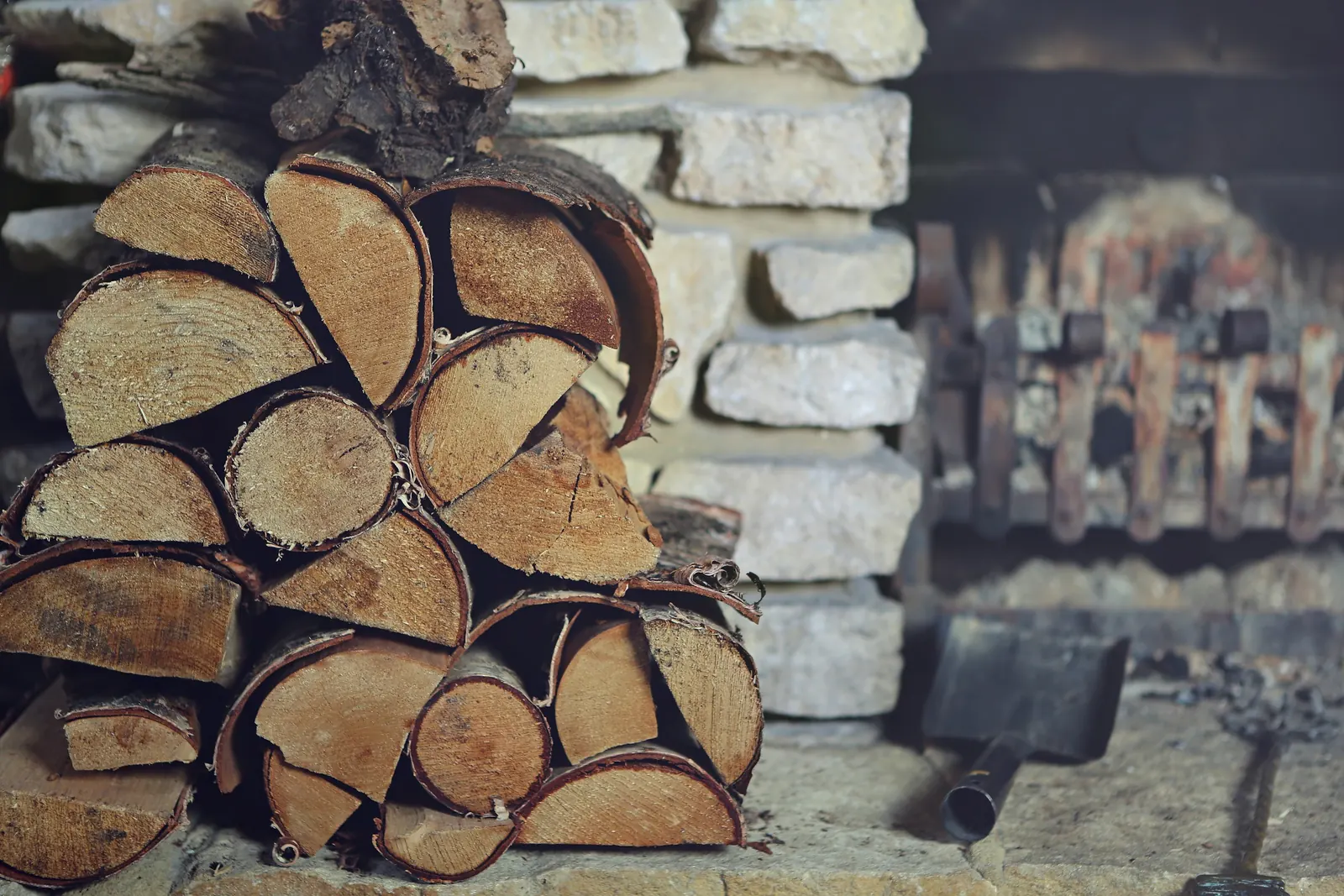
What gas logs are
Gas logs are ceramic or refractory logs arranged over a gas burner and set into an existing wood-burning fireplace. Vented sets send their combustion products up the chimney, so the flue must be open while they run, and many installation instructions require the damper to be fixed partly open so it cannot be closed all the way by mistake. Vent-free sets burn more completely and release their exhaust, including water vapor, into the room; they carry their own sizing rules, an oxygen depletion sensor, and in some places local restrictions.
Gas logs are not the same thing as a gas insert or a gas fireplace. A direct-vent insert is a sealed box with a glass front that vents through its own liner and is designed to heat. Gas logs sit in the open firebox and are mainly about the look of a fire.
Side by side
The practical differences show up in daily use and in what the chimney goes through:
| Point | Wood fire | Vented gas logs | Vent-free gas logs |
|---|---|---|---|
| Starting and stopping | Build, tend, wait for coals to die | On and off with a key, switch or remote | On and off with a key, switch or remote |
| Heat to the room | Radiant heat near the fire | Mostly decorative | More heat stays in the room |
| Chimney use | Open flue, swept for creosote | Open flue, damper fixed partly open | No venting outdoors; damper rules per manual |
| Mess | Ash, bark, soot | Little; occasional soot on logs | Little; moisture and odor in the room |
| Main upkeep | Sweeping, firebox and damper care | Burner, pilot and log service | Burner and sensor service, room limits |
Living with each one
Wood is work, and some people enjoy every part of it. You buy, stack and season firewood, carry it in, build the fire, tend it, and wait for the coals to die before bed and before cleaning ash. In return you get a fire with sound, smell and changing light that gas does not copy, and a fireplace that works whether or not there is a gas line.
Gas logs fit a different routine. They light in seconds and go out the moment you switch them off, so a short evening fire is easy. There is nothing to store and nothing to carry out. The flame is steadier and less lively than wood, and owners who grew up with wood fires sometimes miss the crackle more than they expected.
Neighbors are part of the picture in dense blocks of attached houses. Wood smoke drifts into nearby windows and yards, and a smoky, smoldering fire is noticed quickly on a street of rowhouses. Burning only dry, seasoned wood in a hot, bright fire keeps visible smoke down. Some owners in tight neighborhoods choose gas partly for this reason, keeping the fireplace in use without the smoke.
Heat output, honestly
An open wood fire throws strong radiant heat at whoever sits in front of it, but it also pulls large amounts of warm room air up the flue. Vented gas logs do the same with a smaller flame, which is why they are mostly decorative. Vent-free logs keep more heat in the room precisely because their exhaust stays in the room, which is the trade-off behind their limits on room size and run time.
When real heat is what you want, a wood stove, a wood-burning insert or a sealed gas insert changes the outcome far more than switching between wood and gas logs in an open firebox.
What each one asks of the chimney
Wood smoke condenses on the cooler upper flue as creosote, which hardens through flaky, crusty and glazed stages and is the fuel for chimney fires. A wood-burning flue needs sweeping whenever deposits build up, along with the yearly inspection NFPA 211 recommends for every chimney and vent.
Gas burns cleaner, with little soot and no creosote, but its exhaust carries a lot of water vapor. In a cold masonry chimney, especially an unlined one or one with cracked clay tiles in a freeze-thaw climate like ours, that moisture can condense inside the flue and soak into the brick and mortar. A gas flue can also be blocked by nests or fallen debris, and the burner, pilot assembly and log placement all need periodic service. Gas logs set in the wrong position can produce soot, so they go back exactly as the manual shows after cleaning.
What drives the cost of each
Comparing the two on cost comes down to factors that vary from house to house:
- Whether a gas line already reaches the fireplace or one has to be run
- The type and size of the log set, vented or vent-free, and the controls chosen
- Chimney or firebox work needed first, such as repairs, a damper clamp or a cap
- Local gas prices and how many hours you run the logs
- Firewood prices, delivery and the space to store and season it
- Ongoing upkeep: sweeping for wood, burner service for gas
Switching from wood to gas, or back
Going from wood to gas starts with a sweep, because creosote left in a flue does not disappear when the fuel changes. The chimney is inspected, the firebox and damper repaired as needed, and the gas line brought to the fireplace by a licensed professional. Permit requirements for gas work vary by town, so check with your local building department. Older chimneys that will carry gas exhaust are checked closely for liner condition because of that moisture.
Switching back to wood is often possible. The log set is removed, the gas line is capped by a licensed professional, and the chimney and firebox are inspected before the first wood fire, since a flue that has carried only gas exhaust for years may have moisture damage or debris that went unnoticed.
Safety with either choice
Install carbon monoxide alarms on every level of the home and near sleeping areas, whatever you burn. Carbon monoxide is dangerous and invisible. If an alarm sounds, leave the house and phone 911 or your gas utility once you are outdoors. If you smell gas, do not touch light switches or the fireplace controls; leave first, then call. We inspect and repair chimneys and fireboxes for both wood and gas fireplaces, and put the findings in a free written estimate.
Common Questions
Is a gas fireplace cheaper to run than wood?
Can I switch back to wood after installing gas logs?
Do gas logs need a chimney?
Do gas logs need the chimney swept?
Can I burn wood on top of gas logs?
Need help with this? See our fireplace repair service, or call (844) 468-2410 for a free written estimate.

