
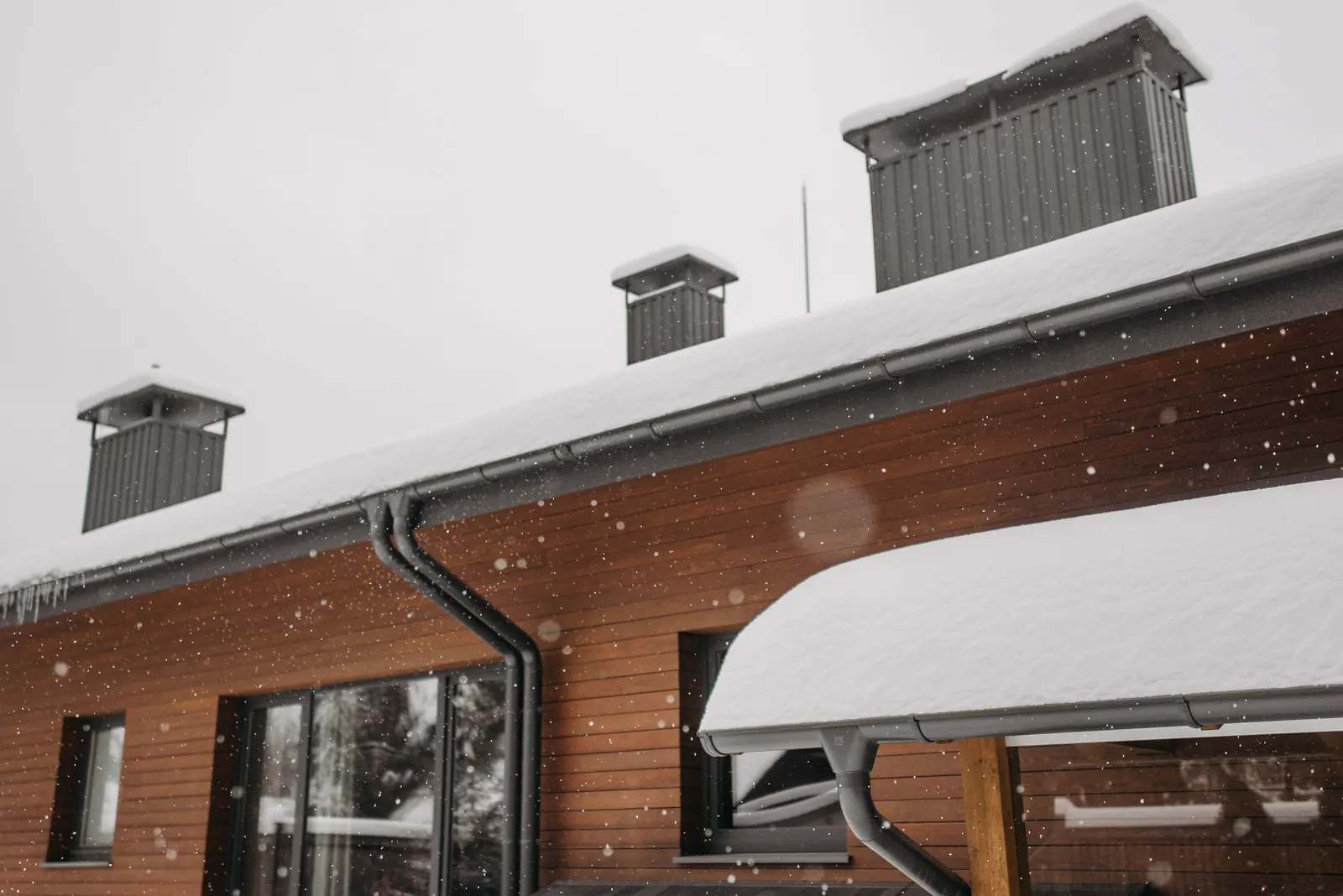
Why an open flue appeals to birds
To a bird, an uncapped flue looks like a hollow tree: high, dry, sheltered from wind and out of reach of cats and hawks. The inside walls of clay tile and brick give some species a rough surface to cling to, and the smoke shelf above a fireplace damper gives others a flat ledge to build on.
Chimneys that have been nested in once tend to draw birds back in later seasons. A nest that stays in the flue over the winter also tells passing birds that the spot is usable. Closing the top is what breaks that cycle; scaring birds away or removing one nest does not.
Older chimneys often make it easier still. Many have several flues side by side with no caps at all, or caps that have rusted open, so a single stack can offer a choice of entrances. An unused flue is especially attractive, since nothing warm or smoky ever rises through it.
Which birds you are likely hearing
In the Northeast two very different groups use chimneys. Chimney swifts are small, dark birds that spend the warm months here and leave for the winter. They cannot perch like most birds; they cling to vertical surfaces, and they build a small half-cup nest of twigs glued to the inside wall of the flue with their own saliva. At dusk in late summer you may see them circle and drop into a chimney together to roost.
Starlings and house sparrows behave differently. They stuff grass, sticks, paper and feathers onto the smoke shelf or into the base of a flue, sometimes enough to block it. Pigeons may roost on the top of an open flue or on a wide crown. Knowing which one you have decides what comes next.
Chimney swifts and federal law
Chimney swifts are protected under the Migratory Bird Treaty Act. The US Fish and Wildlife Service explains that the law prohibits the take of protected migratory bird species, which includes killing or capturing them, without prior authorization from the Service. In practical terms, a swift nest with eggs or young is left in place until the birds have gone for the season.
If you are unsure what kind of bird is in the chimney, or think you may need to act while birds are present, contact the Fish and Wildlife Service or your state wildlife agency before anything is disturbed. A sweep can help identify the birds from the firebox, but the legal answer comes from the wildlife authorities.
Sounds and signs to recognize
Bird noise is loud in daylight and quiet at night. Swift chicks make a rising, rasping chatter that swells each time a parent drops in to feed them, often many times an hour. Starlings and sparrows make more varied chirping and scrabbling on the smoke shelf, and you may hear wings beating against a closed damper.
Other clues are twigs, grass and feathers falling onto the hearth, droppings on the damper plate, and a musty smell in warm, humid weather. Heavy scratching and thumping at night points to a raccoon or squirrel rather than a bird, and that calls for a different response. Keep a note of when the noise started and when it stops each day; that pattern, along with a look at any debris on the hearth, usually tells a sweep which bird is in the flue before anyone climbs a ladder.
What to do while birds are inside
The goal while birds are present is to keep them out of the room and avoid harming them. Most of what helps is simply not doing things people are tempted to try.
- Keep the damper closed and the fireplace doors or screen shut
- Do not light a fire or a smoky log to drive them out
- Do not pour water, chemicals or repellents down the flue
- Do not reach up or poke at the nest from the firebox
- If a bird gets into the room, close interior doors and open a window
Birds in a heating flue
A nest in a fireplace flue is a nuisance. A nest in the flue that serves the boiler or water heater is a safety problem, because the appliance keeps firing while the passage narrows. Starlings and sparrows in particular can pack enough material into the base of a heating flue to block it, and exhaust then spills back into the basement.
Carbon monoxide is dangerous and gives no warning by smell, so working CO alarms on every floor matter in any house with fuel-burning equipment. If an alarm goes off, get outside first, then phone 911 or your utility. Debris falling from a heating flue's cleanout is a reason to call a sweep promptly rather than at the next routine visit.
Guards and caps that hold up
The guard that lasts is a properly sized stainless cap with mesh on all four sides, fastened to the flue tile or the chimney top so wind and birds cannot lift it. Wire screens wedged into the flue or bent over the top tend to rust, blow loose or clog with soot. Every flue on the chimney needs covering, including the boiler flue and the ones nobody uses, since birds will find the one left open.
The mesh must be tight enough to stop birds yet open enough for the fuel below; an oil boiler flue needs a screen that will not crust over with soot. Torn mesh, a cap knocked askew by a storm or a corner gap where the screen meets the frame are the usual ways birds get back in.
After the season: clearing and capping
Once the birds have gone, the nest material, droppings and feathers come out, a sweep brushes the flue, and the cap goes on, ideally well before the next spring. An old nest left in place is dry fuel sitting where heat and sparks pass, and in a heating flue it keeps narrowing the exhaust path.
Timing follows the bird. With swifts, that means waiting until they have left for the season in fall. With starlings or sparrows in a heating flue, the blockage itself may set the schedule, which is one more reason to identify the bird before planning the visit.
When the cap is fitted, the flue is checked for damage the nesting may have hidden, such as cracked tile or a rusted damper. The crown and cap work are priced in writing before the visit starts.
Common Questions
What is a chimney bird guard?
Can I remove a birds' nest from my chimney myself?
Will birds leave the chimney on their own?
How do I know if it is chimney swifts?
When is the right time to cap a chimney against birds?
Need help with this? See our caps & crowns service, or call (844) 468-2410 for a free written estimate.

