
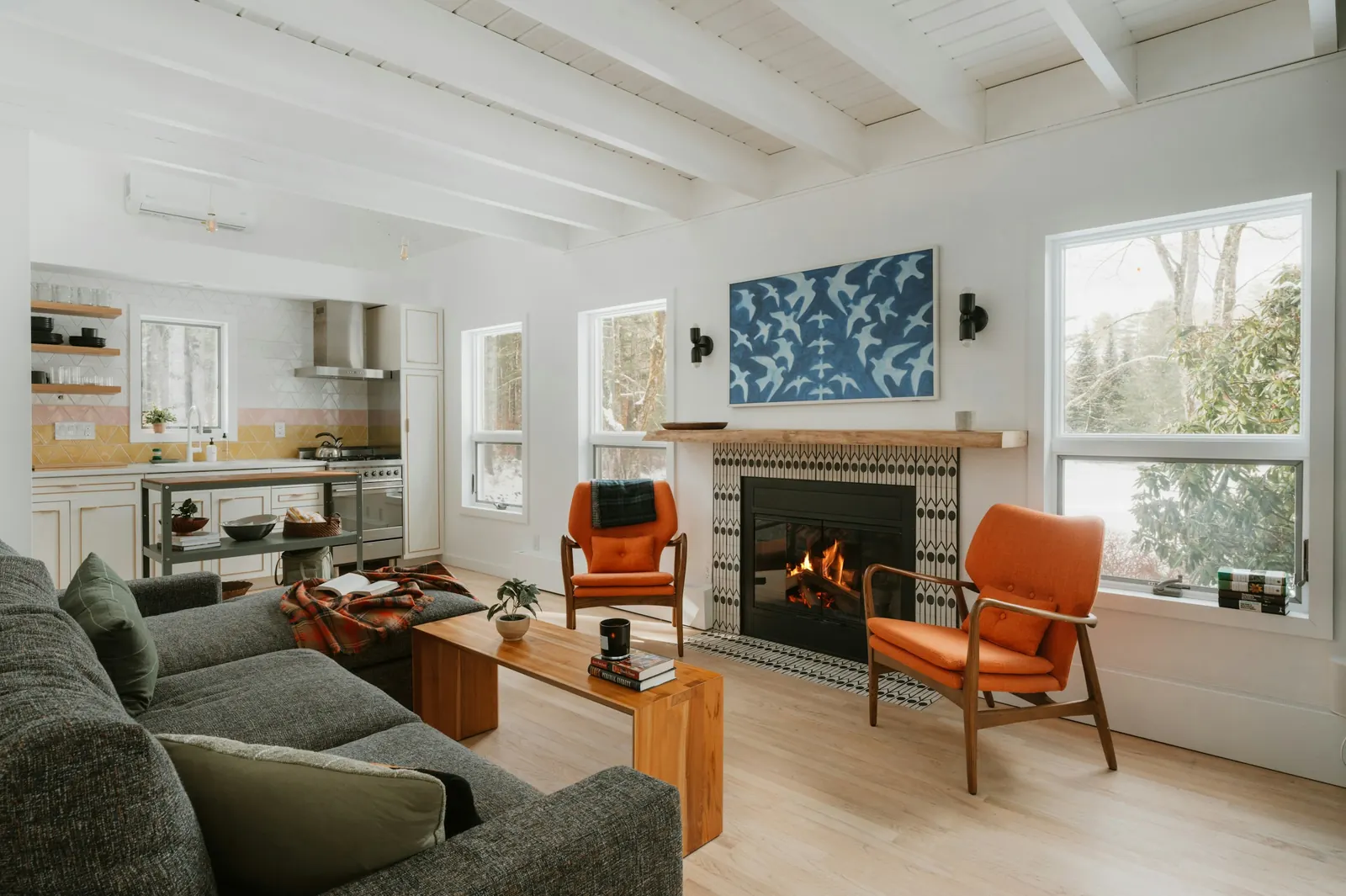
Before the first fire in a fireplace
If the fireplace is new to you, or has not been used in a while, have the chimney inspected before lighting. NFPA 211 puts chimneys and fireplaces on a yearly inspection, and a flue that has sat unused can hold a nest, fallen debris or cracked tile. Open the damper and make sure it moves fully and stays open. Test the smoke alarms and carbon monoxide alarms.
Clear the hearth of rugs, baskets, kindling piles and anything that can burn. The U.S. Fire Administration advises keeping anything flammable at least three feet from fireplaces and other heat sources.
Open the damper and warm the flue
Open the damper all the way; a damper left partly closed is the most common reason a new fire smokes. Then deal with the cold air sitting in the chimney. On a cold evening, the flue is full of heavy, chilled air that pushes back down against the first smoke. Hold a tightly rolled sheet of newspaper, lit at the top, up toward the open damper for several seconds. When its smoke bends upward and is pulled away, the flue is drawing.
In a tight, modern-renovated house, the fire may also struggle for air. Cracking a window in the same room for the first few minutes often fixes smoke that rolls out the front of the opening.
Building a top-down fire
The top-down method turns the usual stack upside down. Instead of paper at the bottom and logs on top, the big wood goes on the grate and the fire starts at the top, burning down through the layers. It lights cleanly, grows steadily and does not collapse onto itself the way a teepee does when the kindling burns away.
The U.S. EPA's tips for a better burn add several practical details. Split wood burns better than rounds, and placing the split face toward the flame helps, since some bark resists catching. Bringing kindling indoors the night before lets it warm to room temperature. Leaving gaps between pieces lets air move through the stack. Natural fire starters burn longer than newspaper and help warm the flue so it drafts sooner.
Lighter, less dense woods catch faster for kindling; denser hardwoods are better as the main logs once the fire has a bed of coals.
- Two or three larger split logs on the grate, side by side, split face up
- A layer of smaller split pieces laid across them
- A layer of kindling: thin, dry sticks, crisscrossed
- Loosely crumpled newspaper or natural fire starters on top
- Light the paper in a couple of places and close the screen
The wood matters most
Dry, seasoned hardwood lights easily and burns cleanly. Wet or green wood hisses, steams and smokes, because the fire spends its heat boiling water out of the log. That cool, smoky burn is also what lines the flue with creosote. Seasoned wood is lighter than it looks, darker and cracked at the ends, and sounds hollow when two pieces are knocked together.
Do not burn painted or pressure-treated wood, plywood, trash, glossy paper or large amounts of cardboard. And never use gasoline, kerosene, charcoal lighter fluid or any accelerant to start or revive a fireplace fire. They flash, not burn, and can throw flame out of the opening.
Small and shallow fireplaces
Many brownstones and older rowhouses have fireplaces originally built for coal: shallow fireboxes, small openings and narrow flues. They were meant for a compact, hot coal fire in a basket grate, not a stack of logs. If yours has never been checked for wood burning, have that done first, since some of these fireplaces need work before they can handle wood safely.
Where wood is suitable, scale the fire to the box. Use shorter, thinner splits, keep the stack low and toward the back, and build smaller fires more often rather than one large one. A fire that reaches up toward the top of the opening in a shallow fireplace is a fire that will smoke into the room.
If it smokes
A little smoke for the first minute is normal. Smoke that keeps spilling into the room above the screen is not. Check the damper first, then try warming the flue again and opening a window. If the fireplace smokes every time, the cause is usually in the chimney rather than the method: a blockage, heavy creosote, a flue too small for the opening, a chimney too short for the roof around it, or a house so tight it starves the fire.
Do not keep adding wood to a fire that is smoking into the room. Let it burn down, and have the chimney looked at.
Screens and glass doors while it burns
Keep a screen across the opening whenever the fire is burning; seasoned hardwood still pops and throws sparks. If the fireplace has glass doors, follow the door maker's instructions. Some are designed to stay open with the mesh screen closed during a full fire, because closing the glass on a roaring fire can overheat it. Others may be closed once the fire is going. Closing doors also cuts the air the fire gets, so a fire behind closed glass burns slower and smokier.
Keeping it going
Add one or two logs at a time once the fire has a bed of glowing coals, and keep the wood toward the back of the firebox. Leave small gaps between pieces so air can reach them. Open the screen slowly and stand to the side when adding wood, since a sudden draft can push a puff of smoke into the room.
A useful check from outside: a fire burning well sends up heat shimmer and little visible smoke. Thick smoke from the chimney usually means the fire needs more air or the wood is too wet.
Winding down safely
Do not leave a fire burning unattended or go to bed with it still going. Stop adding wood well before you plan to leave the room, let it burn down, and keep the damper open until the ashes are completely cold, often the next morning. Ashes go into a metal container with a tight lid, kept outside on a nonflammable surface away from the house, the deck and anything that burns.
Common Questions
How do I light a fireplace for the first time?
Why use the top-down fire method in a fireplace?
How do I start a fire in a fireplace with wood only?
Why does my fireplace fire keep going out?
Can I use fire starter logs to light a fireplace?
Need help with this? See our chimney sweeping service, or call (844) 468-2410 for a free written estimate.

