
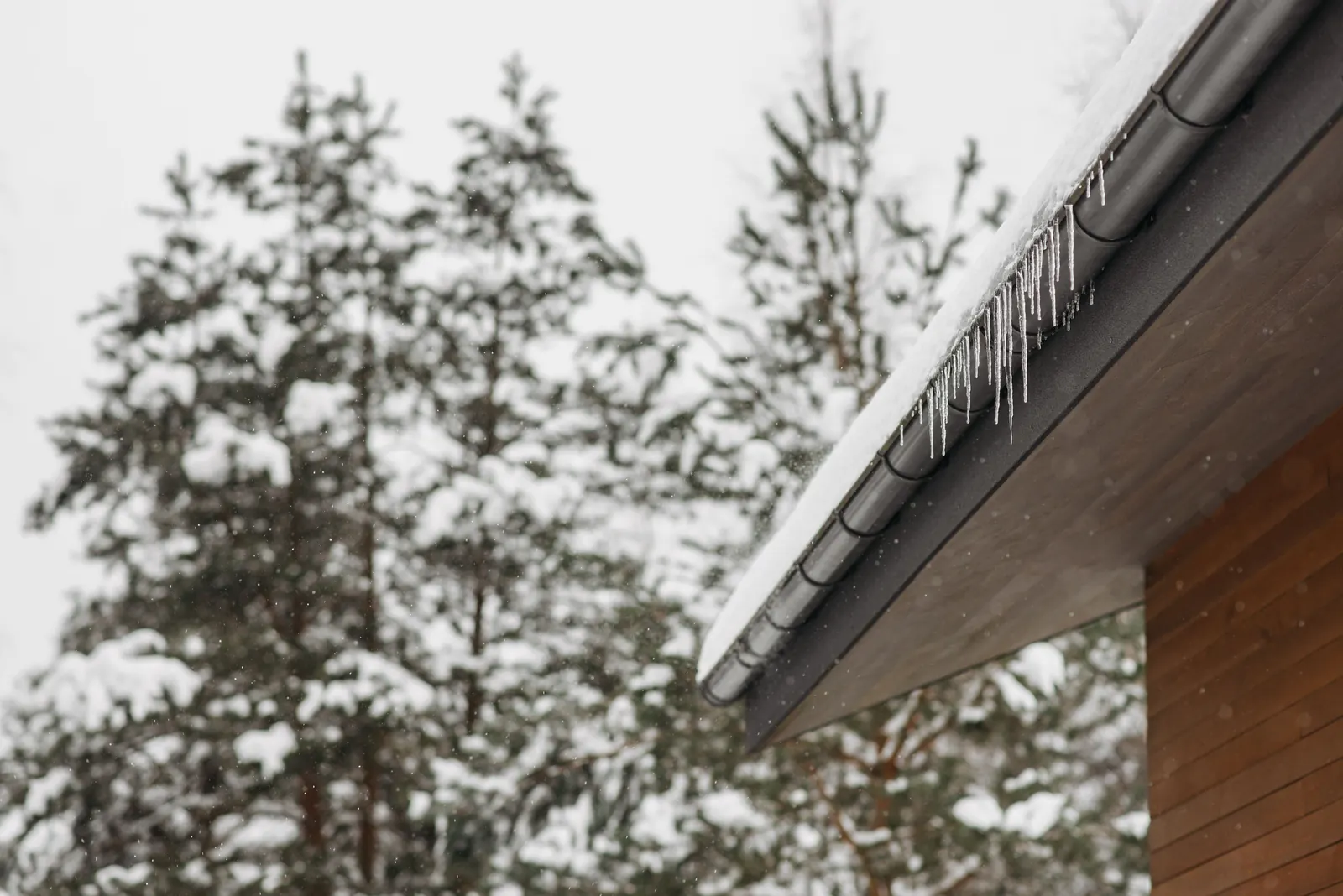
How an ice dam forms near a chimney
Ice dams start with heat. Warm air leaking from the house into the attic, or heat conducted through a poorly insulated roof, warms the roof deck and melts the underside of the snow even on freezing days. The meltwater runs downhill under the snow until it reaches a colder spot, where it freezes. Each day of melting and refreezing adds to the ridge of ice.
Chimneys create two of the conditions that make this worse. The uphill side of a chimney partway down a slope is a flat corner where snow drifts and water collects. And the gaps around a chimney, where framing stops short of the masonry, are often left unsealed in older attics, so warm air rises right beside it and melts the snow above.
Why ice dams cause chimney leaks
Roofing and flashing are designed to shed water running downhill. They are not designed to hold back standing water. When an ice ridge traps a pool of meltwater behind or beside the chimney, that water rises and works sideways and upward under the shingles, over the top of step flashing, and behind the back pan. From there it reaches the roof deck, the attic and the ceiling.
This is why a chimney that never leaks in rain can leak during a midwinter thaw. The flashing may be in fair shape; it is simply being asked to do something no flashing does well. If the flashing was already marginal, sealed with tar or missing pieces, the ice dam finds those weaknesses first.
Signs of an ice dam at the chimney
Ice dams are often visible from the ground, and the leak pattern is distinctive. These signs together point strongly to ice rather than a rain leak.
- A ridge of ice or thick icicles behind or beside the chimney
- Snow melted in a patch around the chimney while the rest of the roof stays covered
- Leaks that start during a thaw after snow, not during rain
- Water stains in the attic on the uphill side of the chimney
- Frost or damp framing around the chimney chase in the attic
Why older homes in the region are prone
Winters in the mid-Atlantic and southern New England swing above and below freezing again and again, which is exactly the pattern that builds ice dams. A snowfall followed by sunny days in the thirties and cold nights can grow a dam in less than a week.
Older houses add their own risk. Attics in many colonials, capes and early suburban homes were built with little insulation and many unsealed openings, and chimneys often run up through the middle of the roof where heat collects. Roofs that have been re-shingled several times may still have the original flashing details, or none at all, around the chimney. And on capes and dormered roofs, chimneys often sit at the junction of slopes where snow piles deepest.
What to do right now
Stay off the roof. Ice-covered roofs are extremely dangerous, and chipping at an ice dam with a hammer, shovel or ice pick damages shingles and flashing, which makes the leak worse. Do not use open flame or heat guns on the roof either.
Inside, catch the water with buckets and move belongings, put plastic down in the attic under the drip, and keep an eye on ceilings for sagging. From the ground, a roof rake with a long handle can pull fresh snow off the lower roof edge if you can do it safely without standing under falling snow or touching power lines. Removing the snow load reduces the meltwater feeding the dam. If water is entering steadily, a roofing crew can steam the ice off without damaging the roof.
Take photos of the ice and any interior damage for your records and your insurer.
Fixes at the chimney
Once the weather allows, the chimney side of the problem is addressed. Flashing that relies on tar, or step flashing with missing pieces, is replaced with properly woven step flashing and counter flashing set into a mortar joint. Wide chimneys partway down a slope get a cricket on the uphill side so snow and water are split around the chimney instead of trapped behind it.
During a reroof, a self-adhering waterproof underlayment around the chimney and along the eaves, where the local code calls for it, gives the deck a second line of defense against water that backs up under the shingles.
- Warm attic air leaking around the chimney melts snow above it; air seal the chase with fire-safe materials
- A flat corner behind a wide chimney lets snow and water collect and refreeze; add a cricket on the uphill side
- Tarred or incomplete flashing lets backed-up water get behind it; replace it with step and counter flashing
- Thin attic insulation keeps the roof deck warm; add insulation while keeping required clearances
Fixes in the attic
The root cause is usually in the attic. Sealing the air leaks around the chimney chase, plumbing stacks, light fixtures and the attic hatch keeps warm air from reaching the roof deck. Around a masonry chimney, the gap between the chimney and the framing must be closed with noncombustible material such as sheet metal and a fire-rated sealant, never with foam or fiberglass packed against the brick. Adding insulation and keeping soffit and ridge ventilation clear helps keep the roof deck cold and evenly frozen.
These steps are often done by an insulation or energy contractor. Local energy programs sometimes offer audits that identify the worst leaks.
After the thaw: check for damage
Water that got into the masonry around the chimney during an ice dam can freeze there too. In spring, have the flashing, the brick at the roof line and the crown checked, and look in the attic for stained or soft decking around the chimney. Damage caught at this stage is usually limited to flashing and a few joints; left for several winters, it reaches the framing and the ceiling below.
A chimney inspection after an ice dam leak looks at the flashing on every face, the counter flashing joints, the brick and mortar just above the roof, the crown, and the attic framing around the chase. The findings should say whether the water came past the flashing, through the masonry or both, since the repair differs.
Common Questions
Can an ice dam cause a chimney leak?
Should I chip the ice off around my chimney?
Why does snow melt around my chimney first?
Does a chimney cricket prevent ice dams?
Are heat cables a fix for ice dams at the chimney?
Need help with this? See our leak repair service, or call (844) 468-2410 for a free written estimate.

