
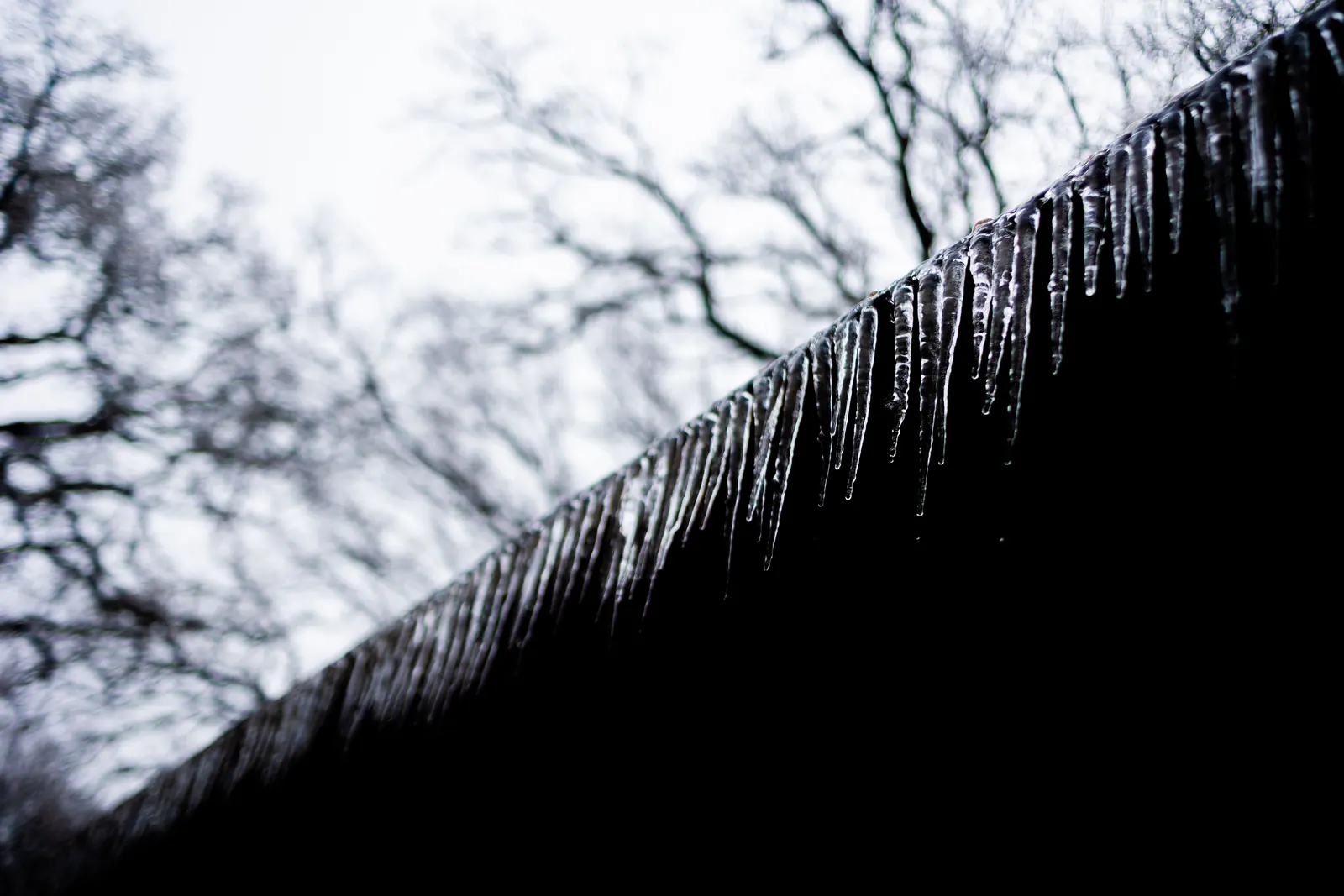
Where the ice comes from
Burning natural gas or oil produces carbon dioxide and a large amount of water vapor. In a warm, correctly sized flue, that vapor stays a gas until it leaves the top of the chimney and becomes the white plume you see on cold mornings. If the exhaust cools on its way up, the vapor condenses on the flue walls and on the cap. When the cap is below freezing, the water freezes there, and drips grow into icicles off the edges and the screen.
Not every icicle on a chimney comes from the flue. Snow melting on the crown or cap on a sunny day can refreeze into icicles at the edges too. Ice that appears on clear, dry, very cold days, while the heating runs hard, is much more likely to come from exhaust.
When a little ice is normal
On the coldest nights of a Northeast winter, a light frost or a few thin icicles on the cap of a gas appliance flue can form even on a healthy system, especially on a cap with a mesh screen and on a chimney that stands tall in the wind. They melt off as the day warms and leave no stain.
What matters is how much ice builds, what color it is, and whether it is growing day after day.
Warning signs
These signs suggest the exhaust is cooling too much on its way up, or that the ice is starting to restrict the outlet.
- Thick icicles or a solid crust of ice on the cap screen
- Brown, yellow or rust-colored icicles or stains running down the brick
- Ice that keeps building through the day instead of melting off
- Water or ice at the base of the chimney or the cleanout in the basement
- A water heater or boiler that spills exhaust at the draft hood or locks out on cold days
- A carbon monoxide alarm sounding during cold spells
What brown icicles mean
Clear ice is frozen water. Brown or yellow ice carries something from inside the chimney. In a gas flue it is usually condensate that has run over rusting metal, old soot, or the mortar and tile it has been dissolving on the way down. In a flue that once served oil or wood, it can carry old soot and creosote residue. The water in flue condensate is acidic, which is why it eats mortar joints and clay tile over time.
Brown streaks on the brick below the cap tell the same story. The flue is wet inside, and that water is working on the chimney as well as freezing at the top.
- Light frost on very cold mornings is normal exhaust condensing at the cap; if it clears by midday, just keep an eye on it
- Clear icicles after sunny days with snow are usually snowmelt refreezing; have the crown and cap checked
- A heavy ice crust on the cap screen means exhaust is cooling and the outlet is narrowing; check CO alarms now and book an inspection
- Brown or yellow icicles and streaks are acidic condensate from a wet flue; the liner and flue need inspecting
Why some chimneys ice up
The usual reasons, roughly in order of how often they cause it: a flue far larger than the appliance needs, so the exhaust slows and cools; a water heater orphaned in a flue it once shared with a boiler; an unlined or cracked clay flue that soaks up heat and moisture; a chimney on an outside wall, or a tall stack exposed to wind, that loses heat fast; and a cap with fine mesh that collects frost easily.
Newer, more efficient boilers and water heaters send cooler exhaust up the same old chimney, so icing often starts the first winter after an appliance is replaced.
Oil, wood and fireplace flues in winter
Oil exhaust contains less water vapor than gas exhaust and leaves the burner hotter, so heavy icing on an oil flue is less common. When it does happen, the ice is often dark with soot and the flue is usually badly oversized or unlined, or the burner is running dirty. A wood fire's flue runs much hotter and rarely ices while in use.
Fireplace flues that are not in use can still collect ice. A cap over a cold, unused flue gathers frost from moist air rising out of the house, and melting snow on a flat crown refreezes along the edges. That ice is harmless to the flue's function but points to a crown without a proper drip edge, which lets water into the masonry.
The carbon monoxide concern
Ice building on a cap screen narrows the outlet. With a natural-draft appliance such as an atmospheric water heater, a restricted outlet can make exhaust spill back at the draft hood into the basement. Working carbon monoxide alarms belong near the boiler and outside the bedrooms. If one sounds, or a person in the house feels ill, go outdoors, phone 911 or the gas company, and leave the appliance off until it has been checked.
How it is fixed
Knocking icicles down treats nothing and means a dangerous trip onto an icy roof, so leave the ice alone. The fix is inside the chimney. A technician checks the flue size against the appliance's venting requirements, the liner's condition, and the cap. The usual answer is a stainless liner matched to the appliance, often insulated on exterior or very tall chimneys, which keeps the exhaust warm until it leaves the top.
The cap is checked as well. Gas appliance flues should use a cap suited to that use and to the appliance instructions; a fine spark-arrestor screen meant for wood fires can frost over easily on a gas flue. Where the appliance has been replaced with one that vents out the wall, the old flue is capped and closed instead.
What to look for from the yard
On a cold morning with the heat running, look at the cap with binoculars and note the size and color of any ice. Check whether brown streaks run down the brick. In the basement, look at the cleanout and the vent pipe for water or rust. Take photos over a few days; they help show whether the ice is a passing frost or a pattern.
Mention any recent boiler or water heater replacement when you call; it is often the missing piece.
Common Questions
Why are there icicles on my chimney cap?
Are brown icicles on a chimney dangerous?
Should I knock the ice off my chimney cap?
Can ice block a chimney?
Why did icicles start after we replaced the boiler?
Need help with this? See our chimney liners service, or call (844) 468-2410 for a free written estimate.

