When the request usually comes
The question tends to surface at a handful of moments: a new policy on a house that has a fireplace or stove, a renewal questionnaire that asks how the home is heated, the addition of a wood stove, insert or pellet stove, and sometimes after a claim involving smoke, fire or water near the chimney. Some requests come from the underwriter's office, others from an agent filling out an application with you.
A deadline usually comes with it. Book early. Many chimneys need sweeping before the flue can be properly seen, and if repairs turn up, scheduling them takes time, especially in the busy weeks of early fall.
Get the request in writing first
Before booking anything, ask the insurer or agent exactly what they need. Wording matters. Some want their own form completed by the inspector. Others want a letter on company letterhead, a full inspection report, or answers to a short list of questions. Some ask only about a wood stove and not the fireplace; others want every flue covered, including the boiler.
Ask too whether they need the inspector's license details, whether the report must state that the chimney is safe to use, and whether they want repairs completed and documented before the policy is finalized. Having those answers up front avoids a second visit.
What insurers commonly ask about
The questions vary by company, but they usually cover the same ground. Having answers ready makes the visit and the paperwork faster.
- Type of appliance: open fireplace, wood stove, insert, pellet stove or gas
- Whether a stove is a listed unit, with its label, model and manual
- Clearances to walls, mantels and floors, and the hearth protection
- What the appliance vents into, and the condition of that flue or liner
- Who installed it, and whether a permit was issued
- When the chimney was last inspected and cleaned
What the inspection looks at
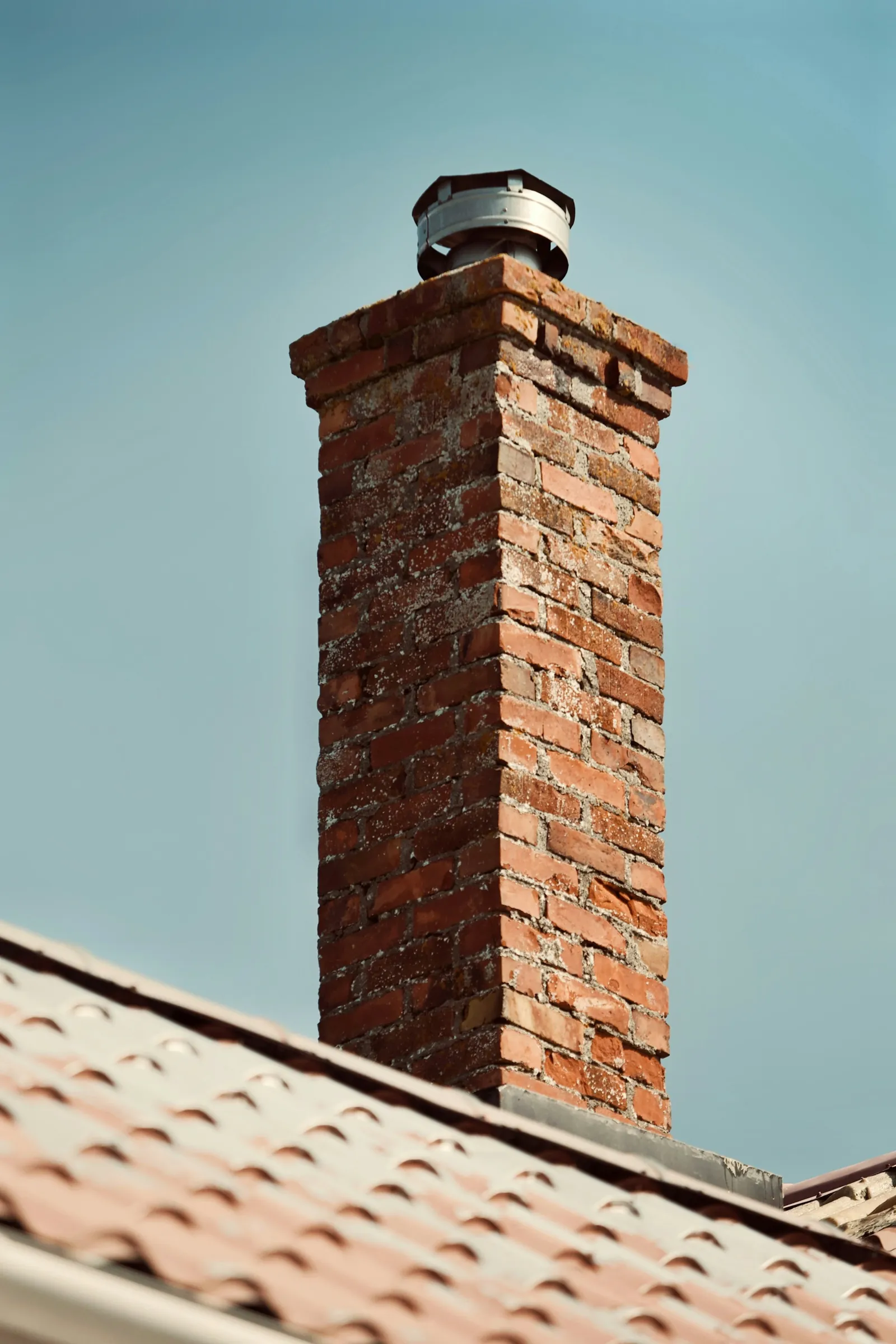
For an insurance request, the inspection follows the same path as any thorough chimney check. From inside: the firebox or stove, the hearth and floor protection, the connector pipe and how it enters the chimney, the damper and the smoke chamber. Through the flue: deposits, cracks, gaps between tiles, and whether the liner suits the appliance. From outside: crown, cap, the top courses of brick, mortar joints and flashing.
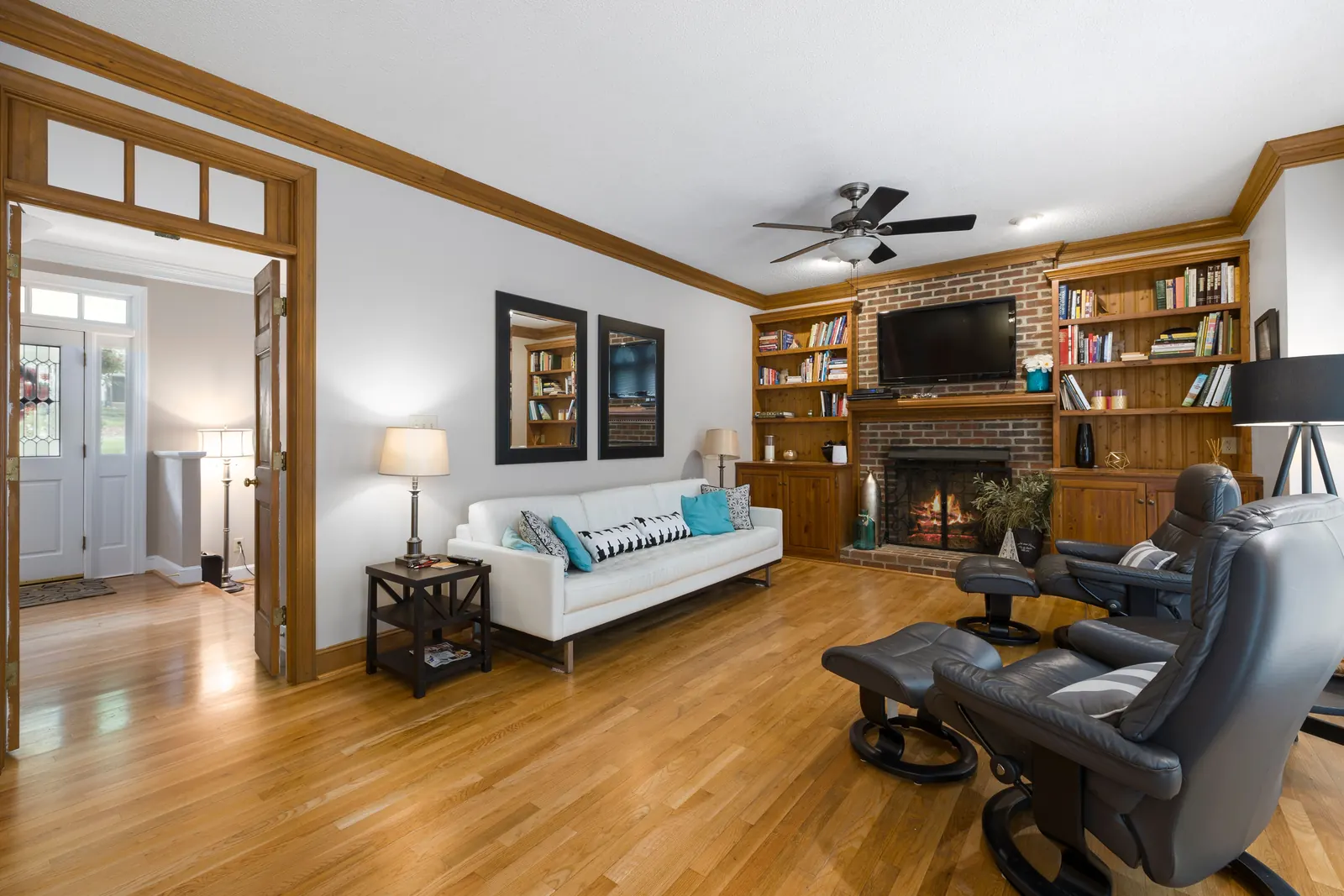
Clearances get particular attention because they are the question insurers ask most about stoves. The installed distances are compared with what the stove's manual lists for that model, including any wall shielding or hearth pad the manual requires.
Wood stoves and inserts draw more underwriting attention than open fireplaces because they run hotter for longer and sit closer to walls and floors. A listed stove installed to its manual, with a properly sized liner and documented clearances, answers most of those questions. A used stove with no label or manual is much harder to document, so check that before buying one. If you are planning to add a stove, talk to your insurer before it goes in.
Preparing the house for the visit
Have the stove or insert manual, any installation invoice and any permit paperwork on the table. If you do not have the manual, the model number and listing label (usually on the back or side of the stove) let the inspector look it up. Do not burn for a day beforehand so the firebox and flue are cool. Clear a path to the fireplace, the boiler room and the attic hatch, and move anything stored on the hearth or against the chimney breast.
If the insurer sent a form, bring it out at the start so the inspector knows which items need specific answers.
If the inspection finds problems
Findings fall into two groups. Safety problems, like a cracked or unlined flue serving a stove, a connector too close to combustibles or glazed creosote, usually mean the appliance should not be used until fixed, and the insurer will likely want proof of the repair. Maintenance items, like a missing cap or worn mortar on the top courses, are recorded and recommended but may not affect the policy.
Ask the insurer how they want repairs documented: a revised report, an invoice describing the work, or a follow-up inspection. A clear written estimate for each item helps them see the scope and timing.
Older homes raise particular questions
Housing stock in our area produces a familiar set of findings on insurance inspections. Brownstones and rowhouses often have fireplaces built for coal, with shallow fireboxes and small flues that were never meant for wood, and many of those flues have no liner at all. Older colonials and twins frequently have a boiler flue and a fireplace flue side by side, with deteriorated mortar between them. Houses converted from oil to gas sometimes still vent a modern water heater into an oversized clay flue full of old soot.
None of these automatically means a problem with coverage, but each is the kind of thing an underwriter wants explained. A report that names the condition, says whether the appliance is safe to use as it stands, and describes the fix in plain terms gives the insurer what it needs to make a decision.
Keeping the paperwork
The easiest way to answer an insurer is to already have the answer. Keep inspection and sweeping reports, repair invoices, appliance manuals, liner documentation and any permit records in one folder, paper or digital. A yearly inspection, which NFPA 211 calls for, keeps that folder current. When a renewal questionnaire asks when the chimney was last inspected, you can give a date and a document rather than a guess.
That folder also helps if you sell. Buyers, their inspectors and their insurers ask many of the same questions.
What we provide
Our inspections end with a written report that describes each flue, the appliances it serves and what was found, with recommendations separated into safety items and maintenance. If your insurer has its own form, we complete the parts that cover what we inspected. Any repair comes with a free written estimate, so you can send the insurer the findings and the plan together. We do not advise on coverage or premiums; your agent is the right person for those questions.
Common Questions
Do insurance companies require chimney inspections?
How do I tell my insurer about a wood stove?
What paperwork should I keep for my chimney?
Can an insurer ask me to stop using my fireplace?
Will a chimney inspection report affect my premium?
Need help with this? See our chimney inspection service, or call (844) 468-2410 for a free written estimate.