
Start with the chimney's history
Before picking up a flashlight, answer a few questions. When was the flue last inspected and swept, and do you have the paperwork? Has there been a chimney fire, a lightning strike or a hard storm since then? Has a boiler or water heater been replaced, added or removed? Did you buy the house recently, with no record of the chimney at all?
Any yes changes the picture. NFPA 211 expects a yearly inspection of chimneys, fireplaces and vents, and another after a chimney fire or anything else that could have harmed the system. A change of appliance matters because the flue that suited the old boiler may be the wrong size or material for the new one. A new owner simply has no way to know how the last occupants burned, what they burned, or how long it has been.
A cold-fireplace check from the room
Make sure the fire is out and the ash is cold, then use a strong flashlight. Open the damper and look up past it: you should see an open passage or a glint of daylight, not a mat of twigs or leaves.
- The damper opens fully, closes fully and the handle moves without forcing
- Firebrick is whole, with no gaps you could slide a coin into and no missing mortar joints
- No tile chips, brick fragments or loose mortar on the hearth or the smoke shelf
- No flaky, puffy black deposits on the hearth that look like burnt cereal
- No musty, animal or sour smell, and no scratching or chirping above the damper
- No rust stains or wet ash that point to water coming down the flue
What to look at from the yard or sidewalk
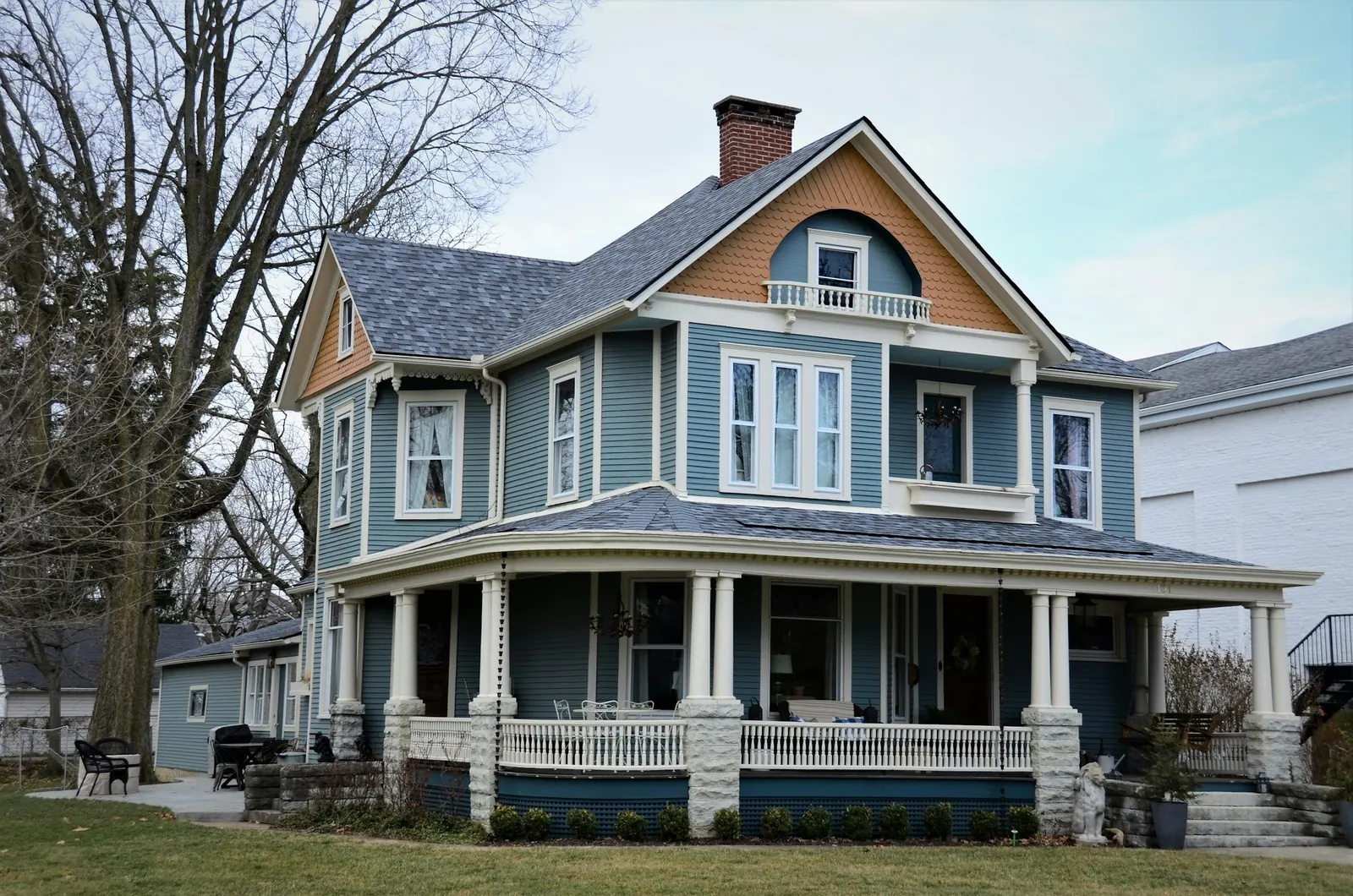
Stand far enough back to see the whole stack and walk around it if you can. It should be straight and plumb, with no visible lean and no gaps where bricks have fallen out. Each flue should have a metal cap. Brick faces that have popped off in flakes, called spalling, mean water is freezing inside the masonry. White, powdery streaks, called efflorescence, mean water is moving through it. Plants or moss growing near the top are a sign of long-term damp.
Look along the roofline too: bent or lifted metal flashing, thick tar smeared over the joint, or stains on the siding below the stack. Stay off the roof. A steep, narrow chimney top is no place for a homeowner, and damaged brick can come loose under a hand.
What common signs mean
Some findings are maintenance items; others mean the fireplace stays cold until someone has looked inside. This table sorts the signs homeowners report most often.
| What you notice | What it usually points to | Keep using it? |
|---|---|---|
| Puffy, honeycomb-like flakes on the hearth | A past chimney fire | No, inspect first |
| Shiny, tar-like glaze above the damper | Heavy third-stage creosote | No, until removed |
| Clay tile pieces in the firebox or cleanout | A cracked or broken liner | No, inspect first |
| Smoke rolling into the room every fire | Draft, blockage or sizing problem | Not until the cause is found |
| Rust or wet ash in the firebox | Water entering through cap, crown or flue | Usually, but schedule a repair |
| White staining or flaking brick outside | Water moving through the masonry | Usually, but schedule a repair |
Reading the creosote you can see
Creosote builds in stages, and the stage tells you how urgent a cleaning is. First-stage deposits are dry, sooty and brush off easily. Second-stage creosote forms crunchy, shiny black flakes that cling harder. Third-stage creosote is a glaze, thick and tar-like, sometimes dripping, and it burns intensely if it ignites. Removing a glaze often takes special tools or chemical treatment rather than a brush alone.
If what you see on the throat and smoke chamber is soft soot, a sweep is due. If it is glossy or bubbly, leave the fireplace cold until it is cleaned and the flue behind it is checked, because heavy glaze is often a sign of slow fires, wet wood or an oversized flue that will rebuild the same deposit.
The boiler flue counts too
Plenty of homes in New York, New Jersey and around Philadelphia have a fireplace that has not been lit in years and a chimney that works every day, because the oil or gas boiler and the water heater vent into it. A blocked or broken flue in that chimney can push exhaust back into the basement. Signs include a rusted connector pipe, white crust or water dripping at the base cleanout, and soot or scorch marks around the draft hood of a water heater.
Carbon monoxide gives no warning by smell and is dangerous. Mount CO alarms on every floor and outside sleeping areas, test them regularly, and replace them as their makers direct. If one sounds, or people in the house start feeling ill, leave the building and phone 911 or the gas company once you are outside.
What an inspection confirms that you cannot
Cracked tiles halfway up, missing mortar between tile joints, gaps where a liner section has slipped, and a liner that is too large or too small for what vents into it are invisible from the firebox. They are also the defects that pass heat and fumes into the masonry and, from there, toward the house framing. A technician examines the whole flue from bottom and top, checks the smoke chamber, the thimble where the boiler connects and the clearance to any visible framing, then gives you one of three answers: safe to use, safe after a sweep, or not safe until a named repair is done.
The first fire after a long idle stretch
When the inspection comes back clean, the first fire is still worth handling deliberately, especially after a summer or a few unused years. Open the damper and leave it open for a few minutes so the flue can start to match room temperature. Burn a small fire of dry kindling and split hardwood rather than a full load, and watch the smoke: it should bend into the throat within a minute or two and stay there.
Keep an eye on the room for the first hour. A smell of hot metal or scorched paint, or smoke curling out along the top of the opening, is a reason to stop adding wood and leave the damper open until the fire is fully out. A CO alarm sounding is different: everyone goes outside first. Keep a screen in place, and keep the hearth clear of rugs, kindling baskets and newspapers.
Common Questions
Is my chimney safe to use if it looks fine from the room?
How long can a chimney go without an inspection?
How do I know if I had a chimney fire?
Can I use my fireplace if the chimney has a small crack outside?
Need help with this? See our chimney inspection service, or call (844) 468-2410 for a free written estimate.

