
How a strike damages masonry
Standing as the highest point on many houses, a chimney is a natural target, and after rain a wet brick stack with a metal cap, liner and flashing is an inviting path to ground. Brick and mortar hold water, and when current passes through, that moisture can flash into steam almost instantly. The expansion blows faces off bricks, splits the crown and pushes whole courses out of line.
Inside, clay flue tiles can shatter or crack along their length. Current that finds a stainless liner, flashing, an old antenna mast or cable strapped to the stack can follow the metal down and burn or pit it on the way. That is why outside damage can look like a few missing bricks while the flue below is broken in several places.
Wind, ice and falling limbs
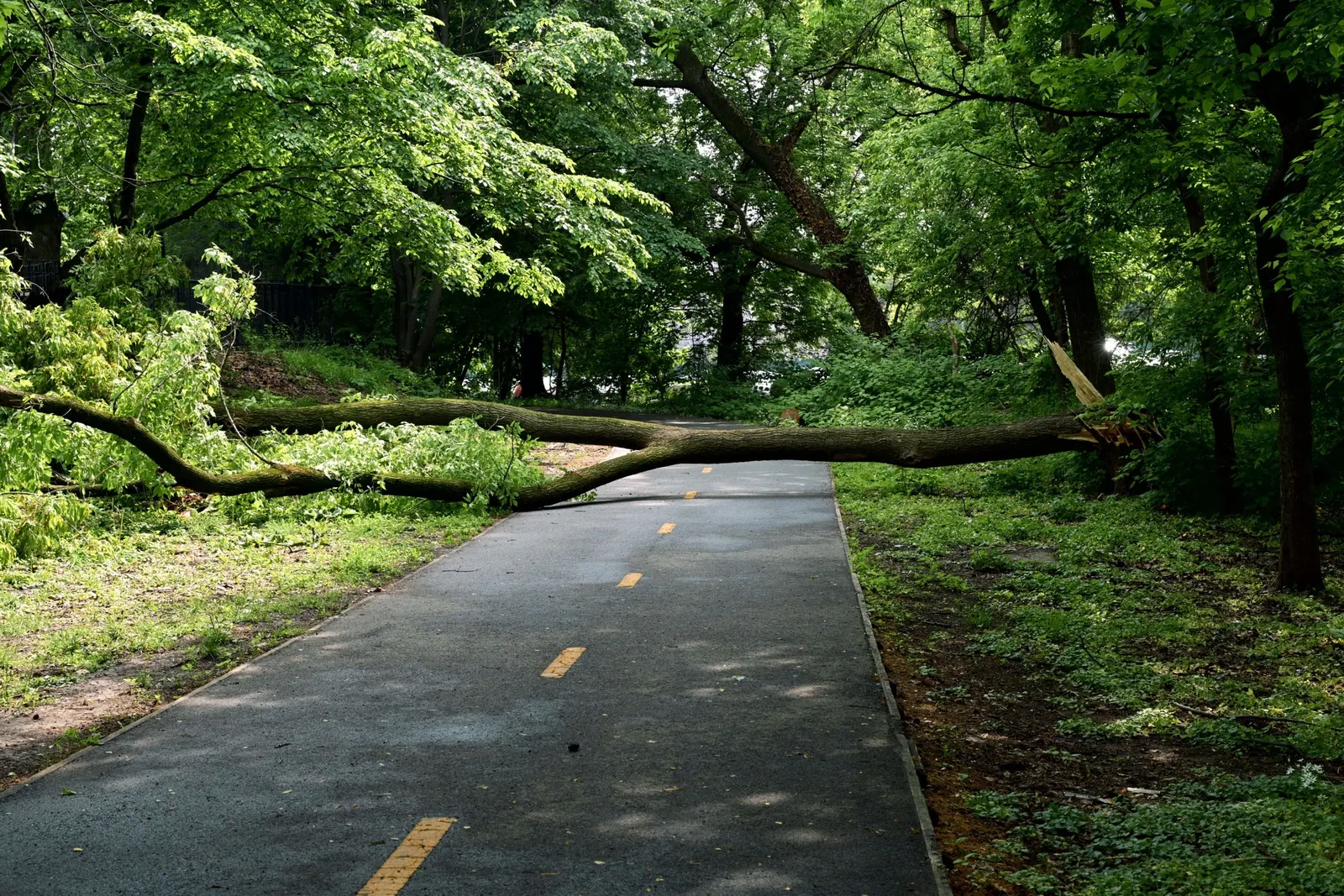
Storms damage far more chimneys through wind than through lightning. Nor'easters and summer squalls tear off loose caps, pry up flashing and push on tall, unsupported stacks, especially ones already weakened by freeze-thaw cracking in the mortar. Falling limbs strike the top courses, and an old antenna or satellite dish strapped to the chimney can act as a lever in a gust, pulling mortar out with it.
Heavy ice and wet snow add their own load, and a sliding sheet of snow off a steep roof can catch a chimney on the uphill side. Damage of this kind is easier to see than a lightning strike, but it still opens the masonry to water, which keeps working on the stack long after the storm.
What to check from the yard
Stay off the roof. A damaged chimney can drop more brick without warning, and a storm-soaked roof is slippery. Walk to where you can see each side of the stack, zoom in with binoculars or a phone if that helps, and look for these:
- Brick or mortar pieces on the roof, in the gutters or on the ground below
- A cap that is missing, bent, scorched or sitting crooked
- Courses of brick shifted out of line, or a top section that leans
- Fresh cracks or blown-out brick faces, especially in the upper courses
- Lifted, torn or blackened flashing along the roof joint
- An antenna mount or dish bracket pulled loose from the masonry
Inside the house: firebox, cleanout and ceilings
With a flashlight, look into the firebox and on the smoke shelf for tile shards, broken brick or crumbled mortar that came down the flue. In the basement, the cleanout door at the base of the chimney is where debris from a boiler flue collects; fresh tile shards there mean the liner broke somewhere above. If the boiler or water heater vents into this chimney, look at its connector pipe too: a pipe knocked loose from the thimble, or soot around the joint, needs attention before the burner runs again.
Check ceilings and walls along the chimney on every floor and in the attic for new water stains, cracks in plaster or a gap opening between the chimney breast and the wall. Keep the damper closed so rain and cold air do not pour into the room through a damaged top, and keep pets and children away from the hearth if debris is falling.
Why the flue comes first
NFPA 211, the national standard for chimneys, fireplaces and vents, calls for an inspection after any event that may have damaged the chimney, and a lightning strike is exactly that. Cracked flue tiles let the heat of a fire through to the brick and on to the wood framing beside it, and they let exhaust from a boiler or water heater leak into the masonry and sometimes into the house.
Until the flue has been inspected, leave the fireplace cold and talk with your heating technician about whether the boiler or furnace can keep running on that chimney. Carbon monoxide is dangerous and has no smell, so test the CO alarms now. If one sounds or anybody feels unwell, everyone leaves the house and someone reaches 911 or the utility by phone from the sidewalk.
Records that help with an insurance claim
Policies differ and only your insurer can say what is covered, but good records make any claim clearer. Note the date and time of the storm or strike, what you heard and saw, and anything that changed in the house afterward. Take photos from the yard and from inside before debris is cleaned up, and keep any tile pieces that came down. Ask that the inspection findings and the repair scope be written out item by item, so the adjuster can see what was damaged and what each repair addresses.
Repair scope: from a new cap to a rebuild
What the work involves follows what the inspection finds inside, not how the top looks. A bent cap and a few loose top bricks may only need a new cap and some resetting. Shifted courses above the roof usually mean taking the chimney down to sound masonry and rebuilding it with a new crown. Broken flue tiles mean relining, often with a stainless liner sized to the fireplace or appliance it serves, and damaged flashing gets replaced as part of the job.
Houses with a lightning protection system need one more check: the air terminal on the chimney and the conductors running from it should be examined and reconnected by a lightning protection installer once the masonry work is done. We inspect the chimney from top to bottom and list each repair in a free written estimate.
Common Questions
Can lightning strike a chimney without visible damage?
Is it safe to light a fire after a storm damaged the chimney?
Can I keep running the boiler after lightning hit the chimney?
Why do chimneys get hit by lightning so often?
Does homeowners insurance cover lightning damage to a chimney?
Need help with this? See our chimney rebuild service, or call (844) 468-2410 for a free written estimate.

