
What green growth on brick tells you
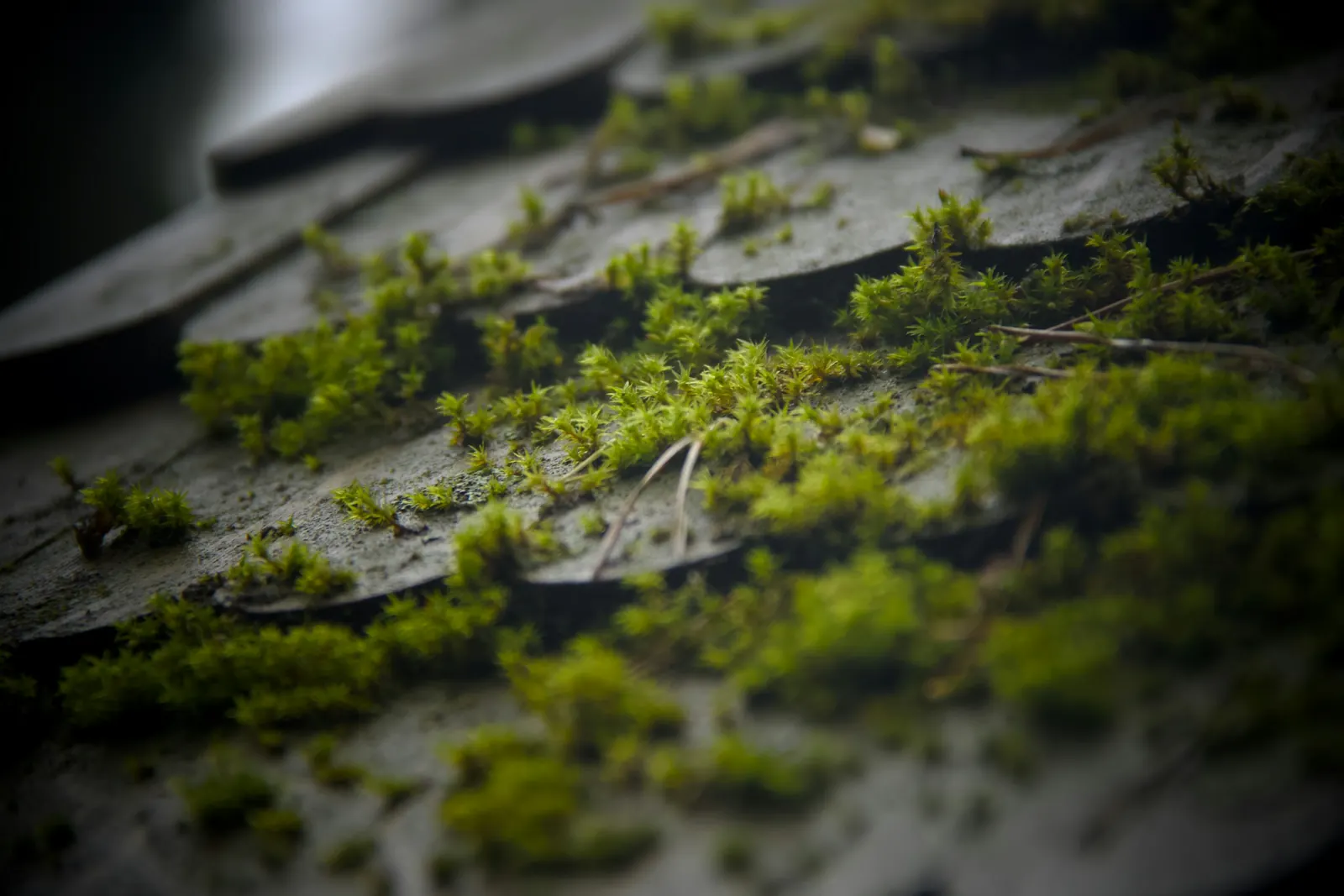
Moss needs shade and steady moisture, so where it grows is a map of where the chimney stays wet. It tends to appear on the crown, on the lid of a cap, along the side of the stack that sees little sun, and on the lower courses of an exterior chimney that run down a shaded side wall. Algae shows as a green or black film, and lichen as crusty gray-green patches; both point to the same thing.
Overhanging trees make it more likely, since they shade the brick and drip on it long after a storm ends. So do a flat or cracked crown that holds puddles, mortar that has gone soft and sandy, and missing or rusted caps that let water run down the inside and soak through.
How moss works on masonry
Moss behaves like a sponge pressed against the brick. Its mat holds water on the surface for days, so more of that water soaks into the brick and the mortar joints than would on a bare wall that dries in the wind. On older chimneys built with soft brick and lime mortar, that extra soaking is significant.
Winter does the rest. Water held in the masonry freezes on a cold night, expands and opens tiny cracks; a thaw then lets more water reach deeper. Over enough cycles, the joints loosen and the face of the brick begins to flake off, which masons call spalling. On the crown, moss can sit in a crack and keep it wet at exactly the spot where water does the most harm.
Ivy and other climbers
Ivy climbs by gripping with tiny rootlets along its stems. On hard, sound brick with tight joints it mostly clings to the face. In soft or eroded mortar the rootlets work into the joints, widen them and hold moisture there. Thick ivy also hides the chimney, so loose bricks, open joints and failing flashing can go unseen until something falls or a ceiling stains.
Vines that reach the roof can grow under the flashing, into the cap screen or toward the flue outlet. Anything growing over a working flue is a fire and blockage risk. Other climbers, such as creepers that grip with adhesive pads, mostly mark the surface rather than invade the joints, but they still hide the masonry and trap damp against it.
Where to look first
Each spot where growth appears points to a likely cause underneath. Reading them together tells you whether you are looking at a cleaning job or a repair.
- Green on the crown: often a crack or a flat surface holding water
- Growth on the cap lid or screen: shade and damp, and a screen that may be narrowing
- Moss at the roof joint: possible gaps in the flashing or counter-flashing
- Green on the shaded side only: slow drying, often with soft joints
- Ivy in the joints: expect repointing once it comes off
- Moss on the chimney breast indoors or in the attic: water moving all the way through
What you can safely do from ground level
Some chimneys, especially on colonials and side-hall houses, run down an outside wall to the ground, and the lower part is within reach. There, a homeowner can do useful work. Cut ivy stems near the soil and leave the vine in place for a few weeks until it browns and loosens; the dried rootlets then come off with a stiff nylon brush and much less damage to the joints.
For moss or algae on brick you can reach from the ground, wet the area with a garden hose, apply a cleaner labeled for masonry and organic growth, let it work for the time on the label, then scrub gently with a nylon brush and rinse. Test it on a small spot first. Anything above the first-floor roof or the roofline is roof work and belongs with a crew, not a ladder.
Pick a dry, mild stretch of weather for this, rinse plantings at the base before and after, and expect a second gentle pass rather than one hard scrub. Moss that comes away with its green color but leaves a dark stain behind usually fades over the following weeks.
Methods that do more harm than the moss
Old brick has a hard fired skin over a softer core. Anything that strips that skin leaves the brick more porous than it was, so it soaks up more water and grows moss faster the next time. A pressure washer on a high setting can blow mortar out of the joints and cut into the brick face. Wire brushes scour the surface and leave steel bits behind that rust into orange stains.
Strong acids and undiluted bleach are also poor choices. Acid etches brick and burns lime mortar, while heavy bleach can leave white salt deposits and kill plantings around the base without solving the moisture. Scraping moss off a crown with a metal tool can open the very cracks the moss was sitting in.
Fixing the reason it grew
Removing the growth is the easy part. Underneath, you often find what kept the brick wet: joints that need repointing, a crown that cracked or holds water, flashing that has lifted, or a cap that rusted open. Fixing those lets the chimney dry after rain, and a dry chimney gives moss little to work with.
Trimming back branches that shade and drip on the stack helps too. On masonry that is sound and repointed, a breathable water repellent made for brick can reduce how much water the surface takes in. Film-forming sealers are a different product and can trap moisture inside, which makes them a poor match for a chimney that has to breathe.
What the visit finds under the growth
A technician looks at the crown, the cap, the flashing and every face of the stack, paying attention to the places where growth was thickest. Joints are probed to see whether the mortar is still firm, and bricks are checked for flaking faces. Inside, the chimney breast, attic and any top-floor closets beside the chimney are checked for stains.
The result is a clear answer on whether you need a gentle cleaning, repointing, crown work or flashing repair, and in what order. All of it is written up in a free written estimate, which keeps the growth from simply being cleared and coming back next spring.
Common Questions
How do you kill moss on a chimney?
Is moss on the chimney cap a problem?
Should I pull ivy off my brick chimney?
Will moss come back after cleaning?
Does lichen damage chimney brick?
Need help with this? See our masonry & tuckpointing service, or call (844) 468-2410 for a free written estimate.

