
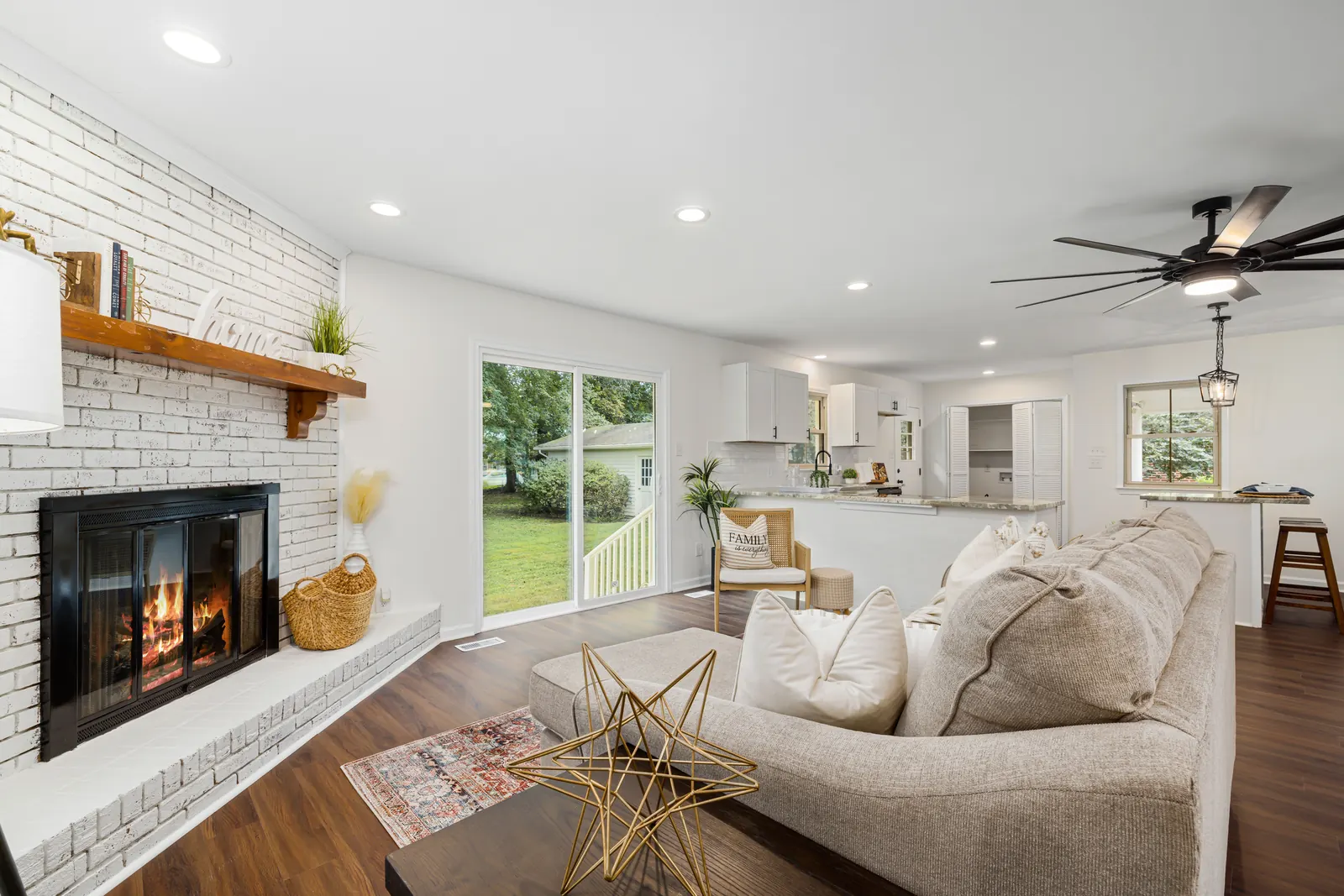
Why fireplaces end up non-working
In older homes from Brooklyn to the Main Line, it is common to find fireplaces that were boarded over, bricked in or simply never lit by the current owners. A previous owner may have closed one after a chimney fire, after a heating contractor took over the flue, or just to stop the draft. The reason matters, because it decides how much work stands between you and a usable fire.
Some causes are mechanical and fixable. Others are built into the house, like a fireplace framed as a decorative opening with no flue behind it at all. Before anyone talks about restoring, someone has to open the firebox and look up.
- The flue was taken over by a boiler or water heater
- The clay liner is cracked, missing pieces or was never installed
- The damper rusted shut or was removed
- The firebox, hearth or smoke chamber is damaged
- The chimney was cut down below the roof or mortared shut at the top
- It was built as a decorative opening with no working flue
How the first inspection reads the fireplace
The visit starts at the opening. A technician removes any board or panel, checks whether there is firebrick behind it, and looks for a damper and a smoke chamber above the throat. Then the flue gets swept if needed and examined from bottom to top, with a light and mirrors or from the roof, to see whether the liner is continuous and sound.
Outside, the crown, cap and flashing are checked, because a fireplace closed for years often has a chimney top that has been taking rain the whole time. Inside the house, the technician looks at how close wood framing, the mantel and the floor sit to the firebox, since older decorative openings were not always built with fire clearances in mind. The answer you get back is one of four paths: restore for wood, convert to gas, fit an electric unit, or leave it decorative and seal it properly.
Restoring it to burn wood
A wood restoration lines up the repairs in order. A cracked or unlined flue gets a liner sized to the fireplace opening. A missing or rusted damper is replaced, often with a top-sealing damper mounted at the flue outlet. Loose firebrick and failed mortar joints in the firebox are rebuilt with refractory mortar, the smoke chamber is checked for gaps, and a hearth extension of noncombustible material is set in front of the opening if the existing one is too short.
The top gets the same care: a cap to keep out rain and animals, and a crown that sheds water off the stack. Only when every part is sound does the first fire go in, ideally a small one to let the new materials cure.
When the flue is already in use
Many older houses have a chimney with one or two flues, and over the decades the fireplace flue was handed to the boiler or the water heater. Those appliances need their own flue. Sharing a flue between a wood fire and a gas or oil appliance can disturb the draft of both and push exhaust back into the house, so a fireplace cannot simply be reopened into a flue that already serves the basement.
In that case the question becomes whether the stack has a second, unused flue, or whether the appliance can be vented a different way so the original flue is freed up. Sometimes the honest answer is that the fireplace can only become gas or electric.
Converting to gas
Gas logs or a gas insert bring the fireplace back into use without wood. The chimney still has to be sound. Vented gas logs need the damper open whenever they burn and a flue in good condition, while an insert usually needs its own liner run from the unit to the top of the chimney. A licensed gas installer has to bring a supply line to the firebox and connect it.
Gas suits owners who want heat or a flame at the touch of a switch and have no interest in hauling wood. The inspection that comes first is the same one a wood fire would need, so you learn the condition of the flue either way.
Fitting an electric unit
An electric insert sits in the opening and plugs into an outlet. It needs no flue, gives off modest heat from its built-in heater and shows a flame effect. For a fireplace whose chimney cannot be used, it is the simplest way to make the opening useful again.
The chimney above still needs attention. Close the flue at the top with a cap and seal, or with a tight damper, so cold air, rain and animals do not come down behind the insert. A dedicated circuit is worth checking with an electrician if the unit has a larger heater.
Leaving it decorative, the right way
A decorative fireplace with no fire is fine as long as everyone in the house knows not to light one. Seal the flue so warm air does not escape all winter, keep a cap on top against water and animals, and make sure the crown and flashing are maintained like any other part of the roof. Candles and fire-starter logs do not belong in an opening that has not been cleared for fire.
| Path | What the chimney needs | Typical work |
|---|---|---|
| Restore for wood | Its own sound, lined flue | Liner, damper, firebox repair, hearth extension, cap |
| Convert to gas | Sound flue; liner for an insert | Gas line by a licensed installer, logs or insert |
| Electric insert | No flue use; top sealed | Outlet or circuit, flue closed and capped |
| Keep decorative | Top sealed and maintained | Cap, damper or seal, crown and flashing upkeep |
What to check before you call
A few observations save time. Look into the opening with a flashlight: firebrick on the walls is a good sign, plain common brick or plaster is not. Check for a damper handle or a metal plate overhead. Outside, from the ground, count the flue tops on the chimney and notice whether any are capped or covered. Note any water stains on the chimney breast or ceiling. Bring those notes to the inspection and the conversation moves faster. If the house has a chimney with more than one flue, it also helps to know which appliances run on oil or gas and where their smoke pipes enter the wall, because that answers the shared-flue question early.
Keep expectations realistic for the timeline. A fireplace that only needs sweeping, a cap and a new damper can be ready quickly, while one that needs a liner, firebox rebuild and hearth work is a larger project that is planned and priced in writing before anything starts.
Common Questions
Can I put a fireplace insert in a non functional fireplace?
Can I light a fire in a decorative fireplace?
Does a non-working fireplace still need chimney maintenance?
How do I know if my fireplace was ever real?
Is it worth restoring a fireplace in an older house?
Need help with this? See our fireplace repair service, or call (844) 468-2410 for a free written estimate.

