
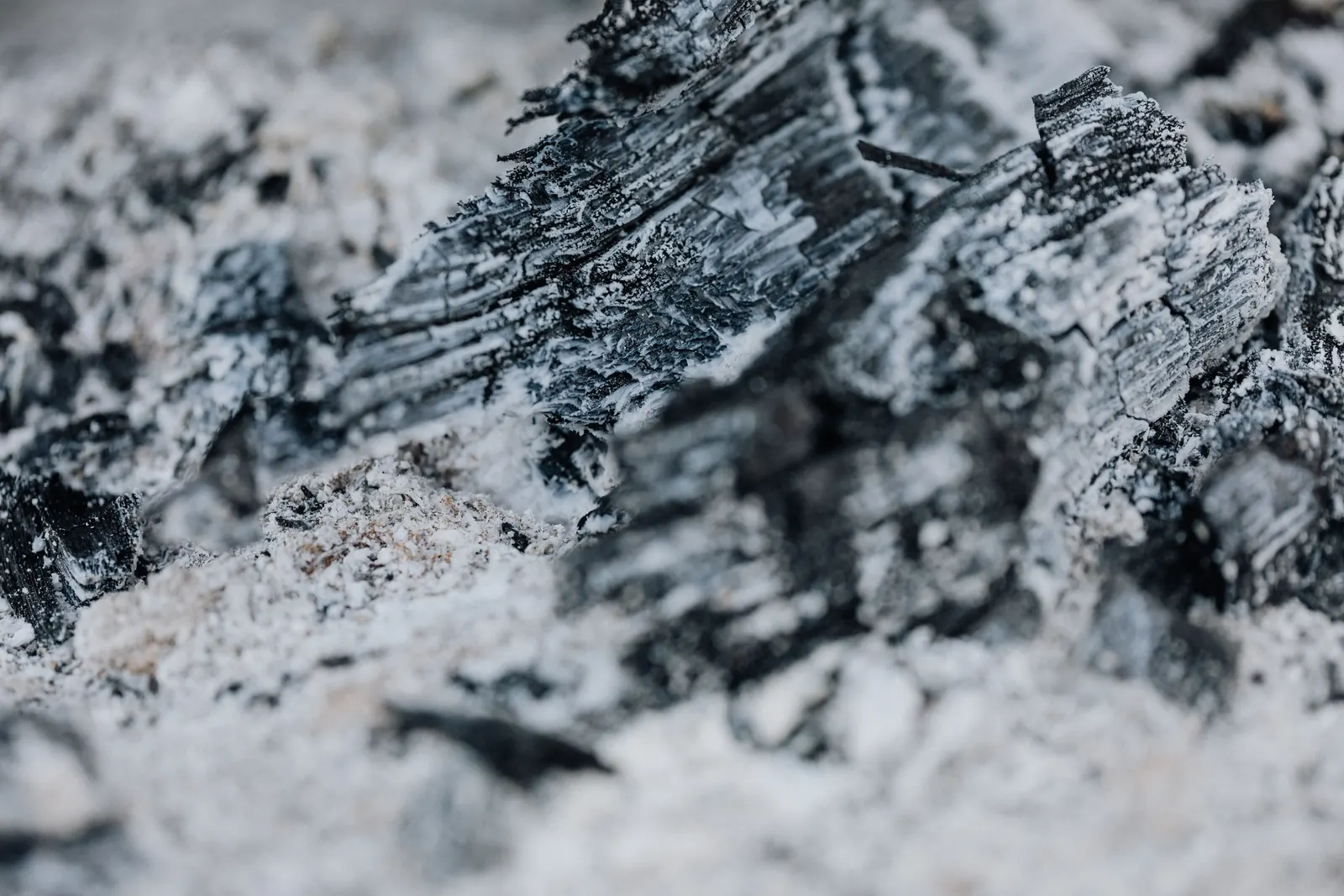
Signs the burner is sooting
Sooting rarely happens all at once. It builds over weeks, and the signs show up around the boiler and on the roof long before anything dramatic happens. The earliest clue is often on the chimney top: a dark plume when the burner starts, or black streaks on the cap and crown that were not there last year.
Inside, the boiler gives the next clues. Soot collecting on the barometric damper gate, black rings around the smoke pipe joints and a burner that needs resetting more often all point the same way. A sooting burner also costs more to run, because soot on the heat exchanger insulates it and less heat reaches the water or air.
- Black smoke from the chimney top while the burner runs
- Soot around the burner, the smoke pipe joints or the barometric damper
- The burner locking out and needing resets more often
- A rumble or rough start when the heat comes on
- An oily or smoky smell in the basement
- Dark film on the walls or ceiling near the boiler
How clean combustion works
An oil burner pumps oil through a small nozzle that breaks it into a fine cone of droplets. A fan blows a measured amount of air into that cone, and a spark lights the mix. When the droplets are fine, the air is right and the chimney pulls the exhaust away steadily, the oil burns almost completely and leaves little behind.
Upset any of those three and combustion goes incomplete. Large droplets do not burn through, too little air leaves carbon unburned, and weak draft lets exhaust linger in the chamber so the flame chokes on its own gases. The unburned carbon is the soot you see.
Causes on the burner side
The burner side is the most frequent starting point. A nozzle that is worn or partly clogged sprays coarse droplets. A dirty oil filter or strainer starves the pump. Water or sludge drawn from the bottom of an old tank fouls the nozzle and filter quickly. A dirty fan wheel or air inlet cuts the air supply, and settings that have drifted since the last tune-up throw the air-to-oil balance off.
These are jobs for a licensed heating technician, who adjusts the burner with combustion test instruments rather than by eye. A tune-up normally includes a new nozzle and filter, electrode adjustment, and a test of smoke, draft and flue gases.
Causes on the chimney side
The burner can only burn clean if the chimney carries the exhaust away. Oil flues collect soot and flakes of acidic scale, and that material drops to the bottom of the chimney. If nobody empties the base, it builds up until it partly blocks the opening where the smoke pipe enters. Exhaust slows, the flame gets less fresh air, it burns dirtier and makes more soot, which falls to the base and narrows it further. The problem feeds itself.
In the older houses we service, the chimney causes we meet most often, roughly in order, are a full base under an unlined or cracking clay flue, a flue far larger than a modern burner needs so the exhaust cools and lingers, a barometric damper stuck open or shut, and a top blocked by debris, a nest or a deteriorated cap.
| Side | Common cause | What it does |
|---|---|---|
| Burner | Worn or clogged nozzle | Coarse spray that does not burn through |
| Burner | Dirty filter, water or sludge in oil | Starves the pump, fouls the nozzle |
| Burner | Air setting drifted | Too little air for the oil |
| Chimney | Base blocked with scale and tile | Exhaust backs up, flame chokes |
| Chimney | Oversized or failing flue | Weak draft, more condensation and scale |
| Chimney | Stuck barometric damper | Draft swings too strong or too weak |
Soot on the walls from the furnace or boiler
If you see soot on walls or ceilings upstairs, take it seriously. With a furnace, soot can travel through the ductwork from a cracked heat exchanger or a leaking flue connection. With either a furnace or a boiler, soot in the living space means exhaust is getting into the house.
Turn the unit off at the service switch, call your heating service, and make sure carbon monoxide alarms are working on every floor. Anyone who feels ill, or an alarm that goes off, means leaving the house first and calling 911 from outside. The cleanup can wait until the source is found.
What a technician checks on the chimney
On a sooting system, the chimney visit starts with the smoke pipe: it comes down, gets cleaned and is checked for rust and loose joints. The barometric damper is checked so its gate swings freely and sits level. The flue is brushed and the base is emptied, and what comes out is telling. Fine dry soot points to the burner, heavy layers of scale and tile point to the flue.
With the flue clear, the liner is examined for cracks, missing tiles and open joints, the thimble is checked where the pipe enters the masonry, and the top is checked for blockage. A draft reading taken after cleaning gives the heating technician a baseline for setting up the burner.
Fixing it for good
A sooting oil system is fixed from both ends. The heating technician cleans and adjusts the burner. The chimney technician cleans the flue and smoke pipe, empties the cleanout, checks the liner and the barometric damper, and confirms the chimney is drawing. Doing only one half often means the soot returns before the season ends.
If the liner is breaking down or the flue is far too big for the burner, the lasting fix may be a stainless steel liner sized to the appliance. It keeps the exhaust warm and moving, stops tile from falling into the base and gives the burner a steady draft to work against. That kind of work should come with a written estimate before anything starts.
What you can do between service visits
Keep an eye on the chimney top from the street when the heat cycles on; a short faint puff at start-up is normal, steady dark smoke is not. Note when the burner locks out and how often. Keep the oil tank topped up rather than run near empty, which can draw sediment into the line. And keep the area around the boiler clear of storage so air can reach the burner. Those notes help both technicians find the cause faster.
Common Questions
What does it mean when the oil burner chimney is clogged?
Is oil boiler soot the same as fireplace soot?
Why is there black smoke coming out of my oil burner chimney?
Can a sooting burner cause a puff back?
Who do I call first, the heating company or the chimney company?
Need help with this? See our chimney sweeping service, or call (844) 468-2410 for a free written estimate.

