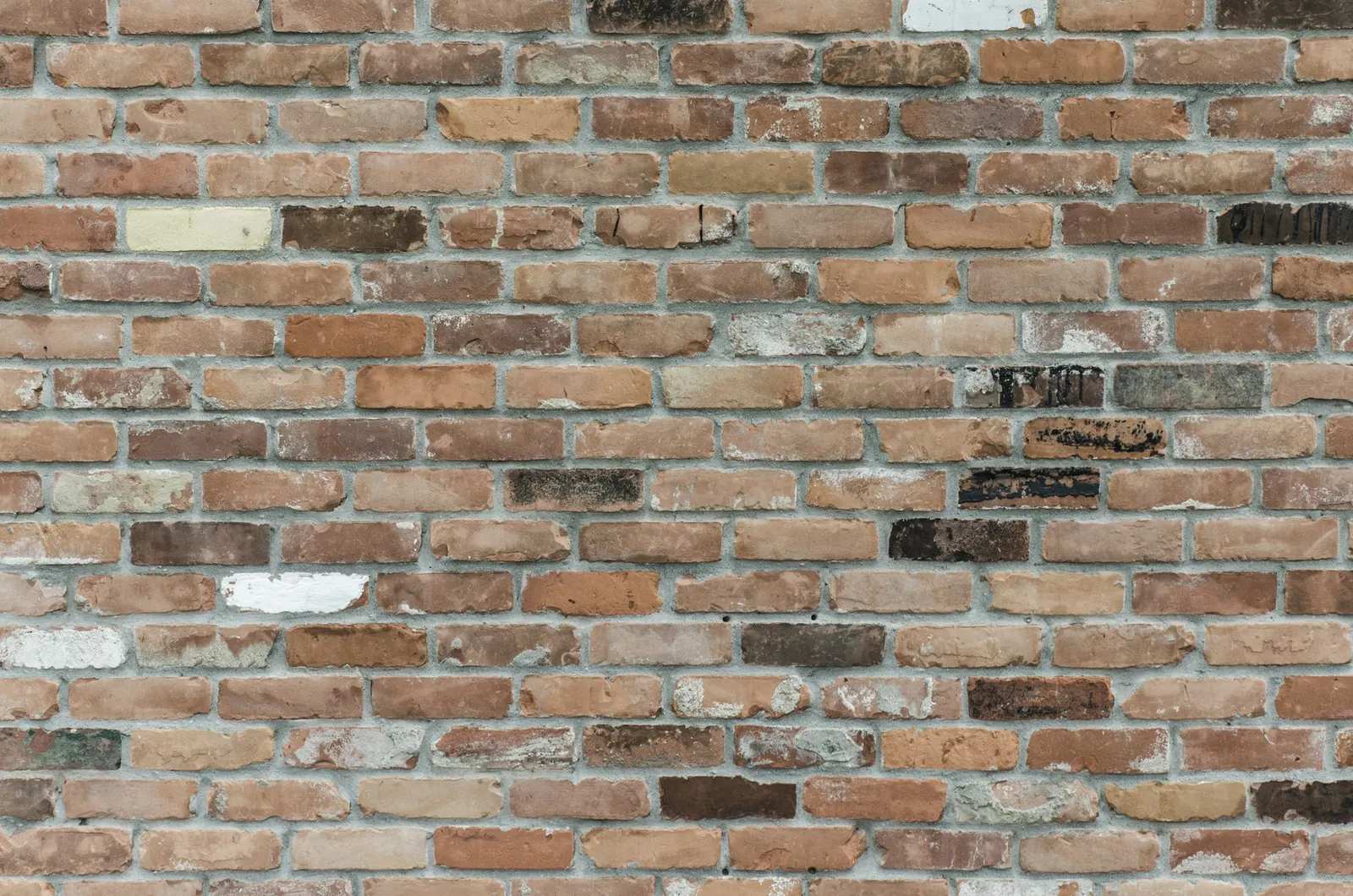
Repairing a shared chimney means working on one stack that serves two or more homes, so the owners need to agree on the scope, the roof access and how the cost is divided before work starts. A leak, a loose top or a cracked flue in a shared stack affects everyone on it, and a repair done on one side only tends to fail.
What a shared chimney is
In rowhouses, twins and many attached homes across Brooklyn, Queens, Jersey City, Hoboken and Philadelphia, chimneys are built into the party wall between two houses. One brick stack holds several flues, and each flue serves a fireplace, a boiler or a water heater in one of the homes. Thin brick partitions inside the stack, called wythes or withes, keep the flues apart.
From the street it looks like one chimney. Inside, it is a set of separate smoke paths that share the same brick, the same crown and the same weather. Sometimes the stack sits wholly on one lot and serves the neighbor too; sometimes the property line runs right through it.
The shared arrangement made sense when every house burned coal in several rooms: one massive stack carried all the flues and the heat of many fires kept it dry. Today most of those flues are cold or serve a single boiler, and the stack spends the winter wet and cold. That is the main reason shared chimneys in older neighborhoods need more attention than they did when they were built.
Common shared chimney stack problems
Because the masonry is shared, so are the problems. A crack or open joint on one owner's side lets water into the whole stack, and damage from one flue can spread to the others. These are the issues we find most often in older attached housing, roughly in order of how frequently they come up.
A leak that shows in your house but starts on the neighbor's side of the stack
Boiler condensation in one flue breaking down mortar for everyone
Caps that cover some flues and leave others open to rain
Half the stack repointed, the other half left crumbling
Smoke or exhaust from a neighbor's flue seeping through a cracked wythe
One owner's flue relined, the other's still unlined and failing
Why a shared stack can leak into your home
Water does not respect property lines. Rain that gets in through a cracked crown or open joints on the other half of the stack can run inside the masonry and come out on your ceiling or chimney breast. Fixing the flashing on your roof alone will not stop water entering from the top or from the neighbor's side.
That is why a leaking shared stack is worth inspecting as a whole: crown, cap, every face of the brick, the flashing on both roofs, and the condition of each flue. On flat roofs, where the two roofs meet at the stack, the joint between them is a frequent entry point that neither owner considers theirs.
When smoke crosses from one flue to another
The wythes between flues are usually a single brick thick. Over decades, heat, acidic condensation from boilers and water heaters, and freeze-thaw cycles open cracks in them. Smoke or exhaust from one flue can then leak into the next and come out of a fireplace or a basement opening in the other house.
This matters for safety. If you smell a neighbor's fire or exhaust in your house, keep carbon monoxide alarms working on every floor, and if one sounds or anyone feels unwell, get out and call 911. The usual fix is relining the affected flues so each has its own sealed path, which restores separation without rebuilding the stack.
Shared work and single-flue work
Splitting a shared chimney job is easier when the scope is broken into parts. Some work protects the whole stack and benefits everyone on it; some serves only one home. A clear estimate makes that line visible.
Who a chimney repair usually serves
Work
Serves
Notes
Crown repair or rebuild
Whole stack
Sheds water off every flue
Repointing or rebuilding the brick
Whole stack
Half-done masonry wears unevenly
Multi-flue cap
Whole stack
Or individual caps per flue
Flashing at each roof
Each roof, both affected
Coordinate with both roofers
Liner in one flue
One home
Sized to that home's appliance
Damper or firebox repair
One home
Inside one house
Working it out with your neighbor
Talk before anyone hires anyone. Share what you are seeing, agree that the whole stack should be inspected, and decide together who will be home when the crew needs roof access. Many shared chimneys can only be reached properly from both roofs, and scaffolding or ladders may need to sit on one property to work on the other.
How the cost is split is up to the owners. Some split it evenly, some by the number of flues each home uses, and some homes have a written agreement or deed language that covers it. If one exists, read it before work begins. Where owners cannot agree, a neutral written inspection report at least gives both sides the same facts.
Removing or capping part of a shared stack
Owners sometimes want to take their half of a chimney down, or cap a flue they no longer use. On a shared stack, that has to be planned with the neighbors. Removing brick can weaken the part that remains, and a flue that looks unused from your side may still serve the house next door. Capping or sealing the wrong flue can block a neighbor's boiler exhaust.
Before any removal, each flue is traced to its appliance or fireplace, and the plan is agreed in writing. Local permit rules for chimney removal vary, so check with your building department.
How we handle a shared chimney
We inspect the stack as one structure and check each flue we can reach, including which one serves which home. The written estimate covers the full repair and breaks out the parts that belong to the whole stack and the parts that serve one flue, so both neighbors can see what they are paying for.
Scheduling is planned around both households: roof access from either side, appliances shut down while their flues are worked on, and a clear account at the end of what was done to each flue.
Where one owner is ready to go ahead and the other is not, we say plainly which parts can be done for one home alone and which parts are only worth doing once both agree. Relining your own flue, for example, can proceed independently; rebuilding half a crown usually cannot.
What you can check yourself
From the street or a back window, count the flue tops and see which are capped. Look for white staining or missing bricks on the neighbor's face of the stack, and for a crown that is cracked or missing. Inside, note where stains appear and after which storms. Those observations, shared with your neighbor, make the first conversation easier.
Common Questions
Who pays to repair a shared chimney?
The owners who share it decide. Splitting evenly, splitting by flues used, or following a written agreement between the properties are all common. An estimate that separates shared work from single-flue work makes the conversation easier.
Can I repair only my side of a shared chimney?
You can repair parts that serve only your home, like your own flue liner. Work on the crown, cap and outside brick affects the whole stack, and half-done masonry tends to leak and wear unevenly.
Why do I smell my neighbor's fireplace in my house?
Often a cracked wythe between flues, a damaged liner or smoke drifting from one flue top into another. Keep CO alarms working and have the stack inspected; if an alarm sounds, get out and call 911.
Can my neighbor take down their half of our chimney?
Not safely without planning. The remaining half can be weakened and shared flues affected. Any removal should be agreed in writing and checked against local permit rules.
Do both homes need to be home for the repair?
Usually someone from each home is needed for roof access and to shut down appliances on the flues being worked on.
Need help with this? See our chimney repair service, or call (844) 468-2410 for a free written estimate.
Limited time offer
$500 OFF
Any chimney service. Mention it when you call or book online.