
What creosote is
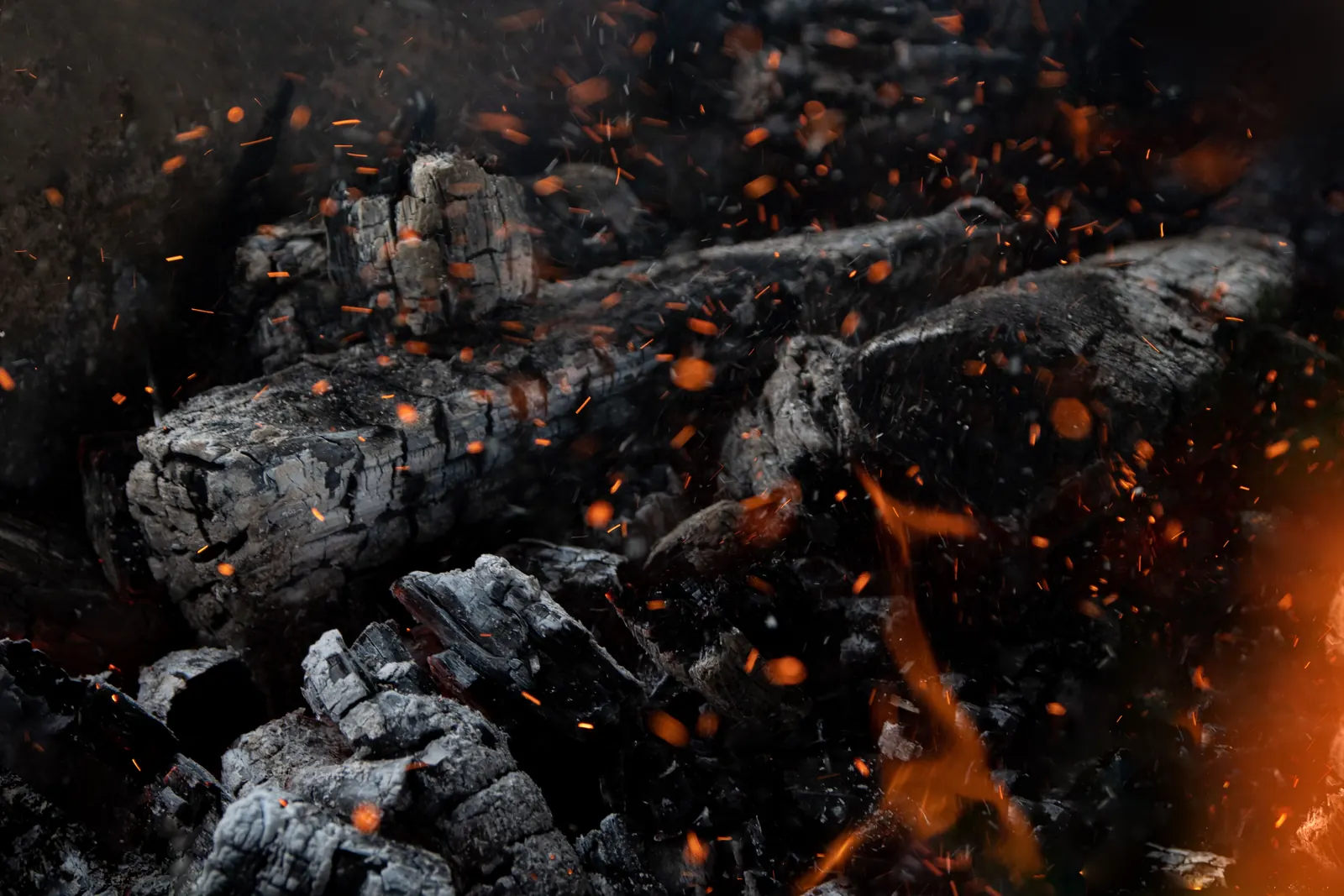
Wood smoke is not just gas. It carries unburned tars, oils, water vapor and fine carbon. As the smoke rises and cools, those materials condense on the flue walls, the same way steam condenses on a cold window. What collects is creosote. How it forms, and what it looks like, depends on how hot and fast the smoke is moving and how much moisture it carries.
Hot, quick smoke from a well-fed fire of dry wood leaves a thin, dry deposit. Cool, slow, wet smoke from a smoldering fire leaves sticky residue that hardens over time. That simple relationship explains all three stages, and it explains why two chimneys on the same street, burning the same amount, can look completely different inside.
Stage one: dry and sooty
First-stage creosote is a dull black, powdery or fine flaky layer on the flue walls. It comes from wood fires that burn hot with plenty of air, so the smoke moves up the flue quickly and leaves little behind. It wipes off on a finger and smears like charcoal, and it is the deposit a sweep hopes to find.
This stage is the easiest to deal with. A brush sized to the flue knocks it loose, and a vacuum running at the firebox keeps the dust out of the room. It still burns, so a heavy layer of it is not harmless, but a yearly sweep keeps it under control.
Stage two: crunchy and flaky
Second-stage creosote looks like black flakes or small shiny chips, sometimes described as puffed, crusty or like burnt cereal. Scratch it with a poker and it breaks up into hard granules. It forms when smoke cools on the way up, often from fires that are banked down, wood that is not fully dry, or a flue that runs cold on an outside wall, which is common on colonials and older homes across the region.
It takes more work than stage one. Stiffer brushes and rotary tools do most of it, and the smoke chamber above the damper, where deposits collect on rough brick, often needs extra attention. Stage two is a warning that the way the fireplace or stove is being run is cooling the smoke.
Stage three: glazed creosote
Glazed creosote is the one people search for. It is a hard, glossy black coating, like a candy shell or tar that dripped and set. It can build up in layers, run down the joints between flue tiles and hang in drips from the damper. Some people call it third-degree creosote. After a chimney fire, it can look puffed up and honeycombed, like burnt foam.
It forms when smoke is cool, slow and heavy with moisture, again and again. Wood stoves and inserts are especially prone to it when they are turned down low for long burns.
- Fires that smolder for hours, or a stove turned down low overnight
- Wet, green or freshly split wood
- Glass doors closed on an open fireplace, starving the fire of air
- A flue much larger than the stove or insert venting into it
- An exterior chimney that stays cold all winter
The three stages side by side
The table sums up how a technician tells the stages apart and what each one usually means for the visit.
| Stage | Looks like | Usual cause | Removal |
|---|---|---|---|
| One | Dull black powder or fine soot | Hot fires, dry wood | Brushes and vacuum |
| Two | Crunchy black flakes, some shine | Cooler smoke, damp wood, cold flue | Stiff brushes, rotary tools |
| Three | Hard, glossy tar-like glaze | Smoldering, wet wood, oversized flue | Rotary cutting heads or chemical treatment |
Why glazed creosote is the dangerous one
Glazed creosote is concentrated fuel stuck fast to the flue. It burns hot and fast once it lights, which is what a chimney fire is, and that heat can crack clay tiles, buckle a metal liner and reach the wood framing around the chimney. It is also hard to remove, so it tends to stay and thicken from one season to the next.
Puffy, bubbled creosote, cracked tiles or flakes of burnt creosote on the roof are signs a chimney fire may already have happened. NFPA 211 calls for an inspection after a chimney fire or any event that may have caused damage, and the flue should not be used until that is done.
How each stage is removed
Stage one and stage two come out with brushes, rods and a vacuum, sometimes with rotary tools for the stubborn parts. Glazed creosote needs heavier rotary tools with chains or cutting heads matched to the liner type, or a chemical treatment applied over several fires that turns the glaze into a dry, brittle residue that can then be brushed out. That may take more than one visit.
Once the glaze is gone, the liner underneath is inspected. If it is cracked or the joints have opened, it may need repair or replacement before the fireplace or stove is used again. Burning the creosote off is not a removal method; that is a chimney fire.
Stoves, inserts and creosote
Closed appliances change the picture. A wood stove or insert controls its air supply, and when it is turned down for a long, slow burn, the smoke leaving it is cooler and slower than anything an open fireplace produces. Run into a large, cold masonry flue, that smoke can build glazed creosote in a single season, sometimes concentrated in the first few feet above the appliance where the connector meets the chimney.
That is why stoves and inserts are usually installed with a liner sized to the outlet, often insulated, and why their manuals give specific guidance on burning hot for a period after loading. Owners of stoves and inserts should expect their flue to need attention more often than an open fireplace burning the same wood.
How to keep creosote at stage one
Burn split hardwood that has dried under cover until it is light, cracked at the ends and sounds hollow when two pieces are knocked together. Give the fire enough air to burn brightly, especially in the first part of a burn, and avoid damping a stove right down for all-night smolders. Keep glass doors open with the screen closed while an open fire is burning hard.
If a stove or insert is venting into a large masonry flue, a liner sized to the appliance keeps the smoke hotter and faster, which changes the deposit dramatically. And a yearly inspection, with sweeping when deposits are found, catches stage two before it becomes stage three.
Common Questions
What does glazed creosote look like?
Can you burn off stage three creosote?
How fast does creosote move from one stage to the next?
Do creosote sweeping logs remove glazed creosote?
Can I see creosote from the fireplace?
Need help with this? See our chimney sweeping service, or call (844) 468-2410 for a free written estimate.

