
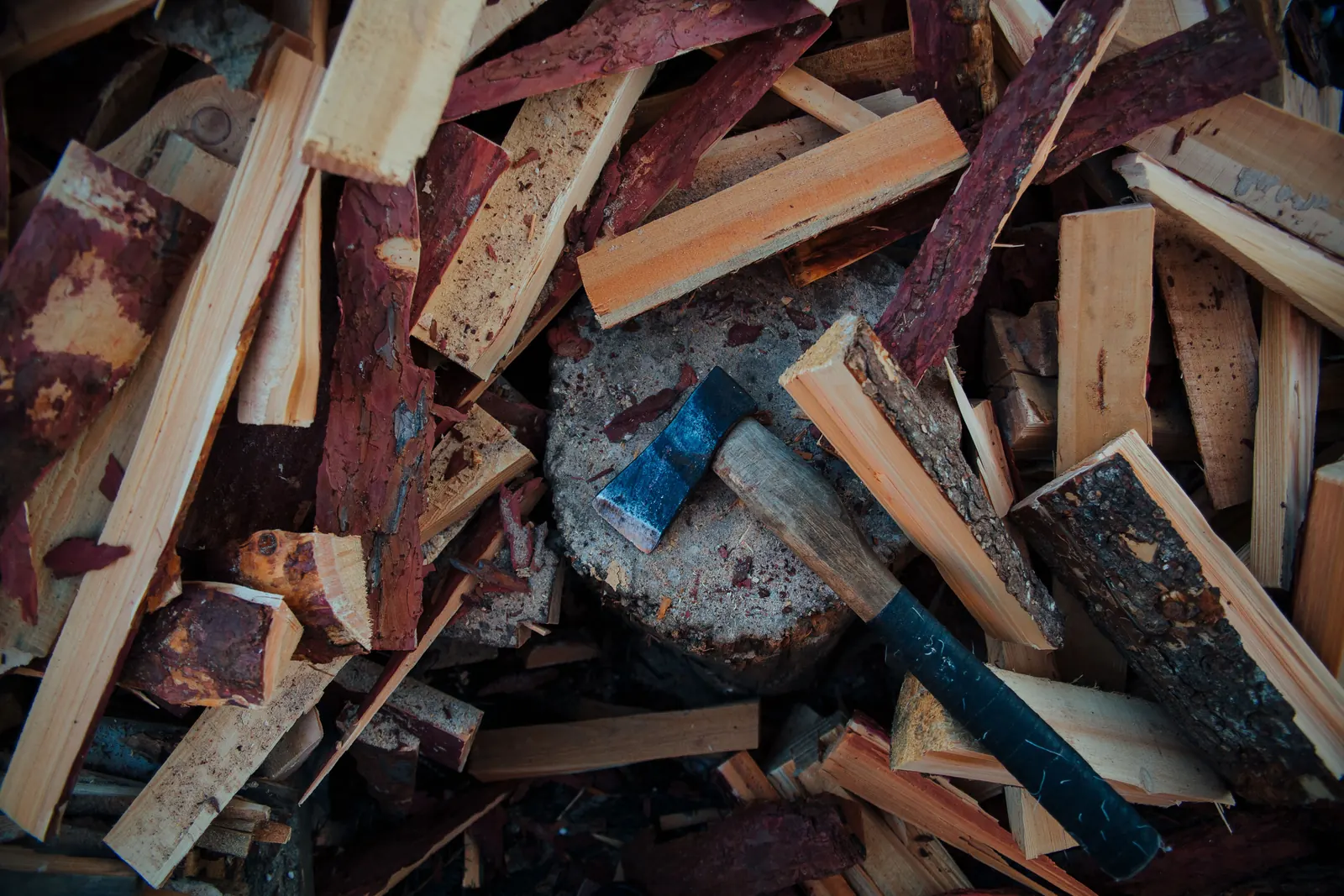
Why the wall is the wrong spot
A tight stack against the house traps moisture between the wood and the wall. Air cannot move behind it, sun cannot reach it, and rain that runs down the wall soaks into the bottom rows. Siding stays damp, brick and mortar stay wet longer, and wooden sills, trim and the bottom of door frames near the pile can start to rot. On a brick house, damp masonry near grade is the starting point for spalling, efflorescence and mortar loss after a few freeze-thaw winters.
Then there are the residents. Woodpiles are good homes for termites, carpenter ants, beetles, spiders and mice. A pile touching the house is a bridge for them to move from the wood into the sill plate, the siding or a basement window.
Why storage matters to the chimney
How firewood is stored decides how well it burns. Wood that sits on wet ground, or under a tarp wrapped tight around all sides, holds moisture and may grow mold. Damp wood smolders, makes more smoke and sends cooler exhaust up the flue, which builds creosote faster. Wood stacked where sun and wind can reach it dries further over the season and burns hotter and cleaner.
So a good woodpile is not only about pests. It is the first step in keeping the chimney clean.
A sweep can often tell how wood is stored from what comes out of the flue. Light, dry soot usually means dry wood and lively fires; crusty or shiny deposits often go with damp wood and smoldering.
Where to stack it instead
In a small backyard, as with many rowhouses and twins, you may not have much room, but even a modest gap from the wall helps. Good storage shares a few features wherever it is.
- On a rack, pallets or rails so the bottom row is off the ground
- With a gap between the pile and the house wall, fence or shed
- Covered on top with a roof, lid or tarp, sides left open
- In a spot that gets sun and wind, not in a damp corner
- Away from grills, fire pits and the outdoor ash can
- With older wood in front so you burn it first
Stacking so it dries and stays upright
A good stack lets air move through it. Lay the rows on rails or pallets, keep a hand's width between rows if you have more than one, and build the ends as crisscrossed columns so the pile does not lean or slide. Split pieces dry much faster than rounds, so split before stacking rather than after. Many people stack bark side up on the top row so rain runs off.
Keep stacks low enough to be stable, especially where children play, and do not lean them against a fence that was not built to carry the weight. In winter, keep a path to the pile clear of ice; carrying armloads over a slick patio is a common way to get hurt.
Storage options compared
Each spot has trade-offs between convenience, dryness and pest risk.
- Outdoor rack away from the house: dries well and keeps pests at a distance, at the cost of a walk in bad weather
- Against the house wall: convenient, but it brings damp walls, termites and mice to the door
- Garage: dry and close, but pests end up near the house and the fuel load rises
- Indoor rack by the fireplace: ready to burn, and only for a day or two of wood
Storing firewood in the garage
A garage keeps wood dry, but it also keeps it close. Insects that come in with the wood can move into the house from an attached garage, and mice nesting in a stack have an easy route indoors. A big stack of firewood is also a lot of fuel in a room that may hold cars, gasoline, paint and lawn equipment.
If a garage is your only option, keep a modest supply on a rack off the floor, away from the door into the house and from anything that burns or sparks. Wood that is still green will not dry well in a closed garage, so season it outdoors first and bring it in once it is ready.
Storing firewood indoors
A small rack or log holder near the fireplace is convenient, and a day or two of wood is reasonable. Keep it well back from the opening, clear of any spark that pops past the screen, and away from space heaters and radiators. The hearth extension is for fire protection, not storage.
A large indoor stack is a different story. As the wood warms up, insects that were dormant in the bark wake up and walk out into the room. In a basement, a big pile also adds moisture and is a fuel load beside the boiler.
Ashes deserve the same care. Hot coals can stay live for days, so ashes go into a metal can with a tight lid, set outside on a noncombustible surface and well away from the woodpile, the house and the deck. A woodpile and an ash can side by side is a common way outdoor fires start.
Does firewood attract bugs?
It does not so much attract them as come with them. Many insects already live in or under the bark when the wood is cut, and a pile on bare ground invites more. Most of the beetles and spiders that ride in on firewood do not infest a house, but termites and carpenter ants can cause real damage if they reach the framing.
Keep the pile off the ground and away from the walls, bring wood in shortly before you burn it, and knock each piece against the ground outside before carrying it in. Buying firewood cut near where you live, rather than hauling it long distances, helps keep wood pests from spreading to new areas, and some states restrict moving firewood for that reason.
A note on seasoning
Freshly cut wood is mostly water. It needs to be split, stacked and left to dry, usually through at least a warm season and often longer for dense hardwoods. Seasoned wood is lighter, darker, cracked at the ends and sounds hollow when two pieces are knocked together. A simple moisture meter, pushed into a freshly split face, takes out the guesswork. If you buy wood, ask how long it has been split and stacked, and store it properly so it does not take on water again.
Common Questions
Can I store firewood against my house for the winter?
Is it safe to keep firewood next to the fireplace?
How do I keep bugs out of firewood I bring inside?
Should I cover my woodpile with a tarp?
How far should a woodpile be from the house?
Need help with this? See our chimney sweeping service, or call (844) 468-2410 for a free written estimate.

