
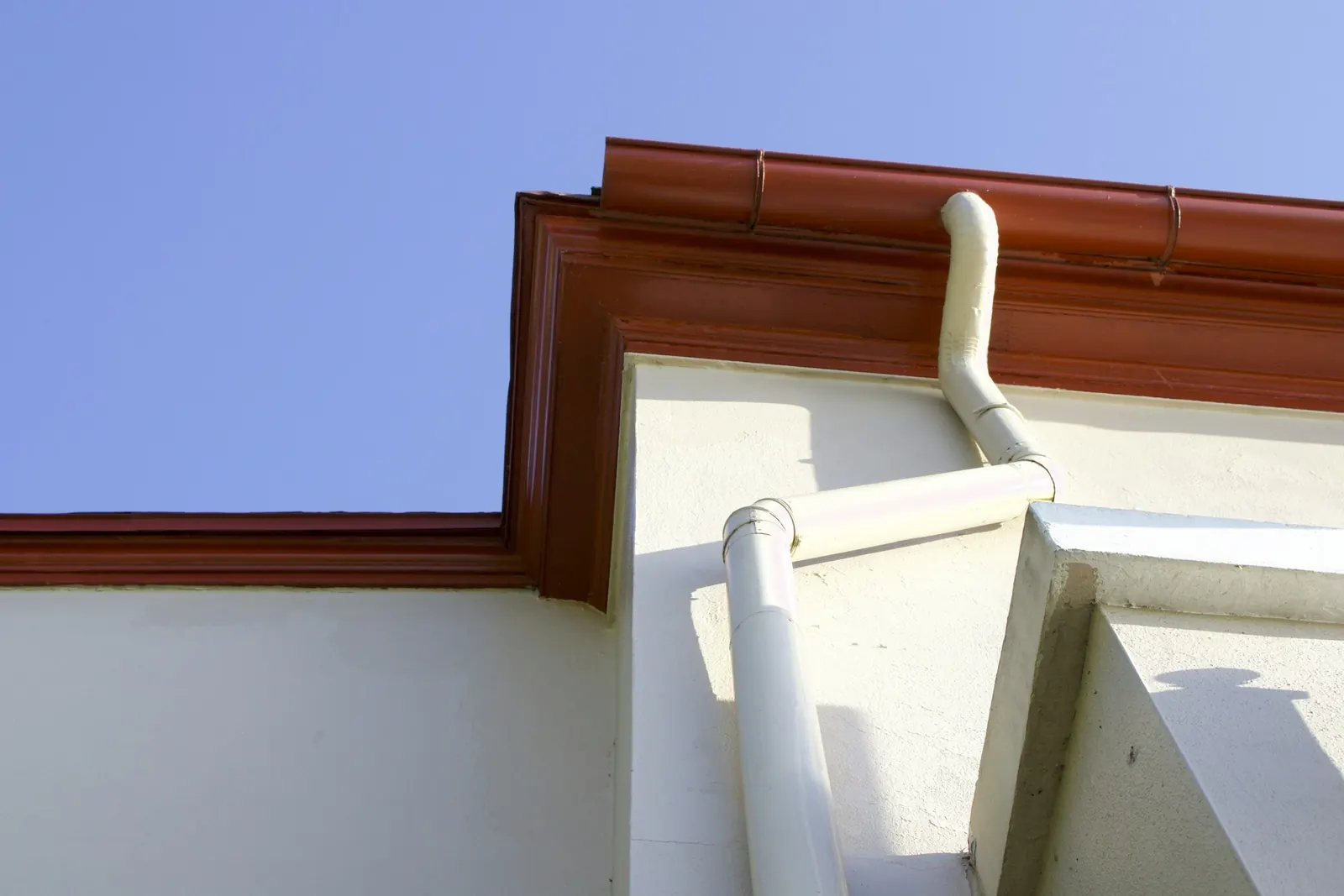
What parging is
Parging is a coat of cement or mortar troweled over the outside of a brick chimney. Stucco is a similar coating, usually thicker and applied in two or three layers over a scratch coat. Some chimneys were designed to be coated, particularly on stucco houses where the chimney matches the walls. Many others were parged later, often to cover worn brick, failed mortar or a patchwork of repairs without repointing them.
That history matters. When a coating went on to hide a problem, the problem is usually still there underneath, and decades of trapped moisture tend to make it worse. In older neighborhoods, a parged chimney on an otherwise brick house is often a sign that someone ran out of patience with the masonry years ago.
Reading the cracks
Fine hairline cracks in a coat that is still stuck tight to the brick are common and mostly cosmetic. Shrinkage and seasonal movement cause them. Wider cracks, cracks that follow the brick joints in a stair-step pattern, and cracks around the crown and the flashing are more serious, because they show movement in the masonry behind or let water straight in.
Where you can safely reach the coating, from inside an attic or a low flat roof, tap it gently with a knuckle or the handle of a screwdriver. A dull, hollow sound means the coat has separated from the brick behind it, even if it still looks intact.
Rust stains bleeding through the coating are another clue. They often mean steel inside the chimney, such as an old lintel, a tie or reinforcing, is corroding from trapped moisture, and expanding rust can crack the coat from within.
- Hairline cracks where the coat sounds solid come from shrinkage or minor movement: patch and monitor
- Stair-step cracks along the joints mean the brick or mortar behind is moving: remove the coat locally and inspect
- A hollow sound or bulging means the coat has let go of the brick: remove loose areas back to sound coating
- Pieces falling off mean active failure with water behind: repair before the next freeze
- Cracks at the crown or flashing let water in at the top or roof line: fix the crown and flashing too
Why a coat can hurt the chimney
A solid cement coat sheds water while it is intact. Once it cracks, rain gets in behind it and has a hard time getting back out, because the dense coating is less porous than the old brick. The brick stays wet, freeze-thaw cycles break down the mortar joints, and the coat is pushed off in sheets. Chimneys that look fine from the street can be soft and crumbling under the parging.
Hard, dense coatings over old soft brick are the worst combination, because the brick needs to dry out through its face and the coating stops it. Painted parging adds another barrier. The top of the chimney suffers most, where rain and snow hit from every side and the crown often drains straight onto the coating.
Causes, most common first
When we take loose parging off older chimneys, the same causes tend to appear in roughly this order.
- Water entering at a cracked crown or missing cap and soaking down behind the coat
- Coating applied over already deteriorated brick and mortar
- Failed flashing letting water run behind the coat at the roof line
- A dense cement mix over soft brick, trapping moisture
- Condensation from an unlined boiler flue wetting the masonry from inside
Parging pros and cons
On the plus side, parging gives an uneven or patched chimney a uniform look, adds a weather layer, and costs less up front than rebuilding the brick. On a chimney built of rough or mismatched brick that was always meant to be covered, it is a legitimate finish.
On the minus side, it hides the condition of the masonry, it can trap moisture, and once it starts to fail it usually keeps failing. The better approach on most brick chimneys is to repair the brick and mortar themselves and leave them exposed. When parging is the right finish, it should go over sound masonry and use a mix that suits the brick, often one with lime that lets moisture move.
There is also a middle path on chimneys where the brick is sound but stained or mismatched from old repairs: careful repointing with a mortar matched in color, and replacement of the worst bricks, often gives a tidy result without hiding the masonry. It also leaves the chimney easy to inspect in future, which a full coat never does.
How a stucco chimney gets repaired
Small cracks in a coat that is still firmly attached are cut open slightly and filled with a compatible patch so the repair moves with the surrounding coating instead of popping out. Loose or hollow areas are removed back to sound coating, and the brick behind them is inspected. If the masonry underneath is soft, it is repointed, bricks are replaced, or the top section is rebuilt before a new coat goes on, or the coat is left off entirely.
Because the real condition only shows once the loose coating comes off, a good estimate explains what is planned and how anything found underneath will be handled and priced before more work is done. Plan masonry and coating work for weather above freezing, since fresh mortar and stucco need time to cure.
Fix the top and the roof line too
A new coat on a chimney with a cracked crown or failed flashing is wasted. Water enters at the top or at the roof line and runs down behind the new coat as easily as it did behind the old one. Repairs to a parged chimney should include a sound crown with an overhang that drips water clear of the face, a cap on each flue, and flashing set properly into the masonry rather than buried under the coating.
Checking a parged chimney from the street
With binoculars, look for cracks wide enough to see from the street, bulges or areas that look puffed out, pieces missing, and rust or dark streaks running down from the top. After rain, notice patches that stay dark long after the rest has dried. Inside, look for stains on the ceiling or walls beside the chimney and for flaking paint on the chimney breast. If pieces are falling, keep people clear of the area below. Leave the roof to someone with the right gear.
Common Questions
Is chimney parging a good idea?
Can I patch stucco cracks on my chimney myself?
Should the parging be removed from my chimney?
Why is my stucco chimney cracking at the top?
Can a parged chimney be waterproofed?
Need help with this? See our masonry & tuckpointing service, or call (844) 468-2410 for a free written estimate.

