
How it works
A traditional damper sits low in the chimney, just above the firebox, in a narrow spot called the throat. It is usually a cast iron plate on a hinge, worked by a handle or a rotating knob. A top-sealing damper moves that job to the top of the flue. A frame is fastened to the flue tile or the crown with adhesive and fasteners, and a hinged lid with a spring sits on that frame.
The spring holds the lid open. A stainless cable runs down the inside of the flue to a bracket mounted on the firebox wall. Pulling the handle down closes the lid against its gasket and hooks the cable in place. Releasing the handle lets the spring pop the lid open again.
Why people install one
The main reason is a throat damper that no longer works. Old cast iron dampers rust, warp and seize, especially in chimneys that have taken rain for years, and replacing one inside the firebox can mean cutting into masonry. A top-sealing damper is installed from above and leaves the old damper in place, usually locked fully open or removed so it does not obstruct smoke.
It also seals better. A cast iron plate closing on a cast iron frame leaves gaps; a gasketed lid on a flat frame does not. With the flue closed at the top, the whole chimney stays filled with house-temperature air instead of cold outdoor air, which cuts drafts, cold downdrafts and the smell of old smoke drifting into the room in humid weather.
For many older homes the comfort difference is the selling point. An exterior chimney on a colonial or a rowhouse rear wall can feel like an open window in January when its throat damper leaks. Sealing the flue at the top keeps that column of cold air out of the house altogether, and it ends the trickle of cold, sooty-smelling air that comes off the hearth on windy nights.
- Tighter seal than a cast iron throat damper
- Keeps rain, cold air and animals out when closed
- Installed at the top, with no demolition inside the fireplace
- Works when the old damper is rusted, warped or missing
- Helps with summer odors from creosote in the flue
Throat damper or top-sealing damper
Both control the flue, but they work from opposite ends and suit different situations.
| Feature | Throat damper | Top-sealing damper |
|---|---|---|
| Location | Just above the firebox | Top of the flue |
| Seal | Metal on metal, often leaky | Gasketed lid |
| Flue when closed | Fills with cold outdoor air | Stays near room temperature |
| Replacement | Often means masonry work | Fitted from the roof |
| Keeps rain and animals out | Only below the damper | Yes, when closed |
Top sealing damper vs chimney cap
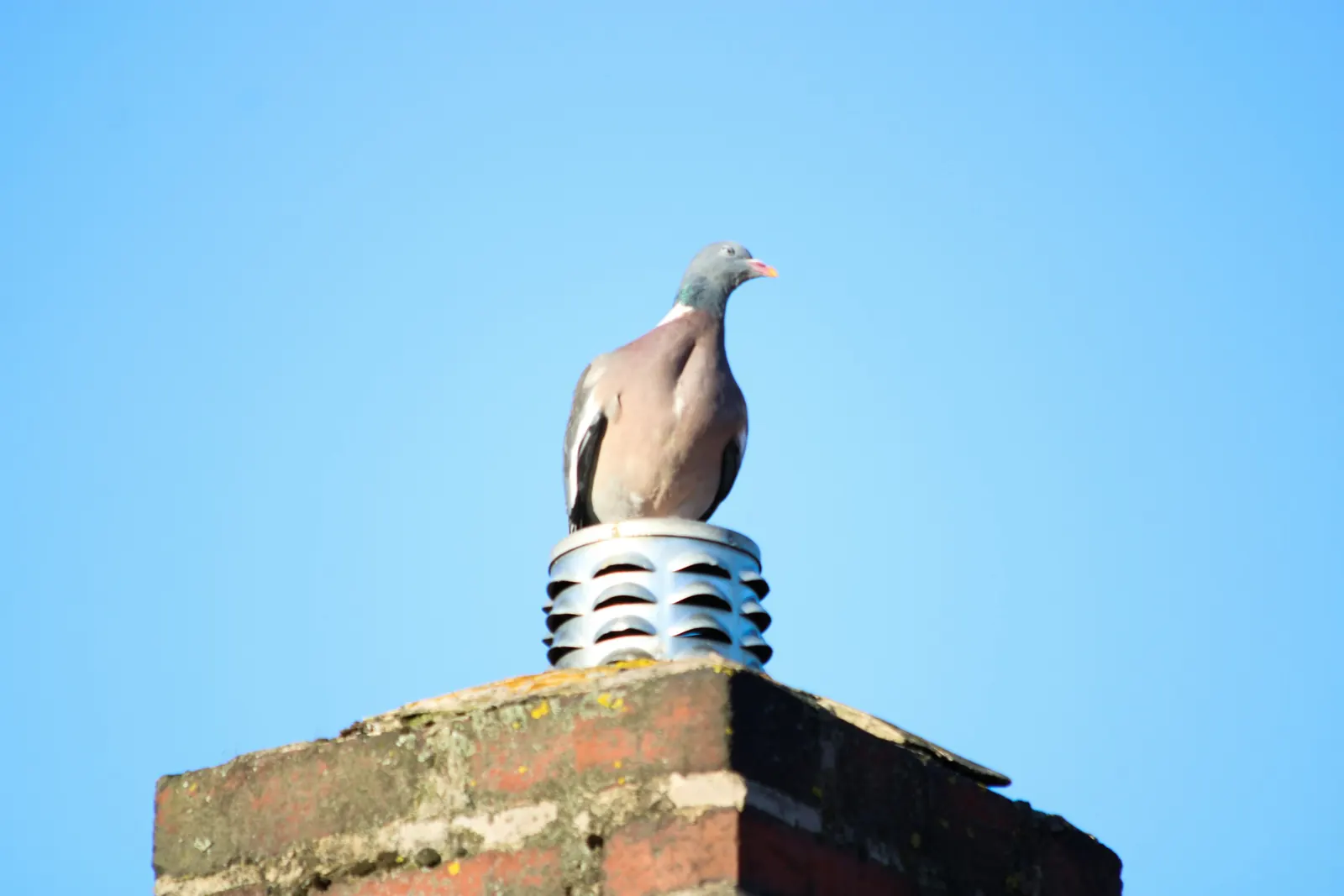
A chimney cap is a cover that sits over the flue and stays open. It keeps rain and animals out while smoke goes up and around it. A damper opens and closes to control airflow. They solve different problems, which is why the two are sometimes combined.
Many top-sealing dampers have a built-in mesh screen and lid, so they act as both a cap and a damper in one unit. Others are made to sit under a separate cap. On a chimney with several flues, each fireplace flue can get its own damper while boiler and water heater flues keep a standard cap, since a heating appliance flue must never be closed.
Open or closed?
Open it fully before you light a fire, and leave it open until the fire is completely out and the ashes are cold, which can take many hours after the flames are gone. Closing it on embers can push smoke and carbon monoxide into the room. Close it when the fireplace is not in use, including all summer.
On a freezing night after rain or snow, check that the lid swings open freely before lighting. If ice holds it shut, wait and do not force a fire under it. A gas log set should only be used with a damper arrangement its manufacturer's instructions allow; vented gas logs often need the flue held permanently open.
Where it fits and where it does not
Top-sealing dampers suit most masonry fireplace flues with a clay tile liner, including the tall, narrow throats of Rumford fireplaces and the small flues of old brownstone fireplaces, where a throat damper would be hard to fit. They are made in round, square and rectangular sizes to match common tiles, and some mount to the crown for odd shapes.
They are not for flues that serve a boiler, furnace or water heater, and they are not a substitute for a liner on a cracked or unlined flue. A wood stove or insert with a liner uses its own cap at the top. On a chimney with a badly cracked crown or crumbling top courses, the masonry is repaired first so the frame has something sound to grip.
Installation
The damper has to fit the shape and size of the flue tile, and the cable has to run cleanly down the flue without rubbing against rough mortar or snagging on a ledge. It is fitted from the roof by a crew with fall protection, after the flue has been swept so the adhesive bonds to clean tile.
The handle bracket goes on a side wall of the firebox where it is easy to reach but out of the direct flame. Expect the installer to show you how to open and close it and to check that the lid seals evenly all the way around.
If the existing throat damper is rusted in a half-closed position, it is either removed or fixed fully open as part of the job, so the smoke path is clear from the firebox to the new lid.
Yearly care
Once a year, usually at the sweep, check that the handle locks, the lid closes evenly and the gasket is not cracked, flattened or pulled loose. The gasket is a wear part and can be replaced without replacing the whole damper. Cables can fray where they pass the bracket; a frayed cable should be replaced before it snaps with the lid closed. If the lid ever sticks shut, do not light a fire until it has been freed.
Common Questions
Should a top sealing damper be open or closed?
Is a top sealing damper cap the same thing as a damper?
Do I still need my old damper?
Can a top sealing damper freeze shut?
Can I put a top sealing damper on a boiler flue?
Need help with this? See our fireplace repair service, or call (844) 468-2410 for a free written estimate.

