
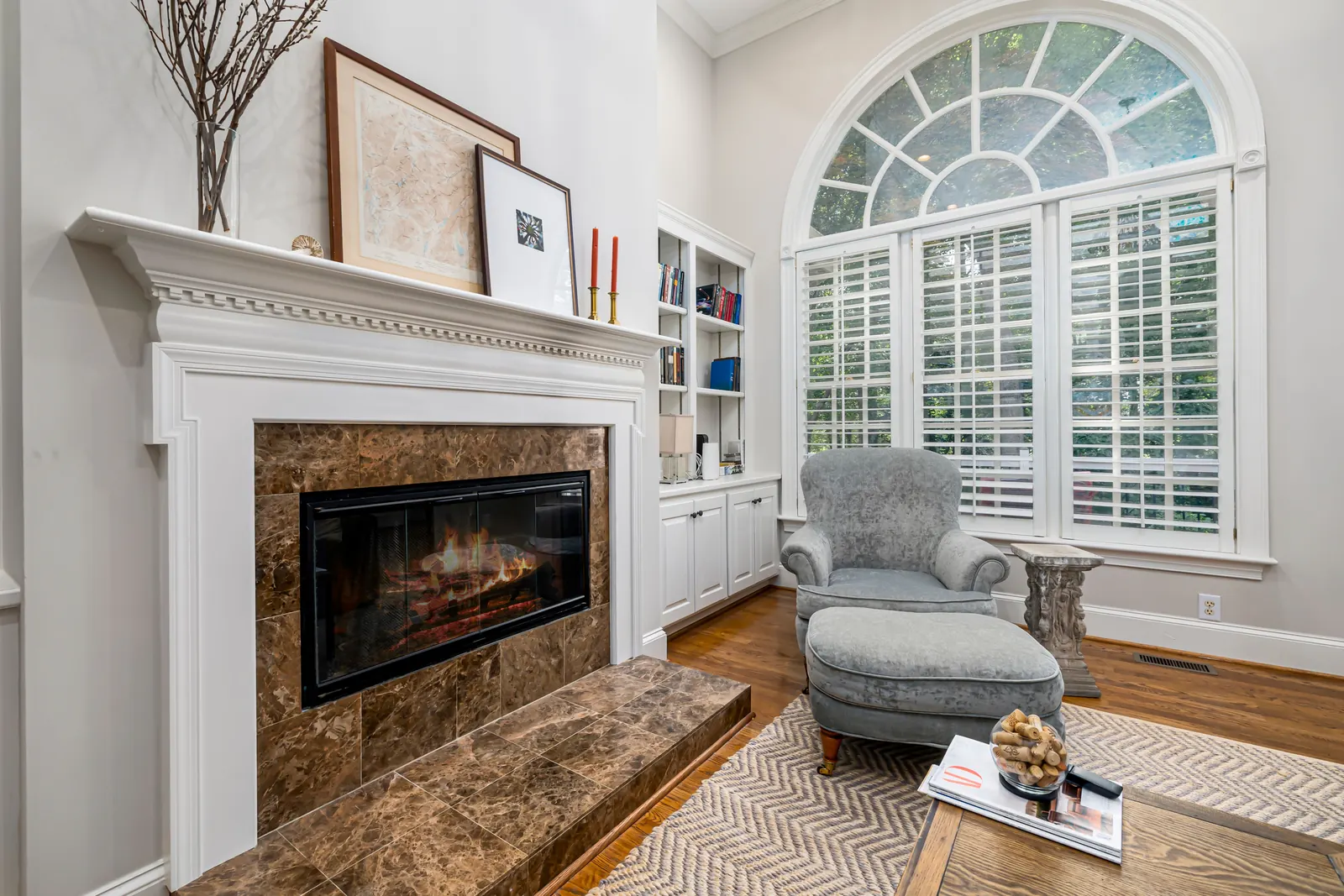
Is it a working fireplace at all?
A lot of fireplaces in older apartment buildings, brownstone floor-throughs and converted townhouses were closed off long ago and kept for looks. Some are painted inside, bricked up at the back or blocked above the throat with a metal plate or a board. Others were built as decorative surrounds with no flue behind them at all. A few observations tell you which kind you have before you ask anyone.
Look with a flashlight, not a match, and do not reach up into the throat.
- A damper or an open throat overhead means there is a flue
- A firebox painted white, tiled or holding candles is likely decorative
- A metal plate or board fixed across the throat means it was sealed
- No soot at all inside may mean it has not been used in a long time
- A gas key or valve nearby means it may be set up for gas logs
Ask before you light anything
In an apartment the chimney usually belongs to the building, not to you. The lease or house rules often say whether the fireplace may be used, and the owner or board is generally the one who maintains and repairs the flue. Ask in writing whether the fireplace is approved for use, what fuel is allowed, and when the chimney was last inspected and swept. NFPA 211, the national fire-safety standard for chimneys, calls for a yearly check, and the building should be able to tell you about it.
Renters should not hire chimney work without the owner's approval. Co-op and condo owners usually need the board or managing agent involved, since flues often run through other units and the roof is common property. Insurance can also be affected by unapproved use.
If the answer is yes, ask a few follow-ups: whether the building requires glass doors or a screen, whether there are quiet hours or seasons when fires are not allowed, where ashes may be disposed of, and who to call if smoke comes into the apartment. Buildings that allow fireplaces usually have answers ready; a building that has never thought about it probably has not had the flue checked in a while either.
- Permission to use the fireplace: the building or board sets the rules; get the answer in writing
- Chimney inspection and sweeping: the building usually arranges it; renters can request it
- Flue, crown and cap repairs: usually the building's responsibility; renters report problems
- Safe use, fuel and ashes: the renter's responsibility, within the building's fuel rules
- Smoke and CO alarms: renters test them and report faults; who installs them depends on local rules
What an inspection of an apartment fireplace covers
When a building has a fireplace inspected, the technician checks the firebox and its joints, the damper, the smoke chamber, and the flue as far as it can be seen, then the top of the flue from the roof: crown, cap and how close it sits to other flue tops. In a multi-unit stack, the technician also confirms which flue on the roof belongs to which apartment, which is not always obvious.
Common findings in older buildings include a missing or rusted damper, an unlined or cracked flue, a cap shared across flues that is clogged, and a hearth in front of the opening that is too short for a wood fire.
Safe habits for a working fireplace
Burn only dry firewood in small fires sized to the firebox; apartment fireplaces are often small, especially old coal fireplaces. Skip trash, cardboard, wrapping paper and treated or painted wood. Open the damper fully before lighting and keep it open until the ashes are cold. Use a screen or glass doors, keep rugs, furniture and holiday decorations back from the hearth, and never leave a fire burning when you go out or go to sleep.
Put ashes in a metal can with a tight lid and keep it outside the apartment if the building allows, away from anything that burns. Hot coals can stay live for days.
Alarms and carbon monoxide
Keep smoke alarms and carbon monoxide alarms working, and test them before the first fire of the season. A fireplace that is not drafting well can push smoke and carbon monoxide into the room, and in a small apartment that happens quickly. A CO alarm, or anyone who feels sick, is a signal to leave the apartment and call 911.
If the smoke alarm sounds every time you light a fire, smoke is reaching the room. That calls for an inspection rather than moving the alarm.
Gas logs and electric options
Some buildings allow gas logs but not wood. Gas logs still need a working flue if they are vented, and gas work needs a licensed professional. Where no fire of any kind is allowed, an electric insert can give the look of a fire in the opening without any venting, as long as the flue above is closed off so cold air does not pour down behind it.
If the fireplace is sealed and stays that way, a cold flue can still cause small problems: drafts around the panel, a musty smell in humid weather, or water staining if the top is open to rain. Those are worth reporting to management, since the fix, usually a cap or a proper seal at the top, is on the building's side.
City rules
In New York City, the Mechanical Code ties solid fuel fireplaces to the city's Air Pollution Control Code, which sets which fuels may be burned, and allows new ones only for fuel types that code permits. Check the current rules with the city before buying fuel. Outside the city, confirm with your local building department. Rules vary by town and by building, so confirm locally rather than relying on what a previous tenant did.
Common Questions
Can I use the fireplace in my rental apartment?
How can I tell if my apartment fireplace is decorative?
Is it safe to burn wood in an apartment fireplace?
Who pays for chimney cleaning in an apartment?
Can I put candles in a decorative fireplace?
Need help with this? See our chimney inspection service, or call (844) 468-2410 for a free written estimate.

