
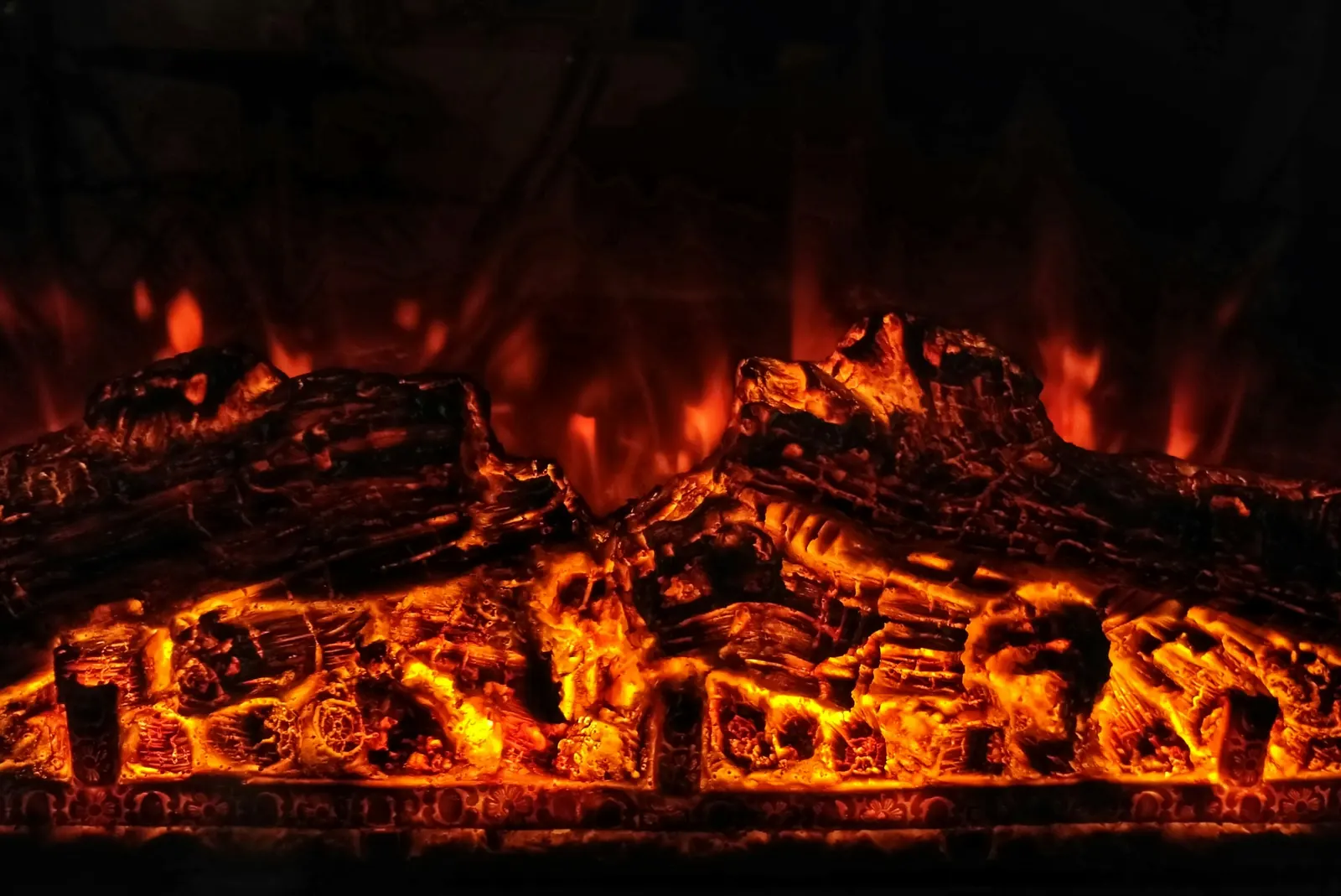
How vented gas logs work
A vented set burns like a small, controlled wood fire. The burner sits under ceramic logs, and the flames are large and yellow and wrap around them, which is what makes them look real. Because the flame touches the logs and burns with less air, combustion is less complete than in a vent-free set, and the exhaust has to go up the chimney. The damper must be open while they burn, and many installations use a clamp so the damper cannot close fully.
Because most of the heat goes up the flue with the exhaust, vented logs are mainly about the look of a fire. They are a common choice for converting a masonry wood fireplace that the owner no longer wants to haul wood for, and they suit the tall openings of older fireplaces well.
Log placement matters with vented sets. Each log has a set position on the grate, shown in the manual's diagram. Logs moved out of place, often after cleaning, push the flame into the wrong spots and cause heavy soot on the logs, the glass doors and the wall above the opening.
How ventless gas logs work
A vent-free set is designed to burn the gas very cleanly so it can run without a chimney. The logs are arranged so the flame touches them less, which keeps soot down, and the flames tend to be smaller and bluer. Nearly all the heat stays in the room. So does the exhaust: water vapor, carbon dioxide and small amounts of other byproducts.
Vent-free sets include an oxygen depletion sensor, a safety pilot designed to shut off the gas if oxygen in the room drops. Their manuals set limits on room size, on how long they may run, and on use in bedrooms and bathrooms, and those limits matter.
Side by side
The two types solve different problems, and each gives something up.
| Feature | Vented logs | Vent-free logs |
|---|---|---|
| Flame look | Tall, yellow, wraps the logs | Smaller, bluer, clear of the logs |
| Heat to the room | Little | Most of it |
| Exhaust | Up the chimney | Into the room |
| Chimney needed | Yes, sound and open | Not for venting |
| Damper | Open whenever burning | Per the manual |
| Local rules | Generally allowed with proper venting | Restricted in some places |
Pros and cons
Vented logs give the most realistic flame and send their exhaust outside, but they heat poorly and need a chimney in good condition. Ventless logs give real heat and work where the chimney is unusable, but they put their exhaust and moisture into the house.
- Vented: realistic flames, exhaust leaves the house, but little heat
- Vented: needs a sound chimney, inspected and kept clear
- Ventless: much more heat into the room and no flue needed for exhaust
- Ventless: adds moisture, which can mean condensation on windows and damp walls
- Ventless: some people notice odors or find the air stuffy
- Ventless: restricted or not allowed in some areas
How to tell which one you have
The surest answer is the rating label or the manual. The label is usually attached near the gas valve or on a chain under the logs, and it will say vented or vent-free along with the model. A few physical clues help too. A vent-free set has an oxygen depletion sensor pilot assembly, often visible as a small, separate pilot with a sensor beside it. Its flames are smaller and bluer, and its logs sit clear of the flame. Vented sets have bigger, yellow flames that wash over the logs and leave some soot on them.
If you cannot find a label and are not sure, do not run the logs with the damper closed. Treat them as vented until a technician confirms what they are.
What the chimney needs for vented logs
A vented log set depends on the chimney to carry its exhaust, so the flue has to be sound, clear and open. Before vented logs go into an old wood fireplace, the flue should be swept and inspected: cracked tiles, a missing cap, a nest or a rusted damper that will not stay open all cause trouble. Gas exhaust is moist, and in a cold, oversized masonry flue it can condense and wet the brick.
The damper arrangement must follow the log set's instructions. Where a damper clamp is required, it is fitted so the damper cannot be closed by mistake. That also means the flue stays open between uses, which is why a cap is important on these chimneys.
Logs, inserts or a direct-vent fireplace
Gas logs are not the only way to burn gas in an old fireplace. A gas insert is a sealed firebox that slides into the opening and vents through its own liner run up the chimney. It heats far better than vented logs, keeps room air separate from the flame and keeps its exhaust out of the house, at the cost of a less open-fire look and a larger installation.
Where there is no usable chimney, a direct-vent gas fireplace can be built in with a vent through an outside wall. For owners choosing between options, the questions are the same: how much heat is wanted, how much of the open-fire look matters, what the chimney can support, and what local rules allow.
Whatever the choice, sizing and installation follow the appliance maker's instructions, and the gas line is run by a licensed installer.
Local rules and installation
Rules on vent-free gas appliances vary by state and town, and some places restrict or prohibit them, particularly in sleeping rooms. Gas work and appliance installation often need a licensed professional and sometimes a permit. Confirm with your local building department before buying or installing either type, and ask the installer to show you the rating label and manual when the job is done.
Safety for either type
Whichever you choose, put carbon monoxide alarms on every floor and near bedrooms. Carbon monoxide is dangerous; an alarm, or someone feeling unwell, means getting everyone out and calling 911 or the gas utility. If you smell gas, leave without operating switches and call from outside.
For vented logs, the chimney still needs the yearly inspection NFPA 211 calls for. For vent-free logs, the burner and sensor need servicing as the manual directs. Soot on the logs or walls, a lazy yellow flame on a vent-free set, or a new odor are all reasons to shut the logs off and have them checked.
Common Questions
Vented vs ventless gas logs: which gives more heat?
Can I use ventless logs with the damper open?
Can vented gas logs be used with the damper closed?
Why are my vented gas logs leaving soot?
Can I switch from vented to vent-free logs?
Need help with this? See our fireplace repair service, or call (844) 468-2410 for a free written estimate.

