
Three different things people call a damper
On a fireplace, the damper is a plate in the throat or at the chimney top. On a wood stove, the word gets used for three separate controls, and mixing them up is the source of most confusion. The air control on the stove body meters the combustion air going into the firebox. A key damper is a round plate inside the stovepipe, turned by a handle on the outside. A bypass damper, found on catalytic and some other stoves, opens a direct route from the firebox to the flue for lighting and loading.
Many modern stoves have only the air control and, if catalytic, a bypass. The burn rate is set by how much air gets in, not by restricting the exit. Older stoves and some installations add a key damper in the pipe.
| Control | Where it is | What it does |
|---|---|---|
| Primary air control | Lever, slider or knob on the stove body | Sets how much air feeds the fire, and so the burn rate |
| Secondary or fixed air | Tubes or ports high in the firebox, often not adjustable | Burns the smoke a second time above the fire |
| Bypass damper | Lever or handle on catalytic stoves | Opens a straight path to the flue for lighting and loading |
| Stovepipe key damper | Handle on the pipe above the stove | Partly restricts the flue on stoves that call for it |
Lighting: everything open
A cold chimney is full of heavy, cold air that resists the first smoke. To get draft going, the fire needs plenty of air and a clear exit. Open the primary air fully, set any key damper wide open, and on a catalytic stove open the bypass. Start with dry kindling and small splits so the stove and flue heat quickly. Many manuals suggest leaving the door slightly ajar for the first few minutes, and the EPA's burn tips say the same, with the reminder not to leave the room until the door is closed.
Once larger pieces have caught and the flames are lively, close the door. Leave the air open for a while longer; the stovetop and flue still need to reach working temperature before anything gets turned down.
Turning it down, in steps
When the firebox is full of flame and the stove is hot, reduce the air gradually: a quarter at a time, waiting several minutes between moves. A stovetop or flue thermometer takes the guesswork out, and the manual or the thermometer itself shows the range to aim for. On a catalytic stove, close the bypass once the catalyst is up to temperature so the smoke routes through it.
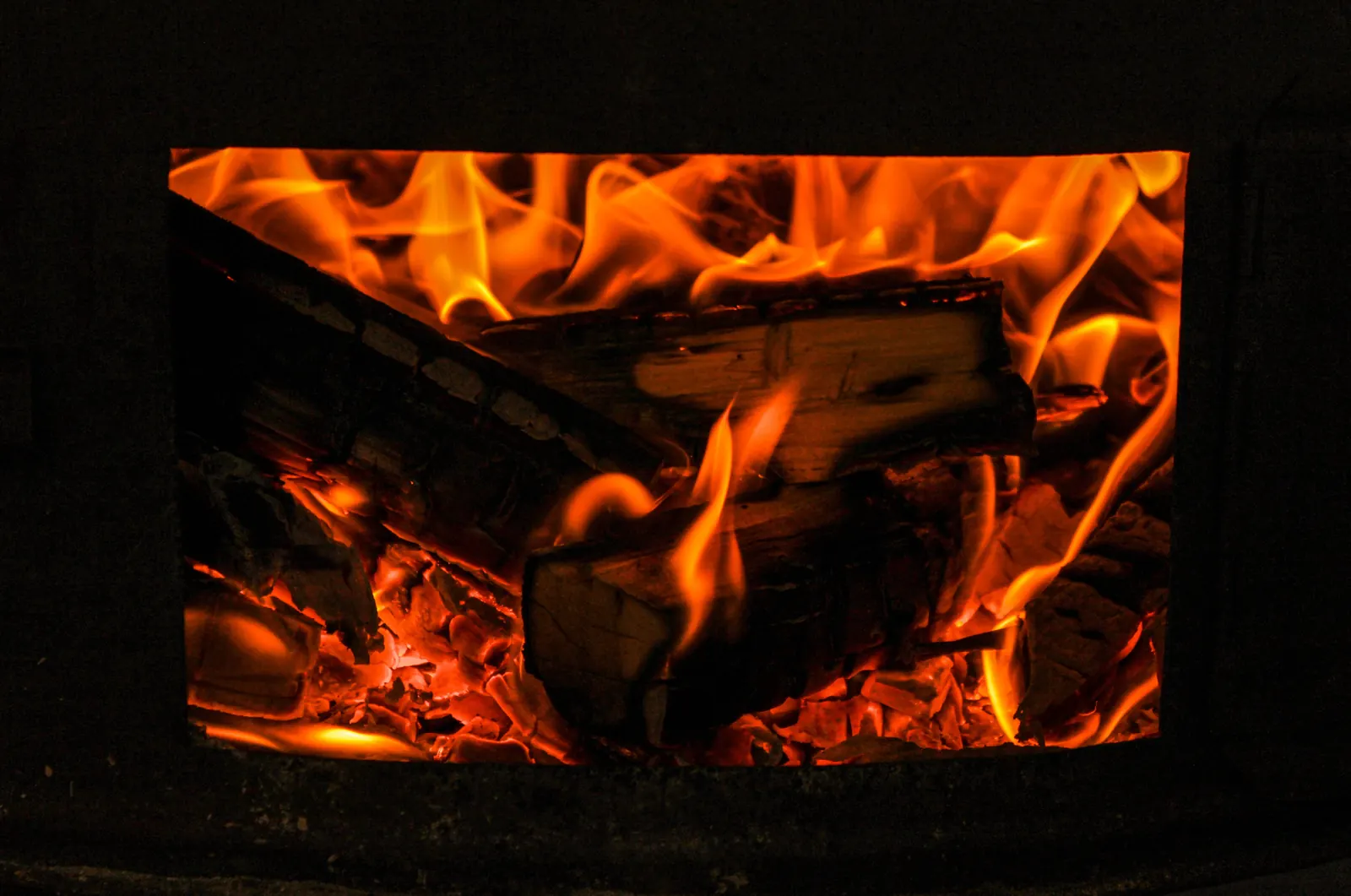
Each time you turn the air down, watch the fire. Flames should stay active, and on a non-catalytic stove the secondary flames near the top of the firebox should keep dancing. If the fire dies to smoke and glowing logs, you went too far. Open it back up until the flames return.
Why choking it down backfires
It is tempting to close everything to stretch a load overnight. The result is a smoldering fire that produces a lot of smoke and very little heat. That smoke cools in the flue and condenses as creosote, often the sticky, tar-like kind that is hardest to sweep and burns hottest if it ignites. The EPA lists a restricted air supply, including a damper not open wide enough, among the conditions that build creosote. Black glass by morning is the visible sign of the same thing.
The stove does not need to be roaring all night, but it needs enough air for active flame. A slightly smaller load with a little more air usually lasts nearly as long and keeps the flue far cleaner.
Which way is open?
Air controls are not standardized. On some stoves the lever pushes in to open, on others it pulls out; some slide left, some right. The owner's manual, or a label on the stove, shows the direction. If you have no manual, the model plate on the back or side of the stove lets you find one.
Key dampers are simpler. The plate inside the pipe turns with the handle, so when the handle runs in line with the pipe, the plate is edge-on to the smoke and the damper is open. When the handle sits across the pipe, the plate is blocking it. Most key dampers have holes or a cut edge so they never fully seal, which keeps some draft even when closed.
- Handle in line with the pipe: open
- Handle across the pipe: mostly closed
- Bypass lever: check the manual, as positions vary by stove
- Air control: follow the label or manual for direction
Does your stove need a pipe damper at all?
Many current stoves do not call for one, and some manuals say not to add one, because the stove is designed to control the burn through its air supply. Older, leakier stoves and installations on very tall or strong-drafting chimneys sometimes used a key damper to tame the draft. New York City's Mechanical Code, for example, bars manual dampers in connectors generally but allows them in chimney connectors serving solid fuel-burning appliances, so they are permitted there, not required.
If your stove overfires even with its air control at the minimum, or the stovepipe glows, that is a draft or gasket problem to diagnose rather than something to fix by adding restrictions. A leaking door gasket lets air in around the control, which is a common reason a stove will not turn down.
When the stove is out
Once the fire is completely out and the coals are cold, closing the air control and any key damper reduces the cold air that drafts down through the stove into the room. It also keeps warm room air from being pulled up the flue. Leave them open while any coals remain, since a smoldering bed with closed controls can push carbon monoxide into the room.
For the summer, many owners leave the controls slightly open so the stove and flue can dry out, which helps prevent the musty smell and rust that come from damp air settling in a closed stove.
If the stove only works wide open
A stove that smokes, struggles or goes out unless every control is fully open is telling you the draft is weak. Common reasons are a liner sized for a fireplace rather than the stove, a short or exterior chimney that runs cold, a long horizontal stovepipe with several elbows, a clogged cap screen, or creosote narrowing the flue. House pressure from exhaust fans can add to it.
That is a chimney question rather than a damper question. An inspection that includes the connector, the liner and the cap, and a draft check with the stove running, sorts out which it is. Keep carbon monoxide alarms working on every level while you are sorting it out.
Common Questions
Should the wood stove damper be open or closed when not in use?
How far should I close the air on a wood stove?
Can closing the damper cause carbon monoxide?
Why does my stove burn too hot even with the air closed?
Need help with this? See our wood stove installation service, or call (844) 468-2410 for a free written estimate.

