
How stove glass is supposed to stay clean
Modern wood stoves and fireplace inserts have what makers call an air-wash. Air enters through a slot above the door, travels down the inside of the glass and feeds the fire from the front. That curtain of hot, moving air keeps smoke from settling on the glass and burns off light deposits as they form.
The system depends on two things: enough air coming through the slot, and a firebox hot enough that the air arrives warm. Turn the air control down too far, or run a fire that never gets properly hot, and the curtain weakens. Smoke then touches the cooler glass, condenses and sticks. What you see on the door is the same residue that is collecting on the walls of the flue.
Causes, from most to least common
When we look at a stove with dark glass, the cause is usually something about how it is being run rather than a broken part. The list below follows what we tend to find in homes across the region, starting with the most frequent.
- Damp or green wood, which spends its energy boiling water and makes thick, cool smoke
- The air control turned down soon after loading, or kept low all evening
- Long, smoldering overnight burns that leave a brown film by morning
- Logs stacked against the glass, blocking the air-wash curtain
- A cold, oversized or partly blocked flue that draws weakly
- Worn door gaskets that let air leak in around the edges, disrupting the airflow pattern
Reading the color and texture
The deposit itself gives clues. A light brown haze that wipes off easily usually comes from a normal start-up and burns away once the stove gets hot. A sticky, dark brown or black film that builds up over a single fire points to wet wood or a fire running too cool. Hard, shiny black streaks, especially at the bottom corners, suggest a pattern of low, smoky burns over many days.
A smoky smudge concentrated in one corner often marks where the air-wash is blocked, either by a log pushed against the glass or by ash piled up near the slot. A white or grayish cloud is usually fine ash and mineral residue, more common with very hot fires or certain woods, and is not a sign of creosote.
| What you see | Likely cause | First thing to change |
|---|---|---|
| Light brown haze that fades as the fire gets hot | Normal start-up smoke | Nothing; give it time and air |
| Sticky black film after one evening | Damp wood or air set too low | Drier wood, more air after loading |
| Black streaks in one corner | Logs or ash blocking the air-wash | Load away from the glass |
| Black glass plus smoke smell in the room | Weak draft or a dirty flue | Have the chimney inspected |
Wood moisture, the usual culprit
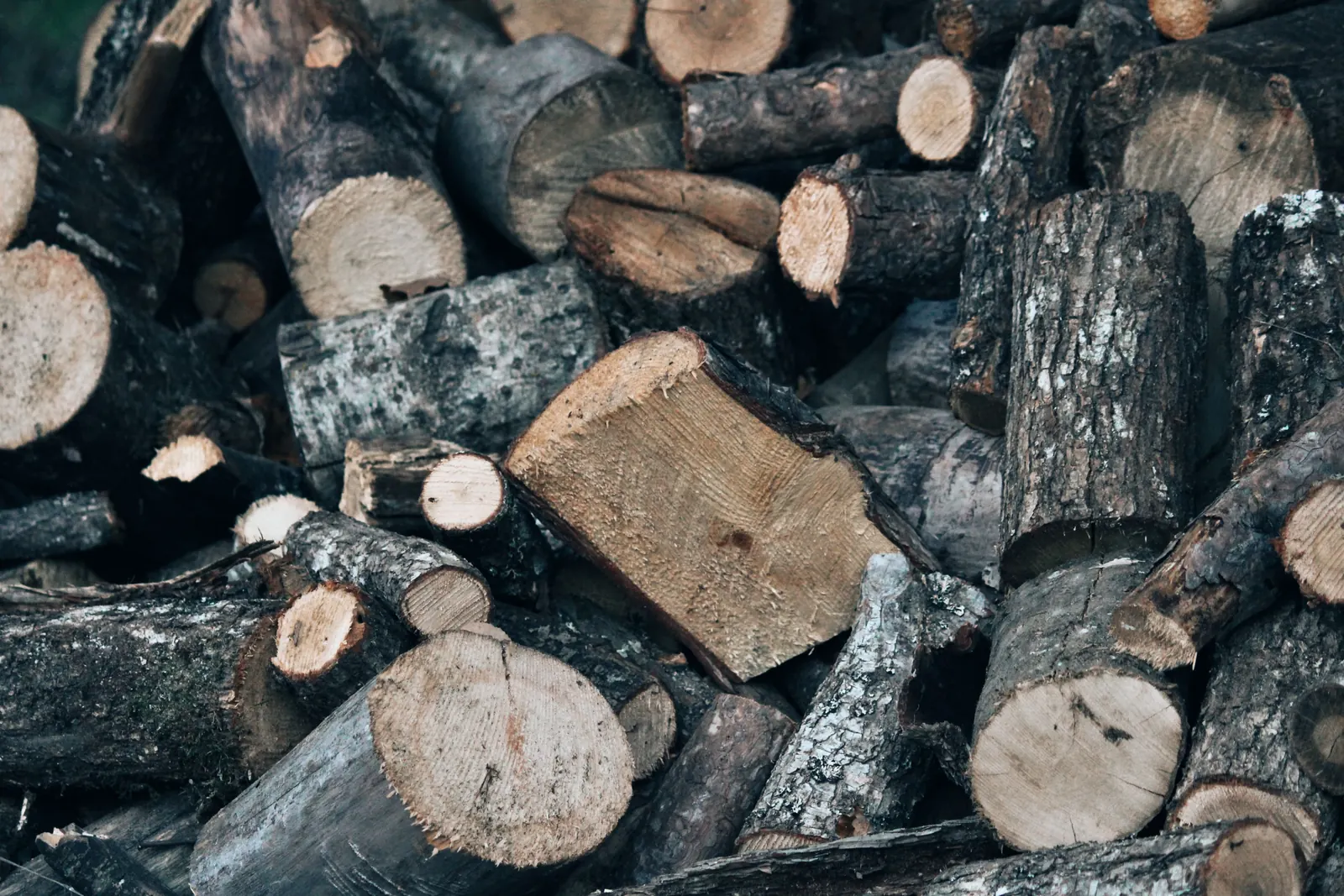
Firewood sold as seasoned is not always dry. Wood that is still holding a lot of water hisses, steams from the cut ends and makes a fire that struggles to stay bright. EPA guidance puts the target for firewood under 20 percent moisture and recommends seasoning for at least six months, with the woodpile off the ground and only the top covered.
The quickest check is a moisture meter: split a log and take the reading on the new inner surface, not the weathered outside. If the glass blackens every time you burn from a certain delivery and clears up with older wood, the answer is in the woodpile. Wood bought late in the fall, stacked under a tarp wrapped around the sides or stored on bare ground, is the usual suspect, since it can stay wet or even pick up moisture over the winter.
Running the stove so the glass stays clear
Load with the air control fully open and leave it open until the new wood is burning actively, with bright flames and the wood beginning to char. Then turn it down in steps, watching that the flames stay lively rather than lazy and orange. If the fire smolders and the glass starts to darken, give it more air.
Place splits toward the back of the firebox and keep the front few inches clear so the air-wash curtain can reach the fire. Smaller, more frequent loads often burn cleaner than one big load shut down for the night. A stove pipe thermometer, read the way its maker describes, helps you see whether the flue is running warm enough.
When the chimney is the problem
If the wood is dry, the air is open and the glass still blackens, look at draft. A stove connected to a large, old masonry flue, common when a stove or insert has been set into a brownstone or colonial fireplace without a properly sized liner, pushes its smoke into a space far too big for it. The smoke slows, cools and drifts back. The same thing happens with a chimney on a cold outside wall, a cap clogged with creosote or debris, or a flue that has not been swept in a long time.
Other signs usually come along: smoke rolling out when the door opens, a fire that is hard to start, and a smoky smell in the room. Those point to an inspection of the flue and connector pipe, not to a better glass cleaner.
Gas fireplace glass is a different story
A sealed gas fireplace should not make soot. A white film on gas fireplace glass is common and comes from combustion byproducts; it is cleaned with a product the manufacturer approves. Black soot on gas fireplace glass means the burner is not burning cleanly, often because logs have shifted, the burner ports are blocked or the air mixture is off. Stop using it and have it serviced, because incomplete combustion can also mean more carbon monoxide.
Many gas inserts and fireplaces also have a yearly service interval in their manual, covering the burner, the log set, the glass gasket and the vent connections. That visit is the right time to have the glass cleaned with the correct product.
Cleaning the glass safely
Let the stove go completely cold first. Stove glass is a special heat-resistant ceramic, and some cleaners and abrasives can scratch or etch it, so check the manual for what the maker allows. Many owners wipe light deposits with a damp cloth or paper dipped in fine wood ash, then rinse and dry, but if the manual says otherwise, follow the manual. Never spray a cleaner onto hot glass.
While the door is open, look at the gasket around the glass and the door. A flattened, frayed or loose gasket lets air leak in and is a common reason one corner keeps blackening. If the glass is cracked or chipped, stop using the stove until it is replaced. When you would like the flue, cap and connector checked as well, our local crews sweep and inspect wood stoves and inserts and can tell you whether draft is part of the story.
Common Questions
Is it normal for wood stove glass to get black?
Why does my wood stove glass keep turning black even with dry wood?
Does black glass mean creosote in the chimney?
Can I clean wood stove glass while it is hot?
Why is my pellet stove glass turning black?
Need help with this? See our chimney sweeping service, or call (844) 468-2410 for a free written estimate.

