Why insurers ask about wood stoves
From an insurer's point of view, a wood stove is a fire that burns for hours inside the house, often close to walls and floors, sometimes overnight. The U.S. Fire Administration reports that heating remained the second leading cause of home fires in 2021, and its heating safety guidance stresses keeping anything that can burn at least three feet from fireplaces and wood stoves and having chimneys cleaned and inspected each year. Insurers ask about stoves because the difference between a safe installation and a risky one is mostly in details they cannot see from an application.
That is why the questions focus on how the stove was installed and is maintained, not just whether it exists.
What underwriters usually ask, and what answers it
Questionnaires vary, but the same themes come up. Having the matching document ready turns a phone call into a quick yes.
- Is it a listed, labeled stove? The label on the stove and the owner's manual answer that
- Who installed it? The installer's invoice with company details
- Was a permit issued and closed? The permit and final inspection record from the town
- Are clearances and floor protection right? The manual's clearance chart and an inspection report
- What does it vent into? Liner documentation and a chimney inspection report
- When was it last cleaned and inspected? Dated sweep and inspection reports
- Is it primary or supplemental heat? Your own accurate answer
Installation details that matter
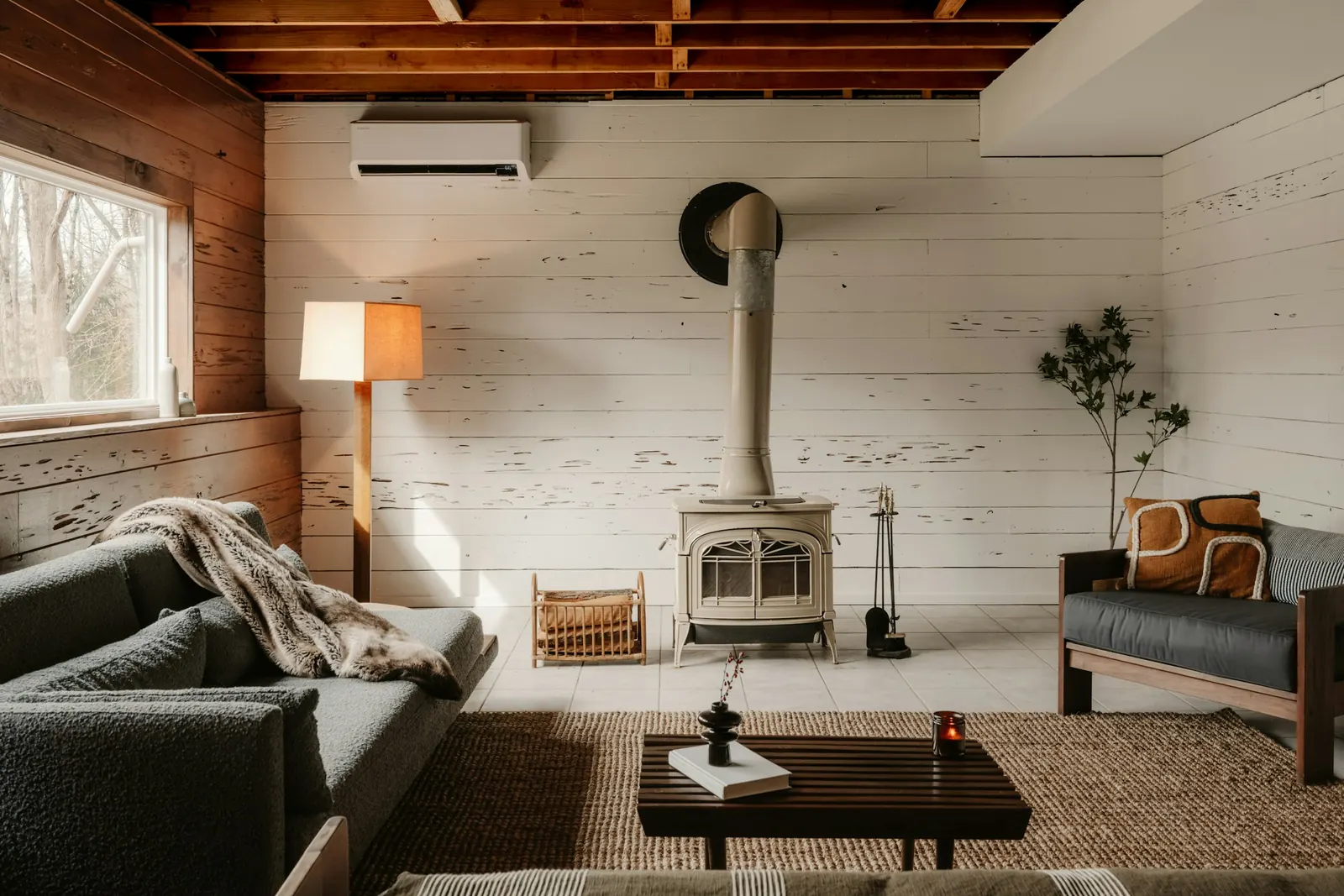
A stove is tested and listed for specific clearances to walls and furniture, specific floor protection, and specific connector and chimney requirements. Those are printed in its manual and on its label. An installation that follows them, with any wall shielding or hearth pad the manual calls for, is what an insurer and an inspector want to see.
The chimney side matters just as much. A stove venting into an old, oversized masonry flue without a liner cools its smoke quickly and builds creosote fast. Most stoves installed into older masonry chimneys around here need a stainless liner sized for the stove, often insulated. A permit, where your town requires one, means someone else checked the work.
A wood insert goes into an existing fireplace and vents through a liner up the chimney. Insurers tend to ask the same questions as for a freestanding stove, with extra attention to whether a full liner was installed. Pellet stoves burn a manufactured fuel with a fan-driven vent, and their venting rules come from the manual, often through a wall or up a chimney with a liner. Both still count as solid-fuel appliances on most questionnaires.
Used and unlabeled stoves
Used stoves are common and often cheap, and some are perfectly good. The problem is documentation. A stove with a missing label or lost manual has no published clearances to install to, and many insurers and inspectors will not accept guesses. Older stoves may also lack the features of current models. Before buying a used stove, check that the label is present and legible, and that you can get the manual for that exact model.
Homemade stoves and stoves converted from other equipment are, in practice, the hardest to insure.
If the stove you want is older, ask whether the insurer has rules about stove age or listing before you buy it. A few minutes on the phone can save a stove that cannot be insured sitting in the living room.
Telling your insurer
The simplest approach is a call before installation. Give the make, model and listing of the stove, who will install it, whether a permit will be pulled, and whether it will be primary or supplemental heat. Ask what they want afterward: photos, an inspection, a form or nothing at all.
If a stove is already in the house, including one that came with it when you bought, mention it at the next renewal or sooner. An appliance an insurer did not know about can complicate things later, and the conversation is easier before a claim than after one. Your agent can explain how your policy treats it.
Buying or selling a house with a stove
A stove that came with the house is a common surprise at closing. The buyer's insurer asks the usual questions, and nobody has the manual, the installer's name or the permit. If you are buying, ask the seller for those documents early and have the stove and chimney inspected during the inspection period, so any liner or clearance work can be priced before closing rather than discovered after.
If you are selling, gather the paperwork before listing. A recent inspection report, the stove's manual and any permit record make the buyer's insurance call straightforward. Where documents are missing, an inspection that describes the stove, its clearances and its venting is the closest substitute.
Keeping the stove insurable
Ongoing care is the other half. NFPA 211 calls for a yearly inspection of chimneys and vents, with cleaning when deposits build up, and a stove that heats the house all winter often needs a mid-season check of its pipe as well. Keep the reports. Burn dry, seasoned wood, keep the hearth area clear, use a lidded metal ash bucket stored outdoors, and keep smoke and CO alarms working. These habits lower the actual risk, and the paperwork shows the insurer you follow them.
How we help
When we install a stove or insert, you get the manual, the liner documentation and a written description of the installation, and we can inspect an existing stove and give you a report your insurer can read. We do not advise on coverage or premiums. For those, talk to your agent, ideally before the stove goes in. If your insurer sends a form, bring it to the visit so the answers match their wording.
Common Questions
Does a wood stove increase homeowners insurance?
Does homeowners insurance cover wood stoves?
Do I have to tell my insurance company about a wood stove?
Will my insurer want an inspection of my wood stove?
Is a professionally installed wood stove easier to insure?
Need help with this? See our wood stove installation service, or call (844) 468-2410 for a free written estimate.